As a frequent Alaska Airlines flyer—and occasional Hawaiian Airlines traveler—I closely track how to earn elite status through Alaska’s frequent flyer program. The launch of the new Atmos elite status program in 2025 merged the Mileage Plan and Hawaiian Miles programs, along with earlier changes introduced in late 2024 for Alaska, significantly reshaped how travelers earn Elite Status Points. However, the upcoming “Choose How You Earn” options arriving in 2026 add an entirely new dimension to qualifying for top-tier elite status and other earning potential.
So how can travelers earn super fancy Elite Status Points for premium Alaska Airlines elite tiers in the meantime? Check out my other post for changes in 2024 and 2025 to earn Elite Status Points. And read on for my take on what frequent flyers should know for 2026. And while Alaska Airlines is typically my airline of choice, this guide isn’t sponsored—these insights are solely my own two cents.

Choose How You Earn
Alaska will point out that choosing how you earn status points is a first for an airline. My take: they’re testing the waters to see whether they’ll get cheers or jeers if they switch to a spending-based program. Regardless, sometime in 2026, the Atmos Rewards program will shift from its current everybody-gets-one-plan scenario to a choose-your-own-adventure one.
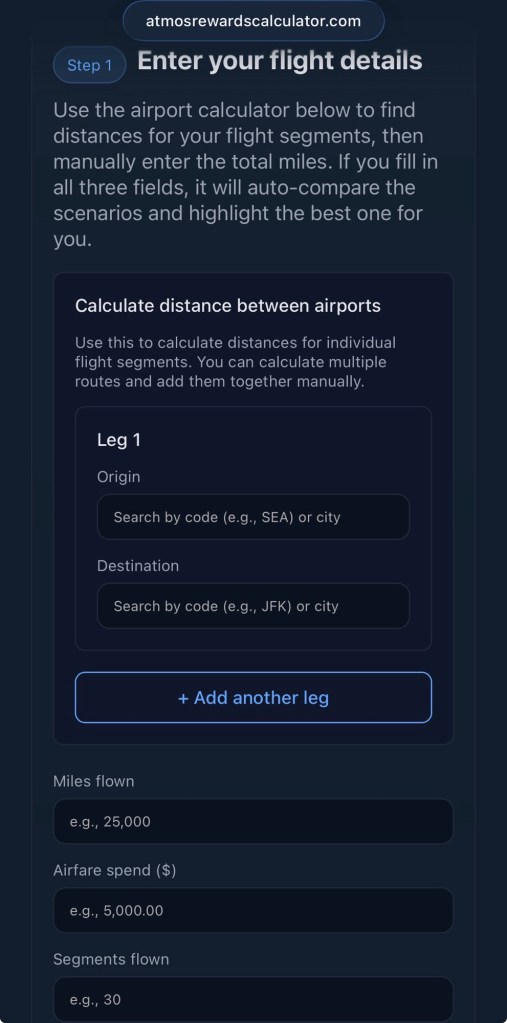
Since the finer details of the program haven’t yet been formally announced, some of the information below is conjecture. I’ve tried to note where this is the case. I’ll also update when more information is available, so stay tuned.
All of the information below is based on butt-in-seat earning, so points earned from partners and credit card spending is in addition to what’s noted. Read on for what I know or anticipate for the three earning options, including a handful of examples at the end of this post based on my own travels. And see here (and in the screenshot at the left) for an online calculator published by an enterprising developer (I haven’t used it extensively and it’s not endorsed by the airline, so use with those caveats.)
Alaska says flyers’ choice for earning can be changed once per year, so there is potential for relief if you made a horrible mistake or your travel habits change, though it’s unclear so far if that’s once every 12 months, once a calendar year, or something else.


Option 1: Distance Traveled
Alaska says, “Earn based on how far you go — the more miles you fly, the more points you rack up,” and from my informal research, this should generally be true. If you primarily or regularly fly transcontinental, Hawaii, or long-haul international flights (whether paid or by redeeming miles), this is probably the option that will earn you the most elite-qualifying points and is likely the path I’ll choose based on my travel habits. This is the option I’m most likely to choose for 2026. Here’s how I see it playing out:
Up Side:
- 1 mile flown = 1 status point earned: straightforward and easy to track
- Counts for award travel too!
- Great for travelers who are able to snag sale or other lower-priced fares (but see below for potential warnings)
Down Side:
- No class-of-service bonuses, so if you buy first class tickets or pay full fare for main cabin seats, you might earn fewer points this way
- Will no longer include a 500-mile minimum, so folks who often fly short hops will likely earn fewer points with this option
Fine Print:
- It’s unclear how Alaska will treat Saver fares. Given that they historically have only credited 30% of miles flown, I anticipate they will devalue these in the future too.
- It’s also unclear how Alaska might treat traveling companions on their credit cards’ companion fare benefits. It seems like they would earn miles flown with this option, but that could be an incorrect assumption.


Option 2: Price Paid
For obvious but potentially unpopular reasons, many airlines have moved to frequent flyer programs that incentivize dollars spent, Alaska hasn’t gone all in on this—yet. But for some travelers, unlocking this option could be to their benefit. Alaska says they’ll calculate points based on fare paid for travel purchased on Alaska’s website, including money spent to upgrade to first, business, or premium class. But fare paid isn’t the same as ticket price: it doesn’t include taxes and fees, which can add up on some itineraries.
Up Side:
- Earn five points for every dollar spent on fares.
- Award travel earns too: one point earned for every 20 points redeemed.
- Travelers who often pay for first class, premium, or full fare main cabin seats may come out ahead with this option.
Down Side:
- Ticket prices include airfare plus taxes and fees, but the amount Alaska calculates for points is only the airfare portion. Taxes and fees can be expensive on certain itineraries, such as connecting flights which pay fees at the departing, connecting, and arrival airports. And Alaska’s new London service will pay Heathrow’s exorbitant fees, too.
- I’ve been fortunate to score some great business class award deals to Europe. At one status point earned for every 20 redeemed, the earn rate is much less than for miles flown.
- Traveling companions who get the benefit of companion fares with Alaska-branded credit cards will most likely lose out on their earning opportunity.
Fine Print:
- Paid fares purchased on partner airlines’ websites will earn based on miles flown—at least for business and first class. Partners don’t necessarily share fare details, so Alaska can’t calculate points as they do with tickets purchased on the Alaska site (scroll to the bottom of the post for more details).
- This option is the direction the industry is going, so folks chasing status should pay close attention to how this could impact them in the future.
- As with the other options, it’s unclear how Alaska will treat Saver fares. Many other airlines exempt these fares from any earning potential and Alaska could follow suit.


Option 3: Segments Flown
Back in the late ‘90s and early 2000s, I regularly flew from San Francisco to Southern California and Oregon. At that time, I earned my status on segments (anyone else remember Shuttle by United?). For travelers who primarily fly short hops, such as Spokane to Portland or Seattle, within California, or among the Hawaiian islands, this might be a solid option. Whether for paid or award travel, each flight segment earns 500 status points.
Up Side:
- Probably great for folks who exclusively or primarily are on flights with a distance less than 500 miles.
- Same earn rate for paid flights or award travel.
Down Side:
- Every flight would earn 500 miles, so travelers who routinely fly a short flight that connects with a longer one (like Portland – Seattle – Honolulu) could be in for a painful surprise.
Fine Print:
- It’s unclear if Alaska would treat paid fares purchased on partner airlines’ websites with the same 500-mile-per-segment earn rate or if those would earn based on miles flown.
- As with the other options, the jury is out on how Alaska will treat Saver fares. Many airlines exempt these fares from any earning potential and Alaska could follow suit.

My Calculations
I didn’t compare the three earning options for every flight I took in 2025, but I did do the math for several of my itineraries which had interesting results (all are round trips, except Frankfurt, as noted):
- Portland to Denver, main cabin. Miles flown: 1,984. Fare paid: $396 (+$60 taxes and fees) = 1,980 points. Two segments = 1,000 points. Winner: distance traveled or price paid.
- Portland to Austin, main cabin. Miles flown: 3,430. Fare paid: $391 (+60 taxes and fees) = 1,955 points. Two segments = 1,000 points. Winner: distance traveled.
- Portland to Newark, main cabin. Miles flown: 4,866. Fare paid: $461 (+$65 taxes and fees) = 2,305 points. Two segments = 1,000 points. Winner: distance traveled.
- Portland to Frankfurt via Los Angeles (one way), business class reward redemption. Miles flown: 6,640. Points redeemed: 55,000 (1 point earned per 20 redeemed) = 2,750 points. Two segments = 1,000 points. Winner: distance traveled.
- Portland to San Jose del Cabo, Mexico (via Seattle on the return), main cabin: Miles flown: 3,654. Fare paid: $1,139 (+206 taxes and fees) = 5,695 points. Three segments = 1,500 points. Winner: price paid … but by using a $99 credit card companion fare, the primary traveler scores while the companion would come up empty. And still pay $206 in taxes and fees.
- Portland to Vancouver, BC, main cabin. Miles flown: 500. Fare paid: $275 (+$85 taxes and fees) = 1,375 points. Two segments = 1,000 points. Winner: price paid. Close second: segments flown.
- Portland to Maui, full fare (Y) main cabin. Miles flown: 5,127. Fare paid: $1920 (+$58 taxes and fees) = 9,600 points. Two segments = 1,000 points. Winner: price paid, but this is another flight where I used a companion fare and the companion would miss out.



Partner Earn Rate
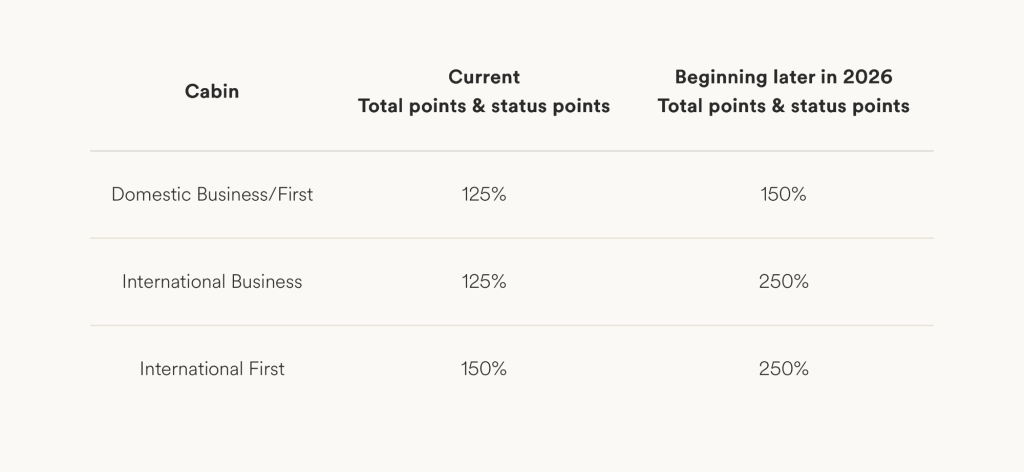
The one potentially big exception to all these calculations is flights purchased directly from a partner airline. When the choice earning program starts in 2026, earning rates for flights booked in business and first class will earn based on miles flown regardless of the member’s earning choice … plus bonuses as shown in the chart below. Alaska is mum on earning rates for flights in partners’ economy cabins, so those may stay the same as 2025 or could earn based on miles flown.
Final Thoughts
The jury is still out how this will all land (pun intended). I’m glad Alaska is keeping the miles-based option for now, but the details will matter for some travelers more than others and there are still some in-the-weeds aspects of earning that aren’t yet clear.
 Upper Left Traveler