Experiencing Oktoberfest in Munich has always been at the top of my bucket list—especially the iconic Rosa Wiesn (or Gay Sunday) on the festival’s opening weekend. In 2025, the stars finally aligned to make this dream trip a reality.
While Munich may not always be the first city people think of for a gay week in Europe, it’s actually one of the most underrated LGBTQ-friendly destinations in Germany. Whether you’re here for the lively beer tents at Oktoberfest, the vibrant Munich gay nightlife (much of which has been around for decades), Pride celebrations, or simply a cultural getaway, this Bavarian capital is full of history, charm, and queer-friendly spaces. If you’re planning your next LGBTQ Munich travel adventure, you’ll quickly see it’s a city where it’s easy to celebrate, connect, and truly be yourself.
There was enough to share about Oktoberfest that it has its own post. Click through for that, and keep reading for everything else about Munich…

Getting There
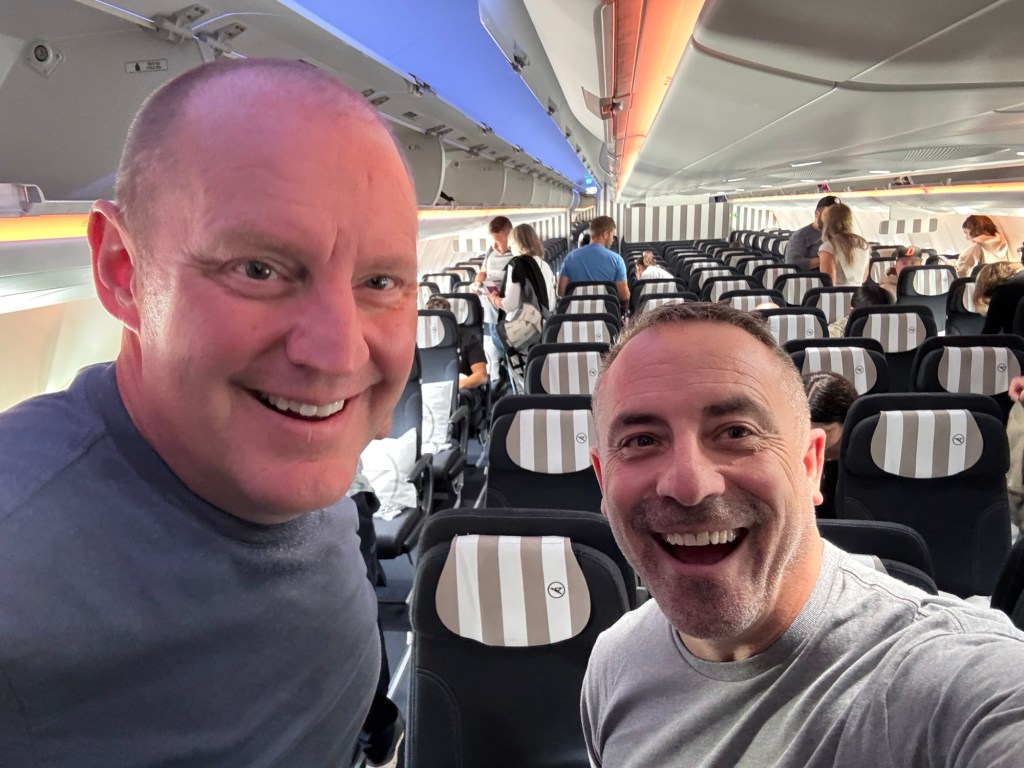
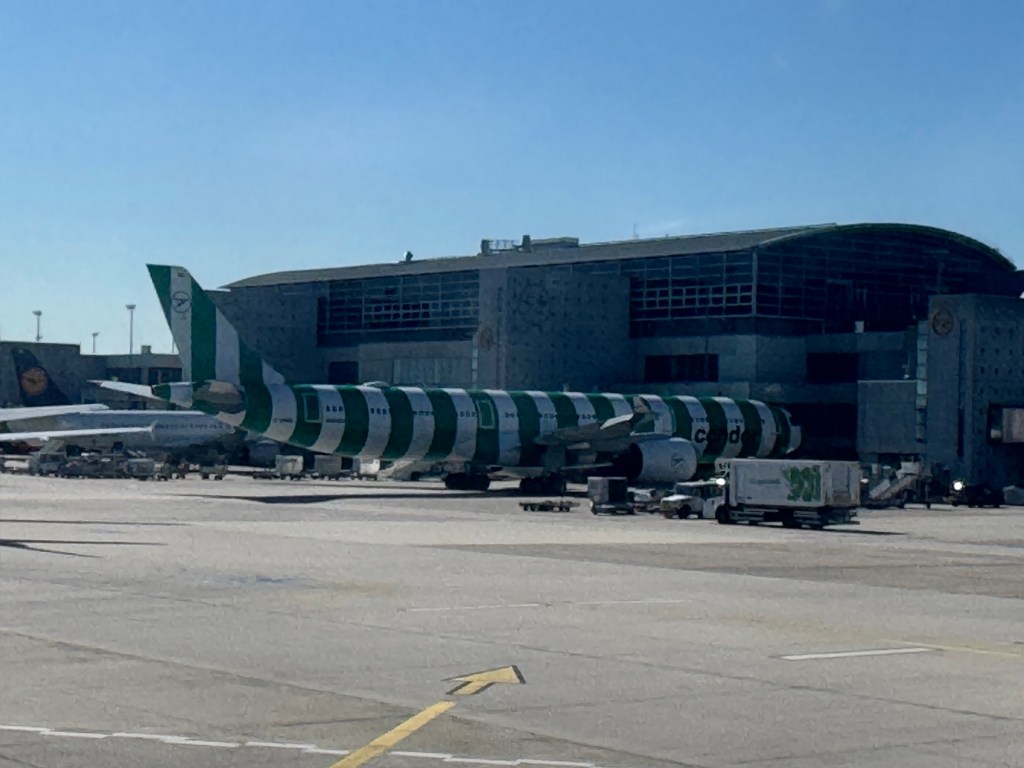
Munich’s Franz Josef Strauss International Airport (MUC) is relatively easy to reach from the United States. As Germany’s second-busiest hub after Frankfurt (FRA), MUC offers nonstop flights from major U.S. airlines’ hubs, as well as on Lufthansa from all over the U.S. If you don’t live near a hub with direct service, Munich is still typically only one connection from anywhere in Europe. In my case, flying Condor Airlines meant a connection in Frankfurt en route and a return flight from there as well (read more about Condor below). Frankfurt is worth a stop of its own, although I’m convinced the airport was designed by a sadist. Give yourself extra time to navigate transfers or departures.
If your gay Munich adventure is part of a bigger European itinerary (or if Frankfurt offers more affordable or convenient options, as it did for our return), Munich is very well connected by rail. High-speed Deutsche Bahn (DB) Inter-City Express (ICE) trains link Munich to major German cities. In fact, Lufthansa even sells connecting plane-to-train itineraries. Frankfurt is about 3.5 hours by train, Berlin is 4 hours, and international routes make it easy to combine Munich with other LGBTQ hotspots: Vienna (4 hours), Zurich (4 hours), and Paris (6 hours) are all direct by train.

Assuming you arrive in Munich by air, getting from the airport to the city center is seamless. The S-Bahn (above ground) trains arrive about every 10 minutes to connect Munich Airport’s Flughafen München station to downtown. The ride takes about 40 minutes, dropping you near Marienplatz, the heart of the city. Tickets cost around €13 per person for a one-way ride, and day passes are available if you plan to use public transit throughout your stay. Taxis and ride-shares are also available, taking about 30–40 minutes depending on traffic, though they cost significantly more (around €70–90).
Alternately, if you arrive by train, Munich’s Hauptbahnhof (Central Station) sits right in the city center, with quick U-Bahn (subway), tram, and bus connections to neighborhoods like Glockenbachviertel, the hub of Munich’s gay nightlife. For many travelers, taking the train is not only faster than flying short distances, but also far more relaxing—you can sip a beer, enjoy the Alpine scenery, and arrive downtown without the hassle of airport transfers.
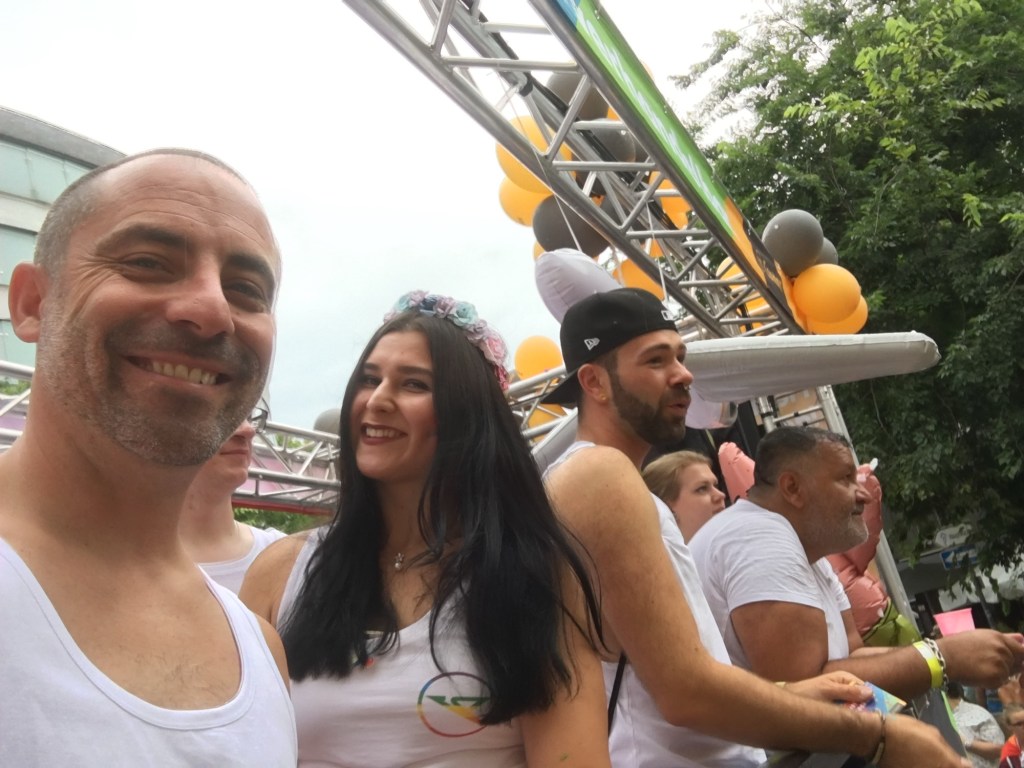
*A word about Condor: the hubby and I won a trip on Condor to Frankfurt’s pride when we got married in 2018. While we paid for our flights this time, I have a special place for the airline, as they treated us so well on the trip and on their float in the Pride parade. They’ve made a massive improvement in their long-haul aircraft since our 2018 trip and if they fly where you do, I have a very biased recommendation to check them out … with a word of caution regarding their regular economy seats, which are pretty snug.
Know Before You Go
Especially if you’re intending to join for Oktoberfest, there’s one thing I can’t emphasize enough: plan ahead. Read below for additional notes on the event, but know that literally millions of people attend each year, so hotels will be expensive and will fill up as soon as bookings are available. The same goes for other events.
Some other travel tips I found helpful include:
- Beginning in 2026, visitors from the U.S. and other countries will need a European Travel Information and Authorization System (ETIAS) approval prior to arrival in or transit through Germany (plus Norway, Cyprus and other Schengen Zone countries). Follow the link above for more detailed info.
- I’d read before my trip that tipping in restaurants and bars was common, but amounts were far less than the U.S.: 5-10% of the total bill or 1€ per beer. The beer part proved true, but in restaurants where I paid with a card, servers were inconsistent whether they gave the option to provide a tip (hopefully I didn’t come off as rude when I didn’t assert myself to offer one).
- When ordering beer in Munich, ordering ein bier will generally get you a 0.5L glass of the house specialty. Ordering ein maß (pronounced to rhyme with boss) will get you a full liter of beer in a very heavy-duty glass mug—perfect for hearty toasts and tired arms. The fest halls predominantly sell the one-literally maß, so if that’s not what you’re looking for, be sure to specify.
- Most bars and restaurants accept credit cards, but there exceptions (and times where cash is preferred). ATMs are readily available nearly everywhere, including at the airport (so you don’t have to change currency beforehand). Be forewarned that some of the most conveniently located ATMs, such as in bars and beer halls, probably have steep fees. Some will also offer to do the conversion for you; generally the exchange rate from your home bank will be better than at the machine. Check your bank’s rules before you go, though: my AMEX checking account charged me foreign transaction fees 3x as high as the husband’s credit union for the same amount withdrawn. Won’t make that mistake again.
- Especially if you’re visiting around the time of Oktoberfest, plan for anything and everything weather-wise. Our first three days were 80+ degrees of hot sun during the day, much of the rest of our week was around 60 degrees during the day, with an intermittent mix of clouds and rain. The week after we left saw lows in the 30s.


Munich is a large city (both in terms of population and land area), but it’s generally easy to get around, with some notable caveats:
- While Munich’s transit system is vast and efficient, it isn’t set up for contactless payment at the fare gates. You’ll need to download their app (which does accept payments from virtual wallets such as ApplePay or GooglePay, fortunately) or buy a ticket from the fare vending machines before you board. And unfortunately, because their system is so vast, fares and tickets vary based on zone so the vending machines can be overwhelmingly complex. If you’re willing to go to the hassle of setting up an account in the MVV app, at least the app will do the calculation for you.
- Once you’re in town, biking is a preferred mode of transport for many locals. Bike and electric scooter shares are available across the city if you’re brave enough to try riding through Munich’s traffic and cobblestones.
- If figuring out transit fares isn’t how you want to spend your trip and biking doesn’t sound much fun either, taxis are a good alternative. The FreeNow app works easily, like Uber or Lyft and a majority of taxis are Mercedes E-class or similar sedans or wagons, so they’re actually nice. Uber and Lyft, however, are not as prevalent in Munich. The couple times I checked them out, they were expensive and a long wait.
- I typically do a lot of walking on trips and Munich was no exception: we logged over 60 miles in a week. Wear comfortable shoes and note that many streets and sidewalks are cobblestone and many businesses have stairs (especially to downstairs restrooms), so if accessibility is a concern, take the opportunity to plan out activities carefully and/or leave extra time to navigate things.

Finally, on a heavy, but important note: Munich was where Hitler got his political start back in the 1930s. There’s a lot of history here, and as dark and hard as some of it is, it’s part of Germany and especially Munich. The German government has forbidden use of certain slogans and symbols so you generally won’t even see much of them in historical context. As well, you’ll typically see things referred to as the National Socialist (or NS) Party, and rarely Hitler or Nazism by name. It feels a little sanitized to me, but it’s how Germany has chosen to tell its story and protect against repeating its past.
LGBTQ Safety
Munich is considered very LGBTQ friendly and safe, and this certainly felt true during Oktoberfest. Although Germany was one of the more recent European countries to formally recognize gay marriage, its cities have long held progressive attitudes and strong formal LGBTQ protections now exist nationally.
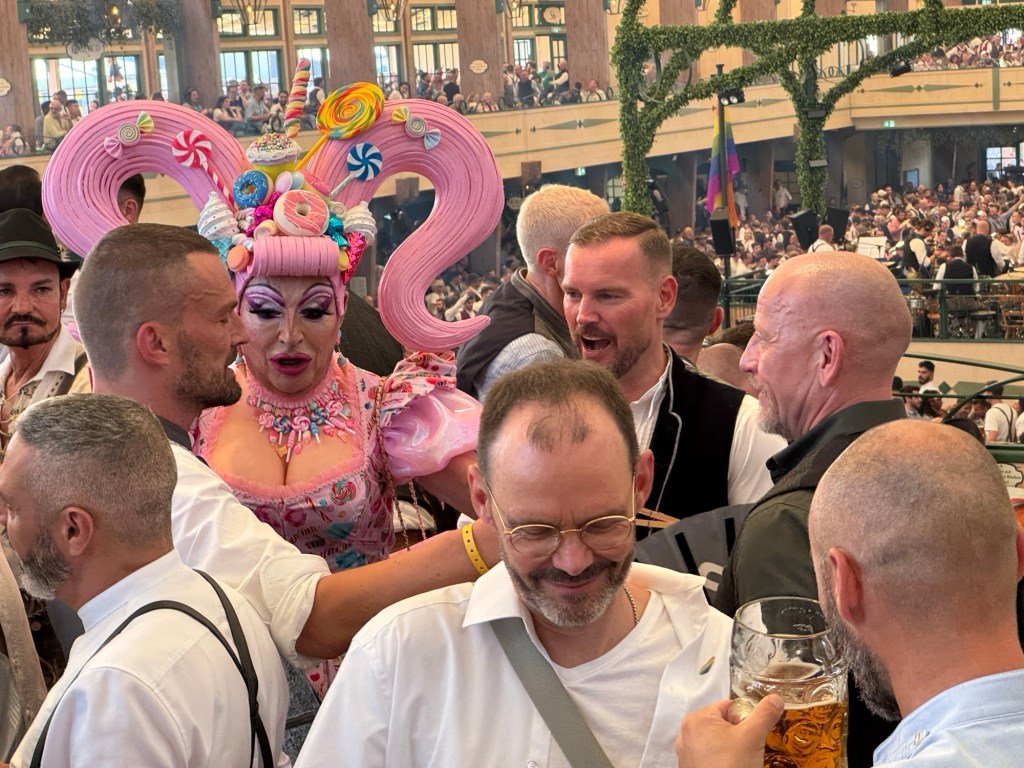
Munich has three notable LGBTQ events throughout the year where visibility is heightened. The first weekend of Oktoberfest is one (check out my separate post for everything Oktoberfest), Munich Pride (called Christopher Street Day or CSD across Germany) is another, and there’s also the Pink Christmas Market in Stephansplatz focused on LGBTQ vendors. Munich’s Glockenbachviertel is the city’s more predominantly queer neighborhood where you’ll see gay couples exchanging affection and pride flags displayed proudly.
All of the things above being said, as with anywhere, it’s still smart to stay aware of your surroundings—especially if you’ve had a maß or two, it’s late at night, or if you’re outside of the more central neighborhoods.

Sightseeing Highlights
There’s a lot to Munich and the surrounding area besides Oktoberfest, which is significant enough to warrant a post of it’s own, and in a week, we barely scratched the surface. But within that week, we packed in a great variety of adventures and exploration.
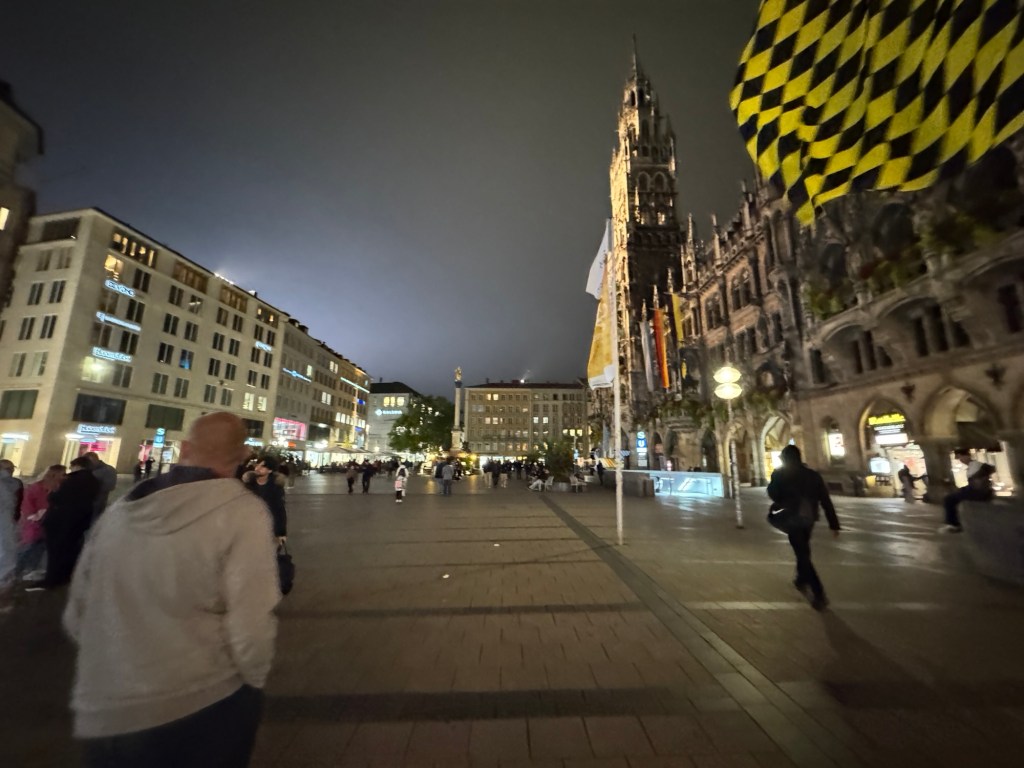
We spent our first afternoon checking out Marienplatz, a plaza named after the Marian column with the Virgin Mary depicted at the top, and Altstadt, Munich’s historic old town. The new and old town halls frame the Marienplatz square, with the Neues Rathaus (new town hall) featuring the famous Glockenspiel. At 11:00am and 12:00 noon, as well as 5:00pm in the summer, the Glockenspiel’s mechanical characters dance and re-enact parts of Munich’s history, attracting crowds to witness the event.
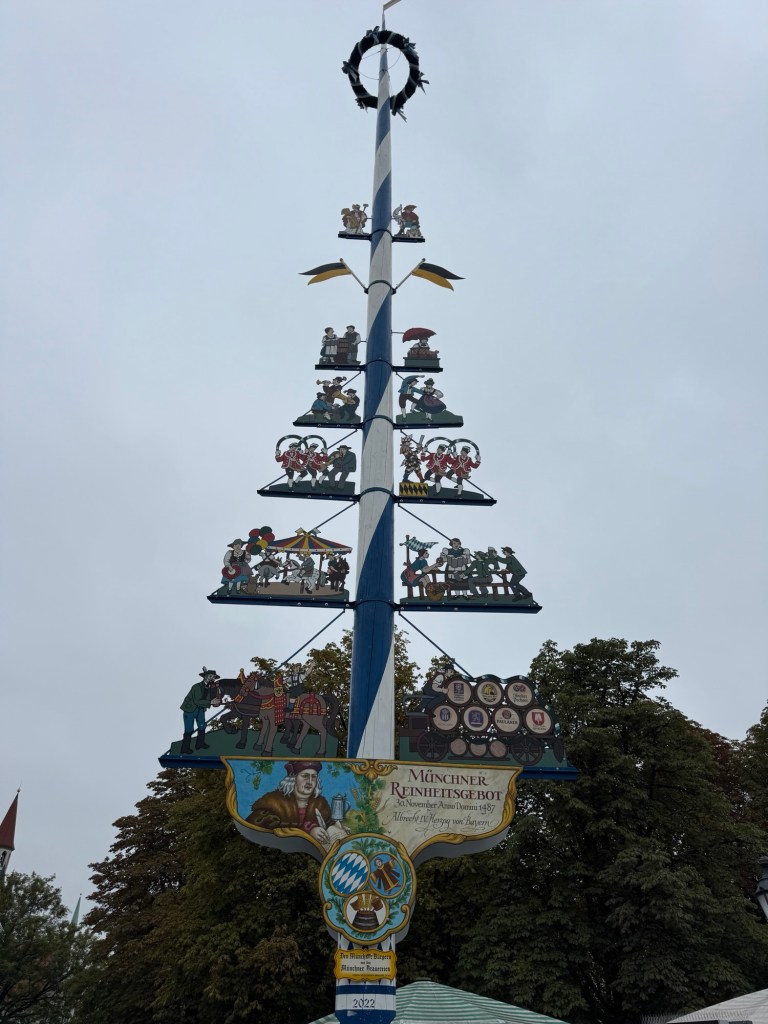
A block over is the Viktualienmarkt: part farmers’ and makers’ market and part beer garden. In the center stands a maypole carved out of a prior year’s Christmas tree (look a bit above eye-level for the tree’s vintage). The day we walked through, we’d just had breakfast so we limited our consumption to a quite-delicious pickle from a popular vendor before continuing on. Another few blocks over is the historic Frauenkirche. Among other notable attributes, it’s the Frauenkirche’s domes that set the height limit for other Munich buildings.


One thing I’m disappointed I missed near Marienplatz (I hadn’t looked up the exact location until later in our trip) was the Viscardigasse. Inlaid in the street are golden cobblestones that mark the out-of-the-way path locals would take during the National Socialist regime to avoid the salute people were required to give to the Nazi government in the Rathaus.
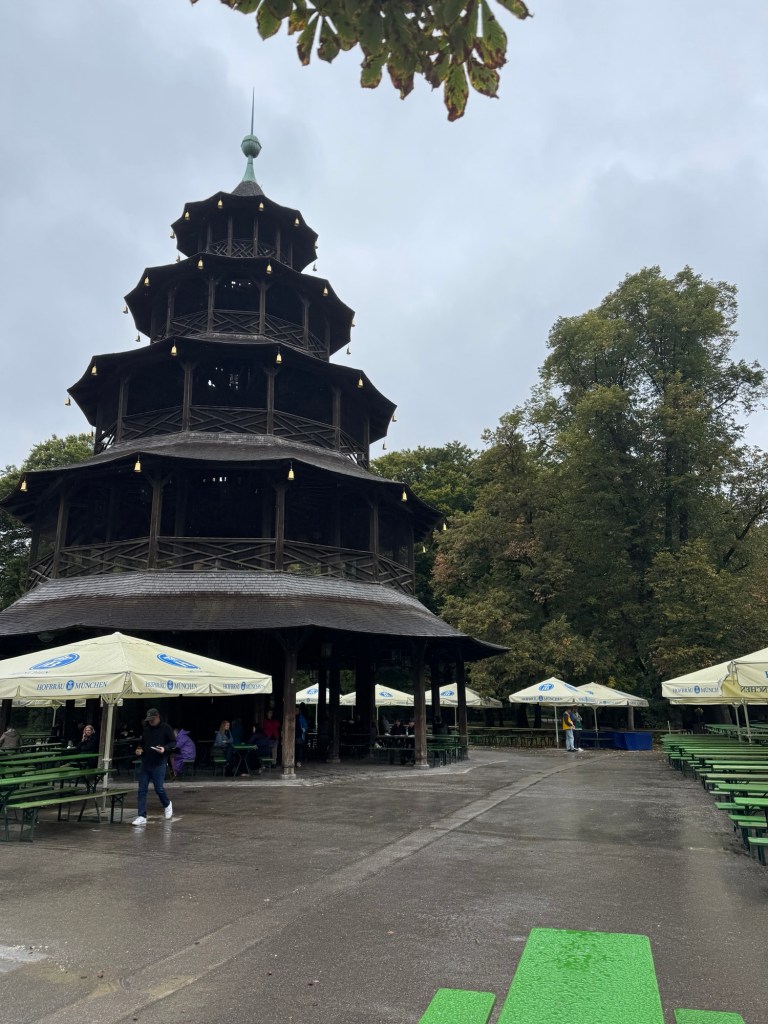
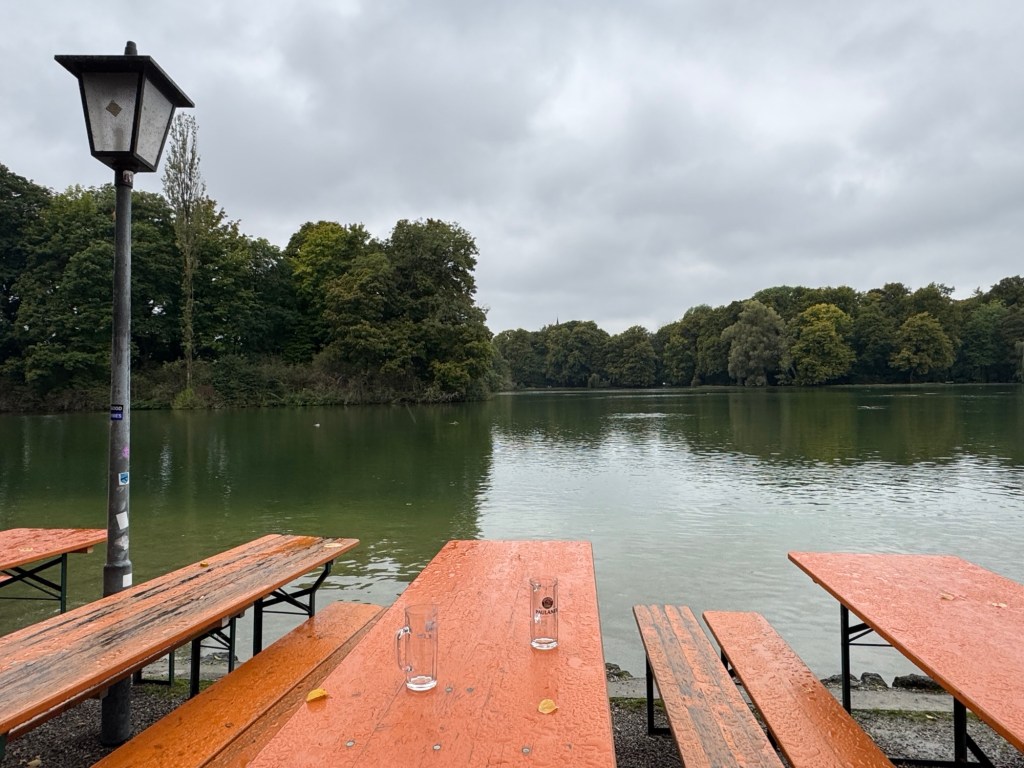
Still, we did pack a lot into our trip, including a bus ride through the MaxVorstadt neighborhood and past the Siegestor a giant arch dedicated to peace. We jumped off the bus at the English Garden. You might be able to fill much of a week just exploring this massive urban park. We were there on a drizzly Wednesday so we didn’t catch (or notice) the nudist meadow, but we did stop at Chinesischer Turm (the Chinese tower) for a bite and a beer in their beer garden. I’m told there’s often live music here, alas that was not the case at lunchtime on Wednesday. We also walked past the Seehaus Biergarten, which was also quiet on a damp midweek afternoon, but it was easy to see how beautiful it would be to catch the sun setting here with the lake in the foreground.
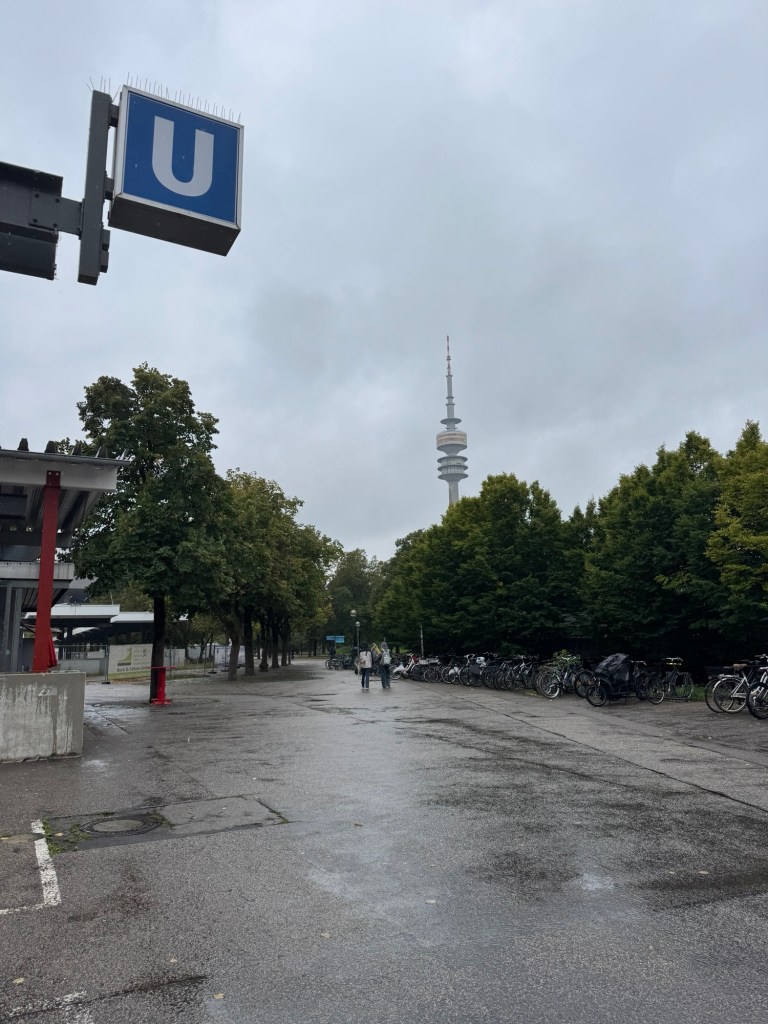
From the park, we jumped on the U-Bahn (having no idea if I paid the right fare) and headed to Olympiapark, the site of Munich’s 1972 Olympics. In addition to the stadium, tower, and other landmarks, I really enjoyed walking through Olympiadorf. What was the Olympic athlete’s village is now student housing and the students are allowed to paint the exteriors of their housing as they see fit—making it a fantastic international collection of street art.
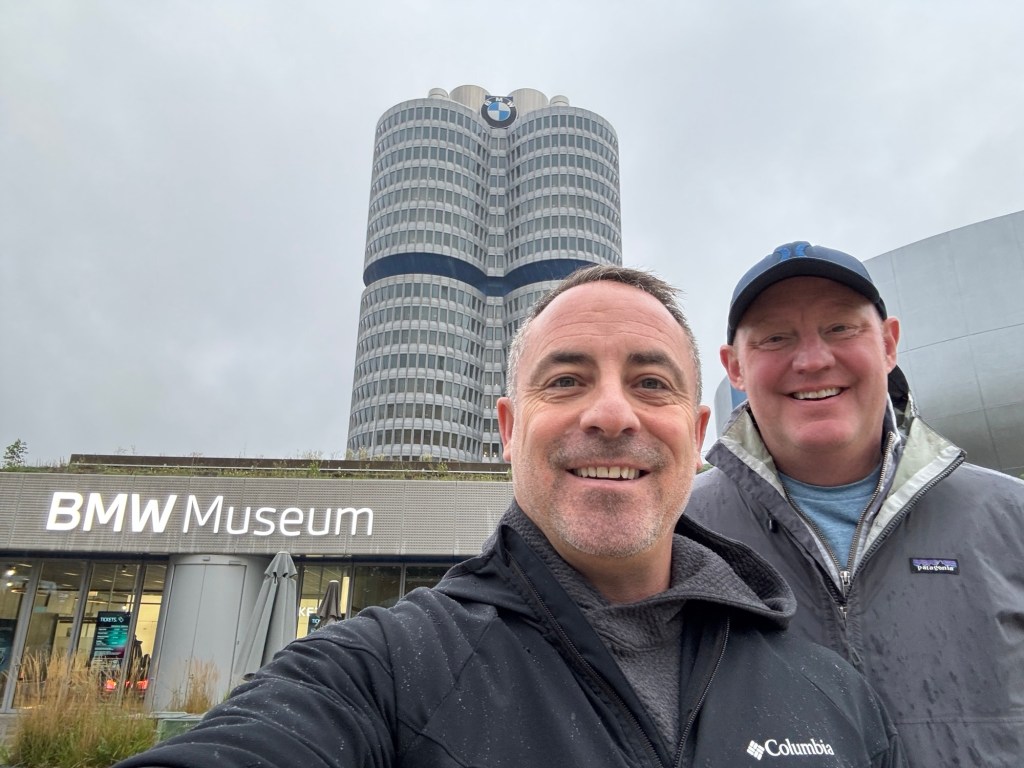
Immediately adjacent to Olympiapark is BMW Welt, or BMW World. In addition to their headquarters and customer delivery center, BMW Welt houses a free exhibition gallery showing off cars from all their brands: BMW, Mini, and Rolls Royce. Connected via an elevated walkway is the BMW Museum, a surprisingly robust collection of vehicles and history. Even as a car aficionado, I was impressed. For planning purposes, if you don’t have at least a couple hours, save this for another time—there’s a lot here.


As noted, in our week of exploration, we didn’t make it to many of the places I had on my to-visit list. So, while I can’t vouch for how great (or not) any of these spots are, they are on a short list for a future trip having been noted as fun or meaningful by others:
- Watching surfers on Eisbachwelle, a man-made wave pool on the Isar River.
- The Hirschgarden, a year-round beer garden said to be the largest in Bavaria.
- Aside from BMW, we didn’t hit any of Munich’s numerous museums. There’s a wealth of them here with pretty much any different focus you might be looking for. Many offer 1 Euro entry on Sundays.
- The White Rose Memorial features bronze insets in the cobblestones of this exterior courtyard. The insets depict the leaflets distributed by the White Rose group to try to counter Nazi propaganda. Inside the building, there’s a permanent exhibition describing the group viewed as heroes by many Bavarians.
- NS Dokumentationszentrum is the Third Reich history museum in Munich. As noted above, since Munich is where Hitler and the National Socialist (NS) party got its political start, there’s understandably a lot of history here.
Day Trips
I suppose we would have had more time to do things in Munich if we’d spent all our time in Munich. But there are so many other things to see and do that are nearby, it would have been a shame to not leave town.
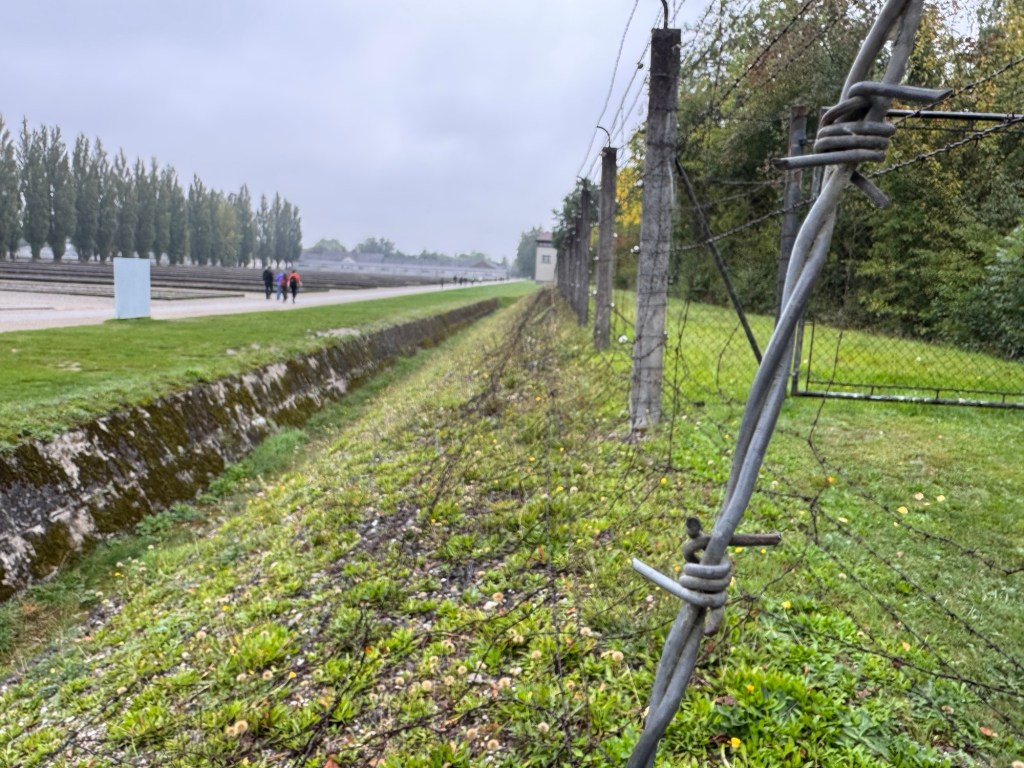
Of particular note is the Dachau Memorial Site. This was the NS party’s first camp and served as a model for those that followed. I hadn’t realized that this was initially a work camp, albeit for political foes and other prisoners, and wasn’t primarily an extermination camp as others were later, but that didn’t really soften the reality of what happened here. We did a guided walking tour versus going through on our own, and I’d recommend it for additional context and commentary. As noted by our guide, afternoons are quieter as most school tours happen during the morning, but Dachau does have a strict closing time, so there’s little time to linger on an afternoon tour.
An interesting LGBTQ history note: it’s generally well known that homosexuals (mostly gay men) were among the people targeted by the NS party to become prisoners in the camps and the pink triangle used to identify prisoners remains a recognizable symbol. But recognition and acceptance has still taken time: in one of the sculptures (pictured at center, below) at the memorial site the pink triangle and others are conspicuously absent. While I’m told the artist commissioned to create the art had proposed to include them, selection committee members asked that the elements considered unsavory be omitted, a sad but true story of evolving tolerance and acceptance.


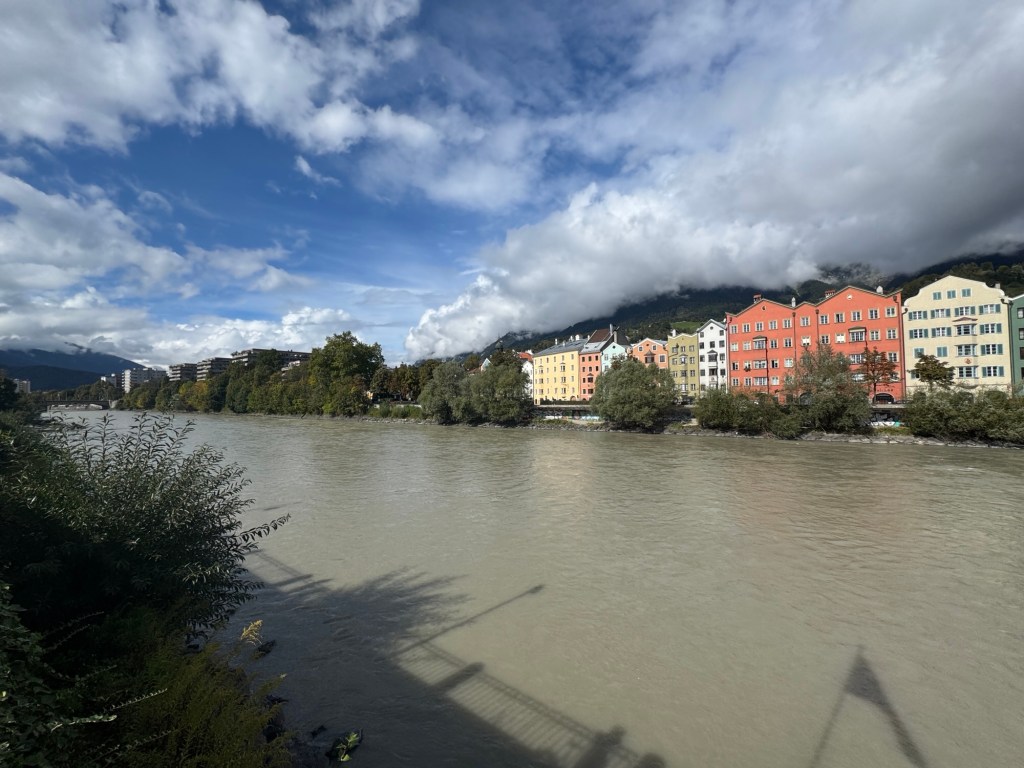
On a much lighter note, we took another day and jumped on a 90-minute train ride to Austria. Not only did we check another country off our list (though without a cherished passport stamp), but found Innsbruck to be a charming diversion to our Munich itinerary. We started our Innsbruck day exploring and having lunch in Altstadt (old town) and wrapped up with a glass of wine on the patio of the MARKET ON THE RIVER. In between, we made our way to the Top of Innsbruck via TRAM and cable car. The ride up there and back isn’t cheap at nearly 100 Euro for two of us, but when the clouds parted, the views were incredible, and it was a nice escape to nature after a lot of city time (if it’s a particularly cloudy day, I’d consider the 100 Euro investment more carefully, for what that’s worth).


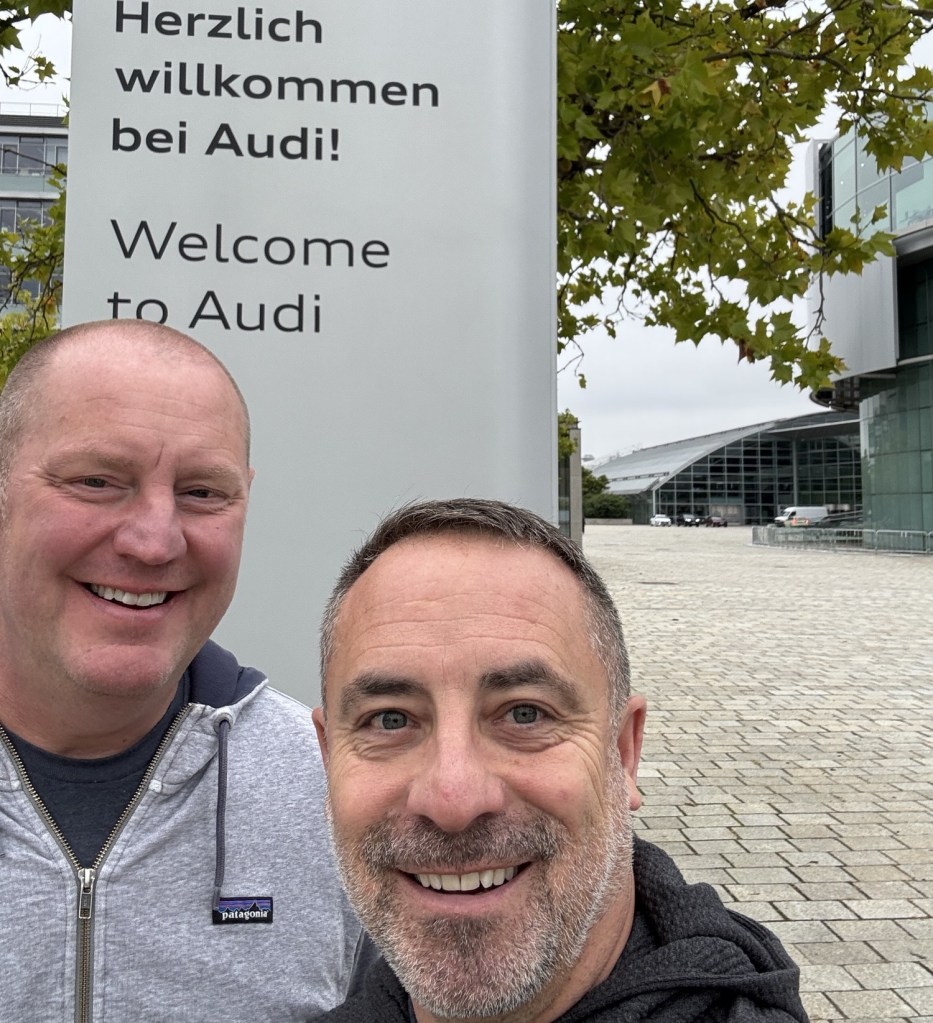
Another out-of-the-city excursion we made was to Ingolstadt to check out Audi’s factory there. BMW was my first choice for a German factory tour, but they didn’t have any available during our trip. Audi was still a good time and it was cool to see both their delivery area and get a guided walk along the factory floor. The Audi museum was closed the week we were there, so we didn’t get to check that out, nor did we take time in the town of Ingolstadt, though the city streets were charming and it seemed worth returning to see more.
If it’s auto history and factories you’re after, Stuttgart is a little further afield, but is home to both Mercedes and Porsche. I was last there about 20 years ago so the details have faded from my memory, but recall it being charming as well and the Mercedes production line was really impressive.


Eating and Drinking
Munich isn’t all about schnitzel and spätzle and pretzels … but it’s definitely about those things too. Come to think of it, that was about half of our meals in town (or more), so I guess this is the section where I try to keep it short! 😂
Some of my favorites included:
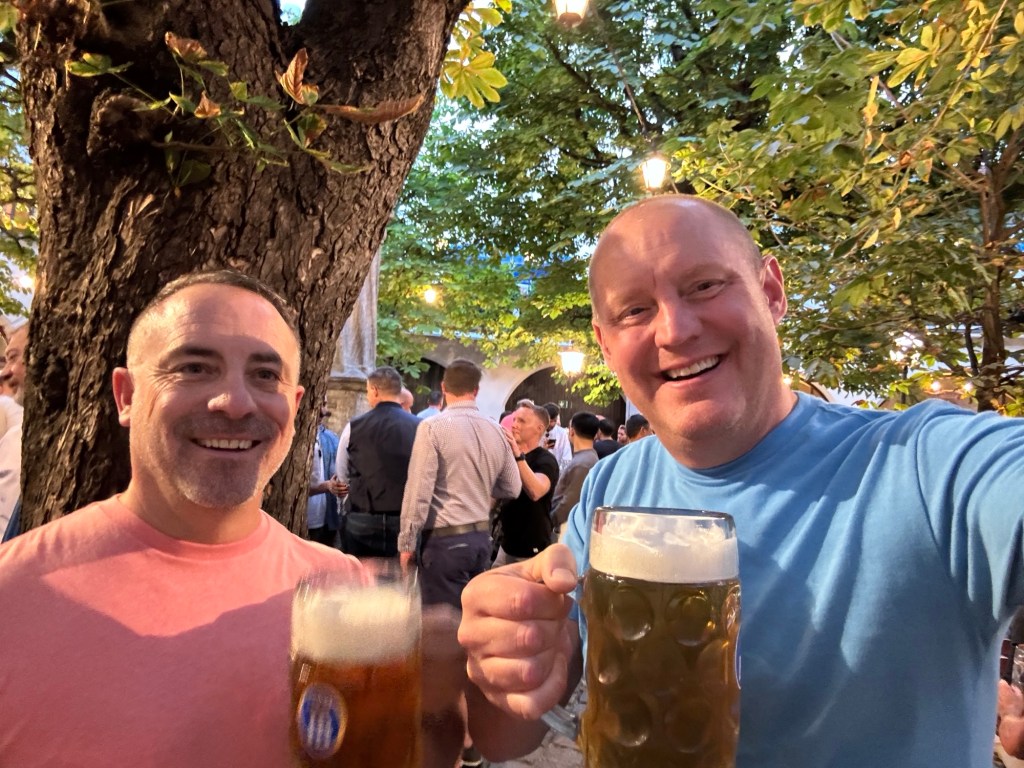
- Hofbraühaus is pretty full of tourists, but I do think they try to keep it authentic. Besides the large restaurant and beer garden in the courtyard, there’s also a fest hall upstairs and a live band keeping things lively (heads up, though: I’m not sure of the band’s frequency on non-event weeks). Their menu—beer and food—is full of all the greatest hits. We just had beers here, but there was a lot of food being eaten here and few people left much on their plates.
- Augustiner-Keller has a location across the block from Hofbraühaus. We did eat here and it was very good, including their obatzde, a typical German cheese and butter spread that’s served with pretzels, bread and veggies. Augustiner-Keller was also easier to find a table on evenings when Hofbraühaus was busy.
- Speaking of Augustiner-Keller, they have another location not too far from the Hauptbahnhof with a large outdoor beer garden and indoor beer hall. We ate here too and it was also good.
- Café Nil is bar and restaurant in the gay Glockenbachviertel area. When we were there, it looked like many folks just popped in here for an evening cocktail, though we ordered food which was good. The decor is an attraction all its own.


Besides the above mentioned foods, Bavarians are apparently known for weisswurst at breakfast (but I’m told it’s not for other meals). The one spot we had it was at the MLC pre-Oktoberfest brunch, so I can’t recommend another spot to have it, but I can confirm from practice and observation that you shouldn’t forget to peel the casing off the sausage before you eat it.
A couple areas that were on my list, but we didn’t make it to included Bahnwarter Thiel, with its bars, restaurants, and street art, and Werksviertel-Mitte, a collection of restaurants and bars in repurposed shipping containers. Next time, I guess!


Nightlife
Munich has a large gay population most visible around the Glockenbachviertel area. Interestingly, there aren’t tons of gay bars given the size of the city, but the ones that we checked out were welcoming and fun.
Prosecco Bar is the unofficial (I think) LGBTQ afterparty following Rosa Weisn and I can confirm it was busy and fun afterwards, as least as long as we lasted!
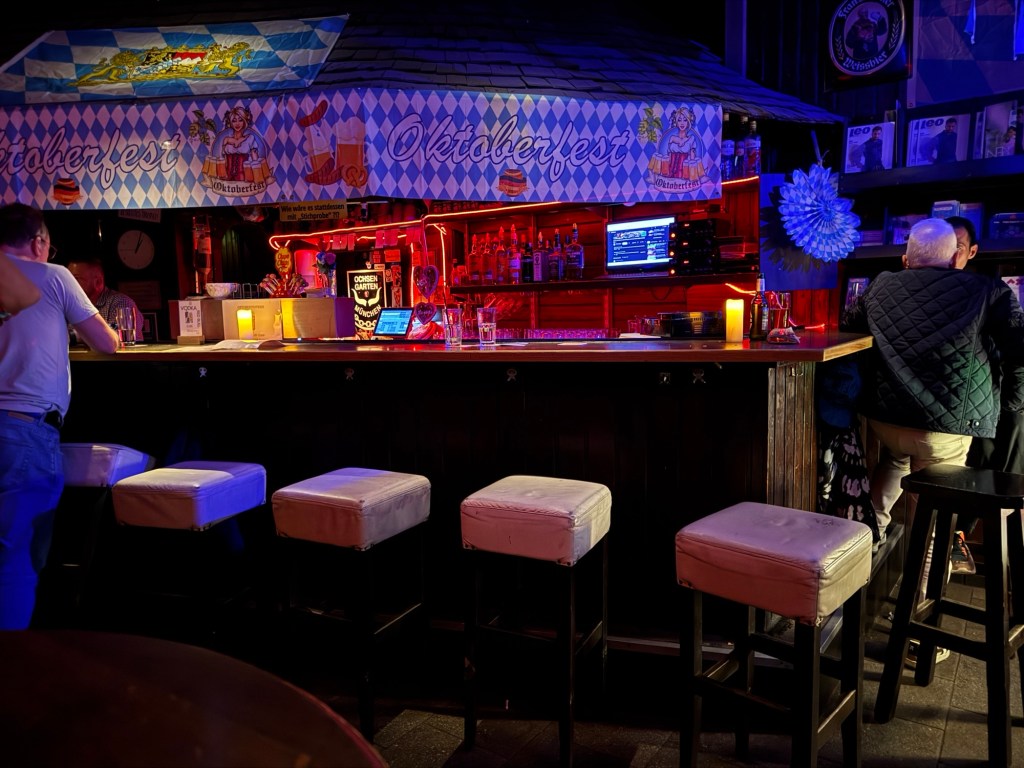
Ochsengarten had been described as a leather bar in some guides I’d read. It did seem to run a little older than, say, Prosecco, but on the couple nights we were there, it didn’t feel very leather-specific, but jeans and a t-shirt felt plenty at home (do check their page for theme nights, however). I read that the bar famously had Freddy Mercury hold impromptu birthday parties here, which seems like a good recommendation. The backroom is where all the action goes down and it has a fairly well-equipped darkroom


CAMP is a pretty typical cruising bar. They probably have a cover charge that you’ll need cash for, but that covers the cost of your first beer (and maybe other drinks, I didn’t check). After that, the bar does take credit cards. During the week (we didn’t go on the weekend) it ranged from quiet-ish to very quiet, but I can imagine it can get hopping on a weekend night.
Deutsche Eiche is a Munich spot that has been around since the 50s. It’s part hotel with a rooftop bar. Neither of those are LGBTQ-specific, but are frequented as such given the gay sauna of the same name that’s also located here.
Other bars and clubs I didn’t make it to, but found in other guides:
- Edelheiss is said to be the oldest bar in town as well as attracting an older (and/or bear) crowd. Men only.
- Bar Zur Feuerwache translates to fire stations and has been around for decades.
- Bar Rendezvous has drag shows, karaoke, and other themes through the week.
- NY Club is near the Hauptbahnhof and is the one spot in town that’s more club than bar. Check their site for rotating themes and potential advance tickets
Lodging
As with many other travel destinations, I’d recommend finding a hotel that’s in a location closest to the activities you’re most likely to do, or perhaps most likely to want to walk to easily. We stayed very close to the Hauptbahnhof, which allowed us to walk to Thieresenweisse for Oktoberfest, bars in Glockenbachviertel, and food and beer in Altstadt. Then again, we did a lot of walking, so you may be fine relying on a bit more transit to get from place to place.
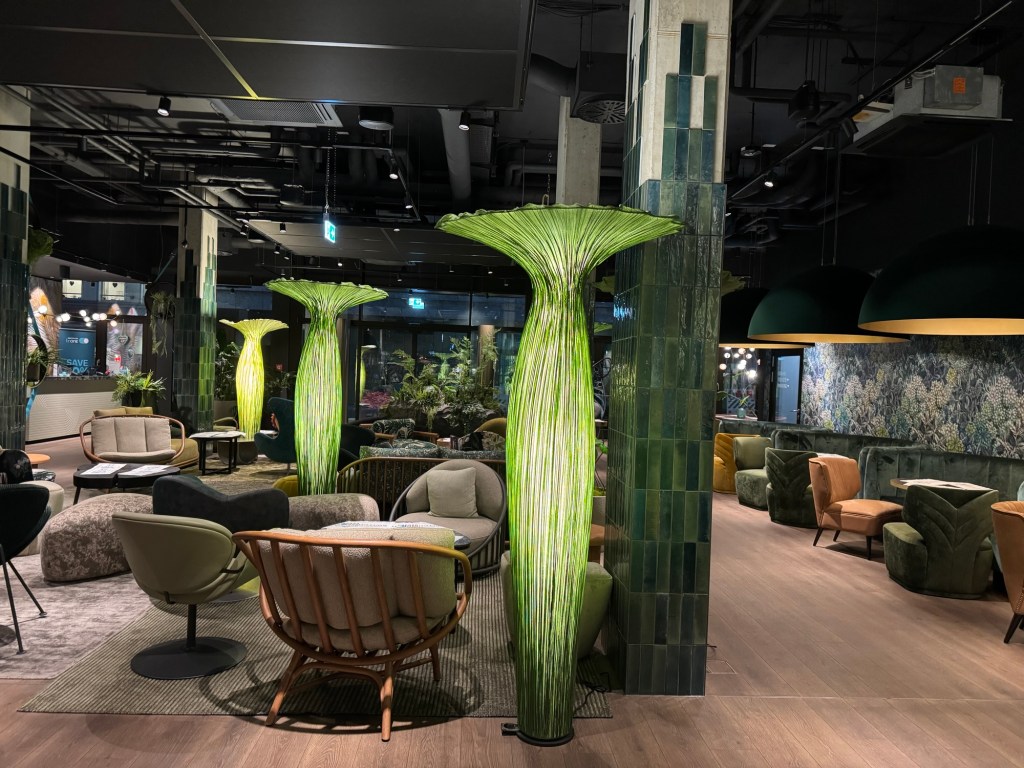
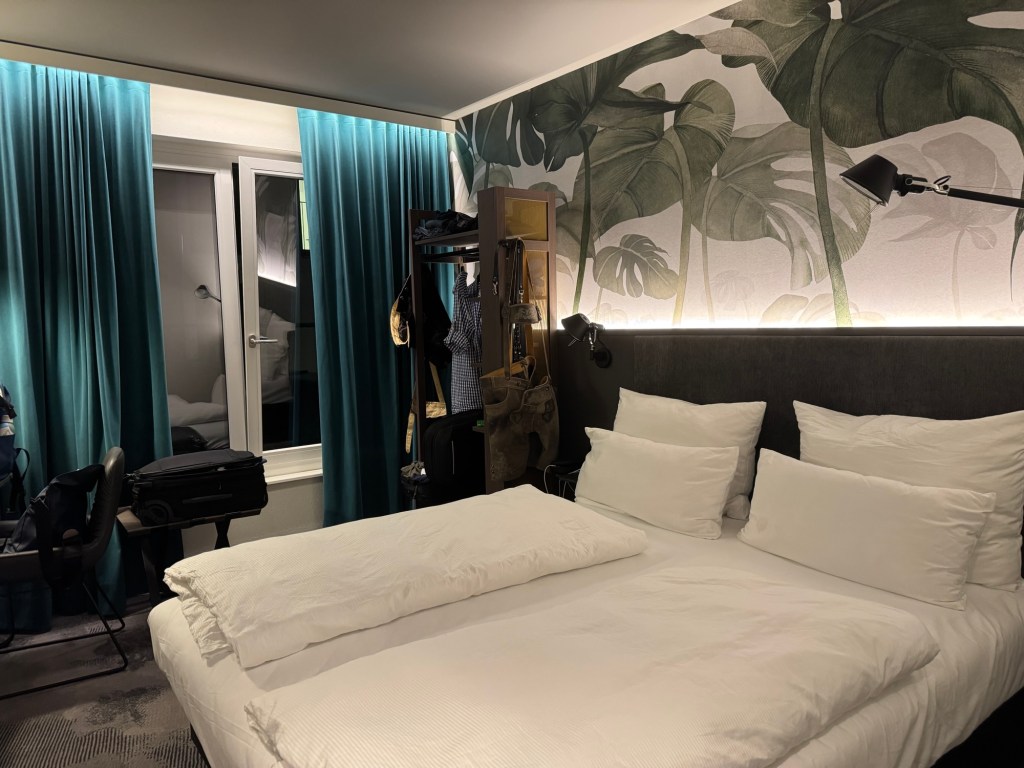
The Hauptbahnhof Motel One where we stayed was one I’d happily return to. Our room was modern and reasonably spacious and modestly priced given the timing. The lobby was fun and groovy and the staff was friendly and helpful when we were looking for information.
Other areas travelers might consider are:
- Glockenbachviertel, Munich’s gay neighborhood
- Altstadt (Old Town), near Marienplatz and the beer halls
- Maxvorstadt, further from most LGBTQ nightlife but closer museums and some other activities
- Schwabing is also further from LGBTQ nightlife, but quiet, bohemian, and walking distance to the English Garden.
 Upper Left Traveler