Calgary is a uniquely Canadian blend of urban culture, prairie soul, and mountain spirit wrapped up in a welcoming package. From the lively Pride District and Queer-inclusive hangouts to expansive parks and city-scaled festivals to nearby peaks and national parks, Calgary offers an eclectic travel mix that’s both welcoming and adventurous.
If Vancouver felt like a seaside concert, Calgary is a prairie rodeo of inclusivity—welcoming LGBTQ and other travelers (a third of Calgary’s population are immigrants, FWIW) while effortlessly blending wild landscapes with city life. Whether you’re leaning into mountain air, queer nightlife, or simply cozying up to local artistry, Calgary invites you to stay for a long weekend—and hopefully a little longer. Here’s my itinerary for four days in and around Calgary, including Pride (read about my top Pride destinations here).
A quick note: I’ve tried a different, itinerary-focused format on this post compared to other posts (but with some of my typical FYI sections at the end). Let me know what you think!
Day 1
Traveling into Calgary on your first day likely means starting at Calgary International Airport (YYC). Although renting a car isn’t essential for Downtown Calgary, it’s pretty necessary to get out of town, including nearby Banff. (Read more about the airport experience in “Getting There” below.) We arrived around 11 am on a Thursday, grabbed our wheels, and made a beeline toward Banff and Banff National Park.
Just beyond the plains of the city, the Canadian Rockies have awe in store. Banff and the park are full of stunning alpine trails, turquoise lakes, ski resorts, and quaint mountain towns. One day isn’t really enough time here, but it’s worth it to enjoy a bite-sized sample from which you can plan your next trip. We got to take advantage of Parks Canada’s free admission in Summer 2025; at other times visitors may need to buy a pass ahead of time or upon entering the park (more HERE).
Assuming you got an early flight, you’ll get into Banff in time for a bite (or a late bite) of lunch. Drop the car at your hotel if you can, because parking elsewhere in Banff can be tricky, then head to Banff Ave Brewing Co. and snag a spot on their second-floor deck to grab a burger and poutine. Wash it down with a Black Pil schwarzbier (or the suds of your choice) while people watching the folks on the street below and taking in the mountain views just beyond.
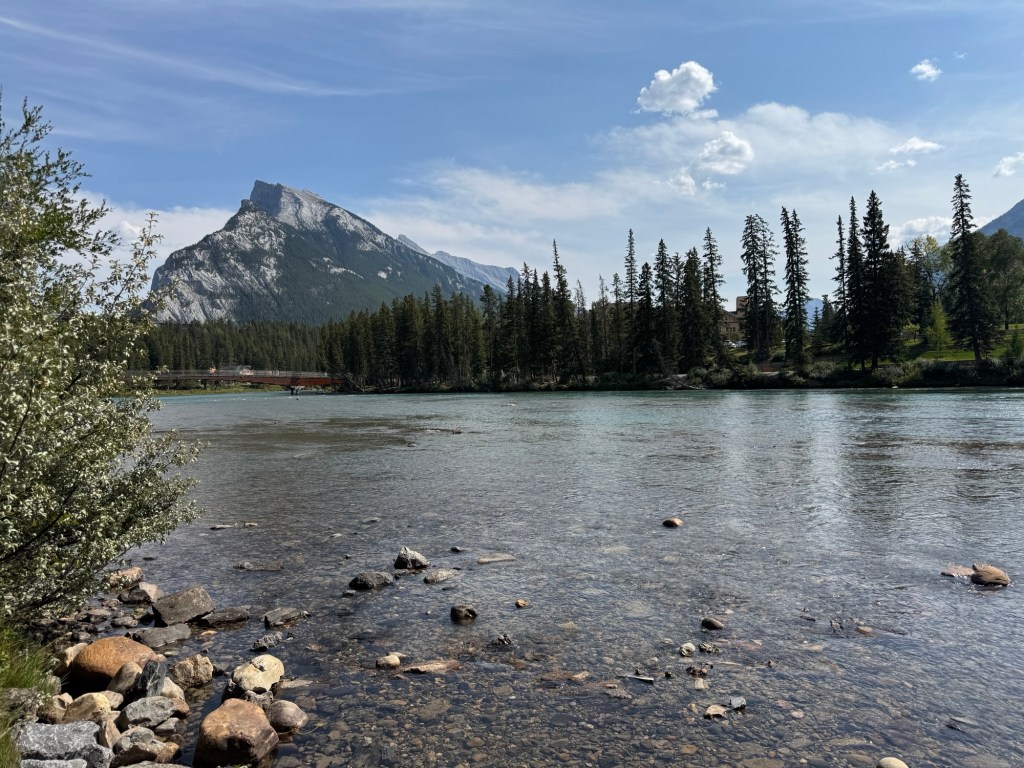
After lunch, make your way to the riverfront trail along the Bow River and take a stroll to burn off the calories from the brewery. There’s some fun art along the way, but the clear turquoise water of the river is the real treat here.
When you’ve done enough walking along the river (or around town), make your way back to Banff Avenue and head up the stairs to the Elk & Oarsman restaurant and bar. You could get a seat on the second floor balcony, but it’s even better to head up another couple floors to the rooftop deck. Rest your legs for a few minutes here while you enjoy a drink and/or a snack before check-in time at your hotel.
We checked into the Banff Caribou Lodge, one of a number of hotels by Banff Lodging Co., a regular supporter of Banff’s pride events. The staff was super friendly and the room was comfortable, if a little dated (good luck finding convenient plugs for your electronic devices). Oh, and the hotel includes passes the city’s bus with the room, which was handy. The Moxy Hotel Banff would also be a good—and more modern—choice, but was significantly more expensive when we were there.
After checking in to the hotel and changing into jeans for the evening (even in summer, it cools off significantly when the sun sets), we headed out to dinner at Three Bears Brewing. This was our best find in town and I’d especially recommend heading there for their food—especially the pizza—whether you’re a beer drinker or not (we sat at the bar and got to watch the bartender making some amazing cocktails which I’d totally recommend).
After dinner, you could take the opportunity to explore more of downtown Banff, or just head to the hotel to rest up for the next day. Of note, Banff is as lively in the summer as I imagine it is during ski season, but it does quiet down on the early side, so don’t plan for much after 8 or 10pm.


Day 2
Lake Louise might be the crown jewel of Banff National Park (though certainly not the only jewel), but if you haven’t made reservations for transit to the lake, you’ll either need to leave early—before dawn—or take your chances on parking being available when you arrive. There are an endless variety of shuttles you can get reservations on, many of which also include nearby Moraine Lake which doesn’t allow private vehicles at all, but parking anywhere near the lakes is limited and during the summer, fills up very early. We arrived by about 9:00am and were turned away on our first try. We did a loop past the Fairmount Hotel and back and luckily a few spaces had opened up. Your results may vary. If you are lucky enough to get parking, make note of your license plate number to enter at the pay kiosk where you’ll ante up nearly $40 CDN for the privilege.
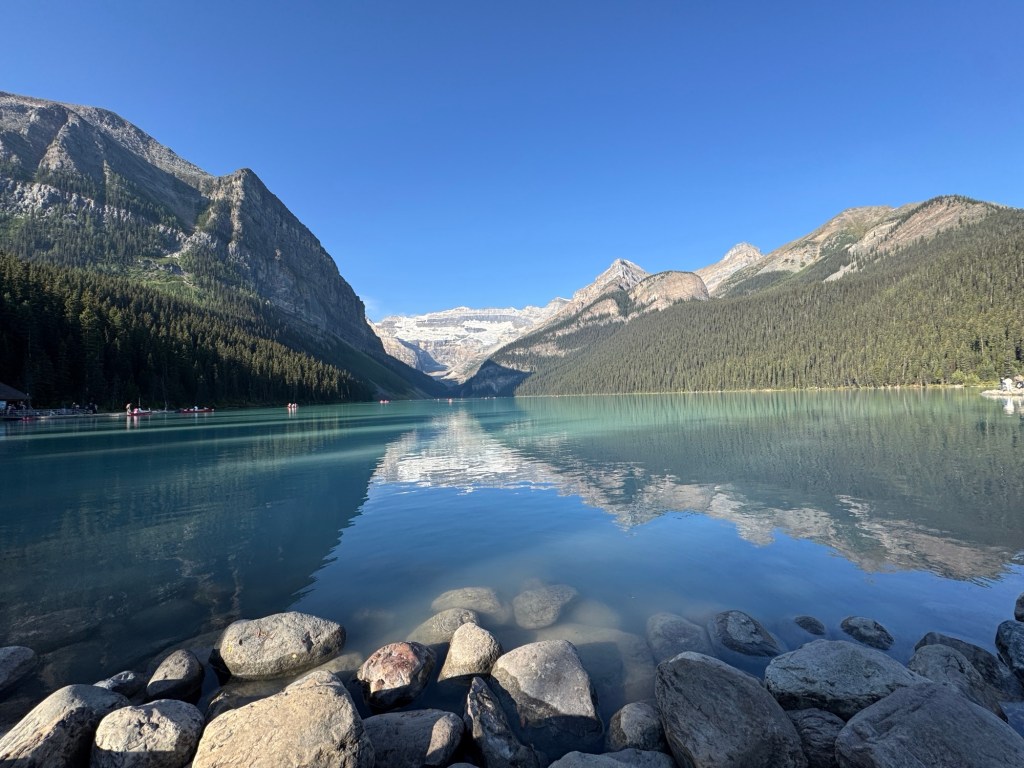
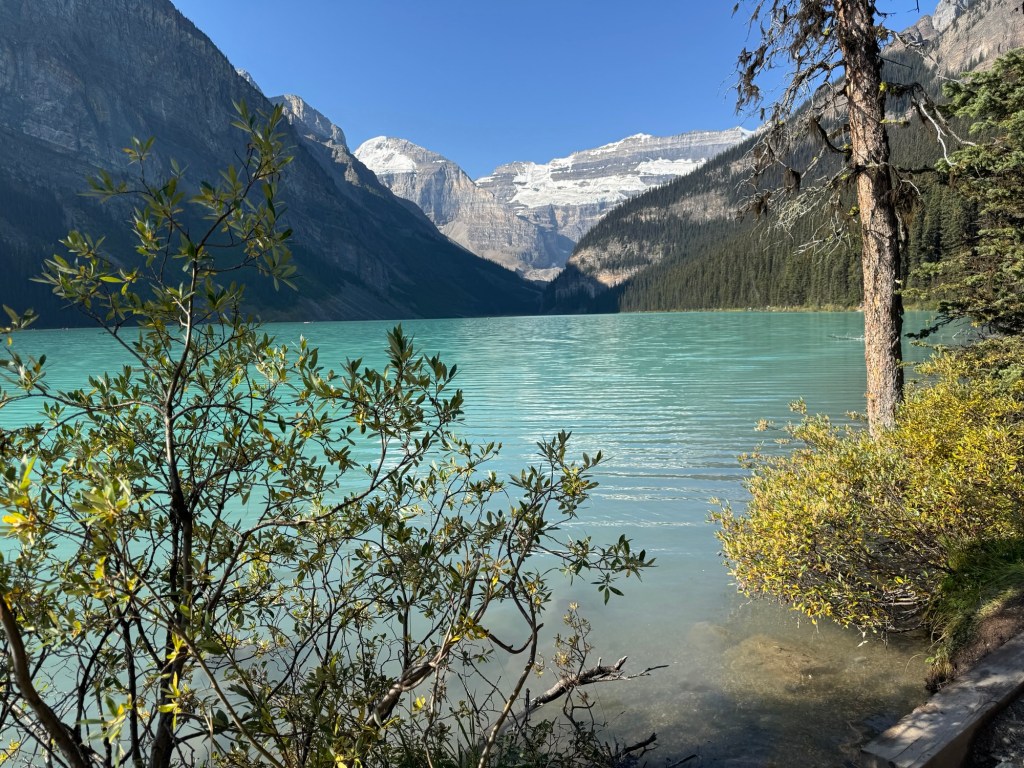
The lake is beautiful and the glacial rock flour that gives the lake its turquoise color makes it a site to behold. But if you didn’t gather from the parking scenario described above, a few thousand other folks will also be here to get a glimpse and take a dozen selfies. That shouldn’t deter you, just don’t expect solitude. To get away from some of the people, make your way up the trails. Depending on how much energy you’ve got (and ideally if you brought lunch and extra water), there are a couple other lakes and the Beehive is supposed to have great views. We only made it up a ways for the peekaboo view through the trees, which was still beautiful.

Once you’re done with the lake, the hikes, and the breathtaking views, jump back in your rental car to head back to Calgary for the rest of your weekend…
We dropped our rental car back at the airport. For us, it was cheaper and easier to skip the hotel parking fees use ride shares and Bird scooters around downtown Calgary. That included heading out for a late lunch. On the advice of a waiter from our most recent trip to Vancouver (he lived in Calgary before moving to Vancouver), we checked out IKUZA Izakaya & Tokyo Market. The yakitori was good, but the sushi and ramen were delicious (and the $8.50 lunch special on the ramen made it a great deal too). From there, we walked around a bit of the Bridgeland neighborhood and past Shiki Menya (also recommended by the Vancouver waiter as “hipster ramen”).
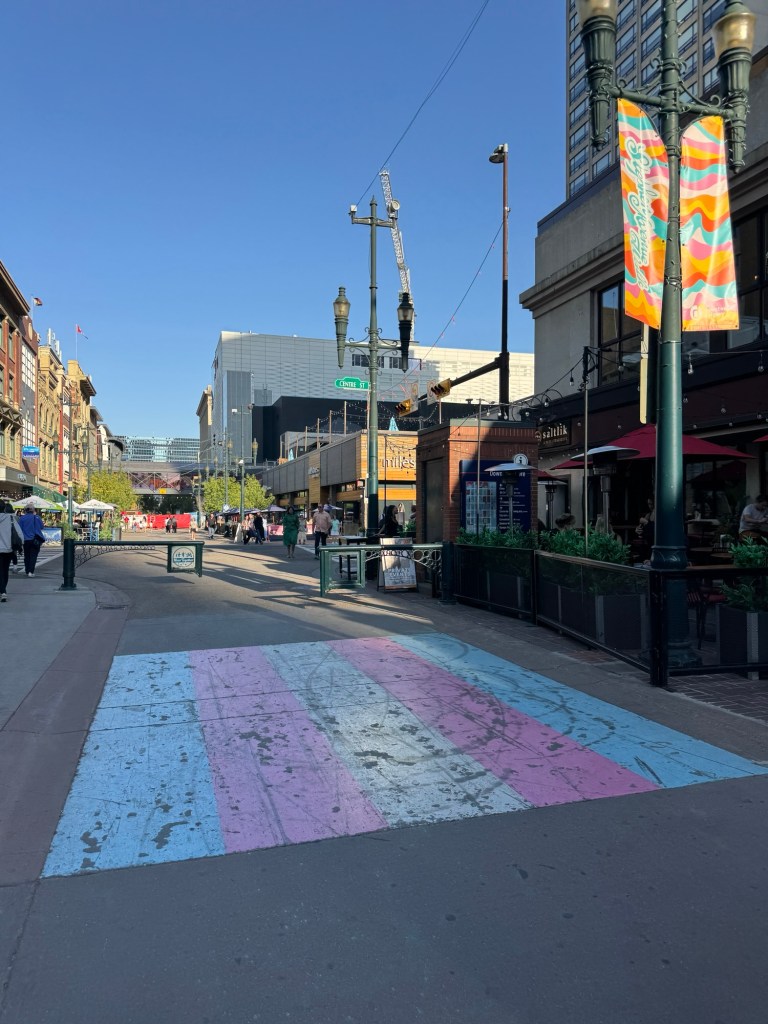
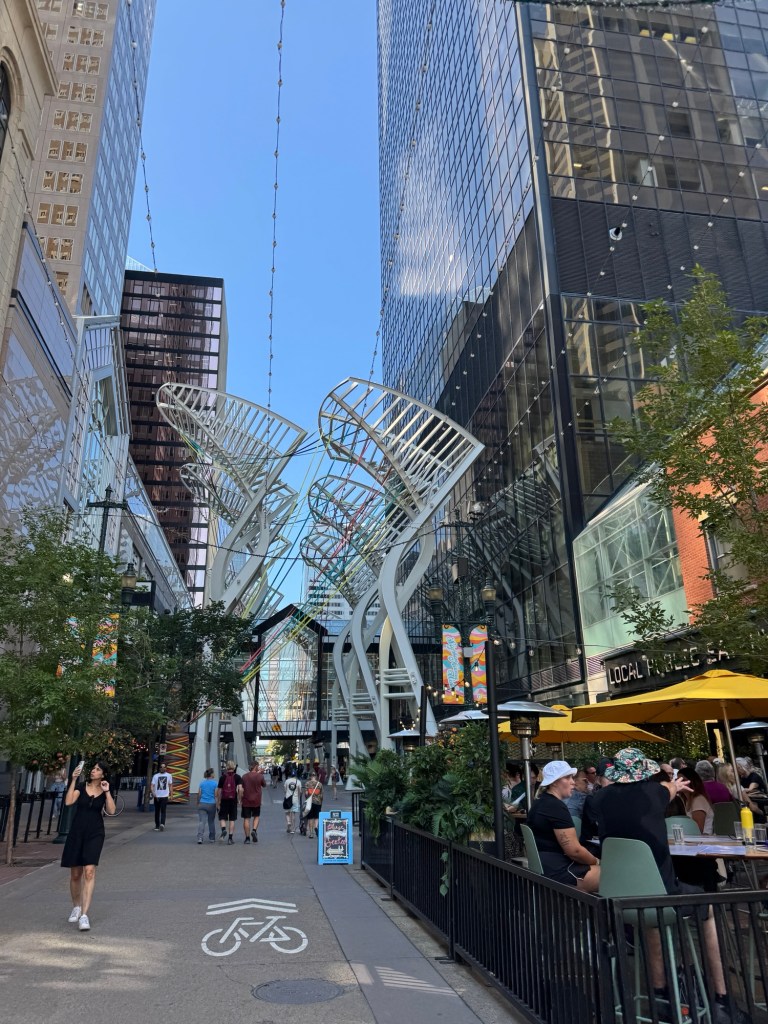
After lunch, we made our way to the pedestrian-only Stephen Street and grabbed happy hour on Bank & Baron’s outdoor patio. In addition to great service and good happy hour deals, the people watching along the street was also a treat. If the weather isn’t conducive to outdoor dining, the converted bank building provides a fun scene inside.
From Stephen Street, it was an easy walk back to the Hilton Garden Inn where we were staying so we could rest our feet for a bit before venturing back out for some Calgary nightlife. More on our hotel and other options is in the Lodging section below.
Calgary doesn’t necessarily have a lot of LGBTQ-specific bars or clubs (check out Day 3 for those), but there are quite a few venues that host LBGTQ nights. We were there during Calgary’s Pride, so there were more than usual, but WERK and Detour (plus a couple others) host and list events at a few spots in downtown. We had tickets for a WERK dance party at The Palace Theatre, which was fun.
Day 3
After a night out dancing (and unfortunately, a little work we needed to tackle), we got a late start on Saturday but made up for it heading out for an early lunch. While we’d done all of Day 2 on foot and on scooters, lunch was on the far side of downtown, so we headed to Calgary Transit’s light rail line and took advantage of the TD Free Fare Zone.
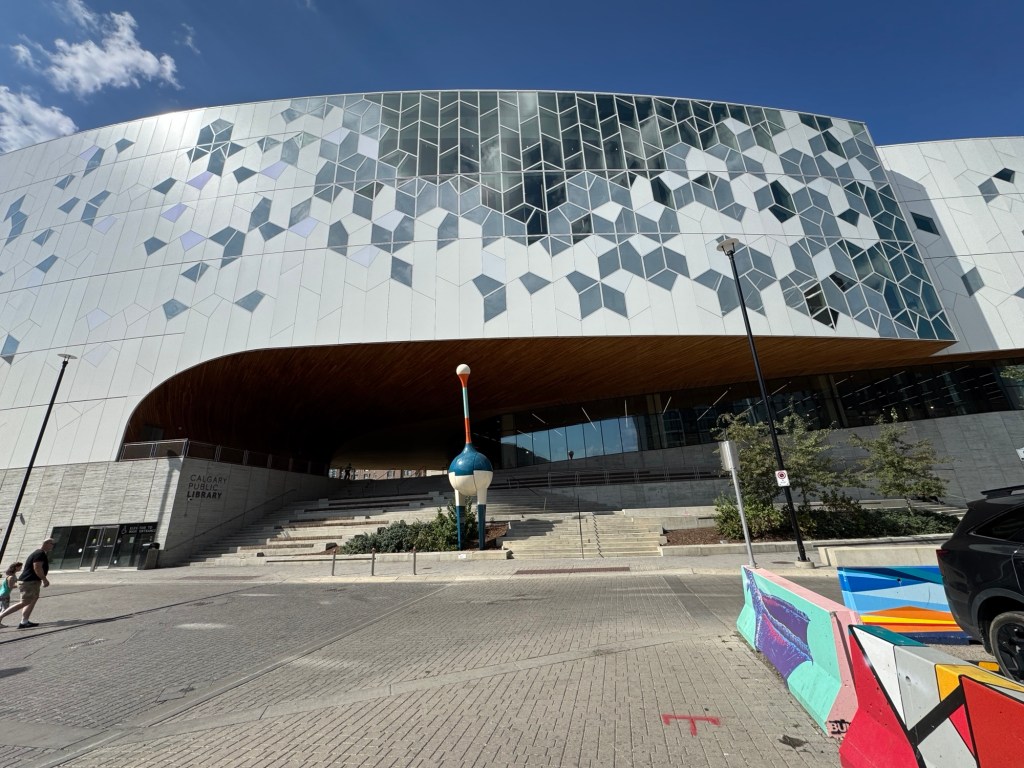
Fortunately, the journey’s half the fun. On the way, we checked out the Calgary’s New Central Library, with its fun public art and striking architecture (and rail tunnel which runs through the ground floor), then made our way past The Bow. The Bow’s height (it was Calgary’s tallest building until 2016) and curved facade makes it an easily-recognizable part of Calgary’s skyline, but the sculptures by Jaume Plensa at the entry plaza—particularly “Wonderland” at the south entry—are really the highlight. Folks who have been to Chicago will know the artist from his Crown Fountain reflecting pool and video sculpture in Millenium Park.
But we were hungry, so we jumped on the train to the other end of the free fare zone, then walked a few blocks to Myhre’s Deli. Myhre’s shares an entry vestibule (and staff) with Galaxie Diner next door, so we initially went into the wrong restaurant, but quickly rectified that error and ordered up a tray of delicious smoked meat sandwiches and poutine. #ProTip: order small—their portions are bigger than they look.


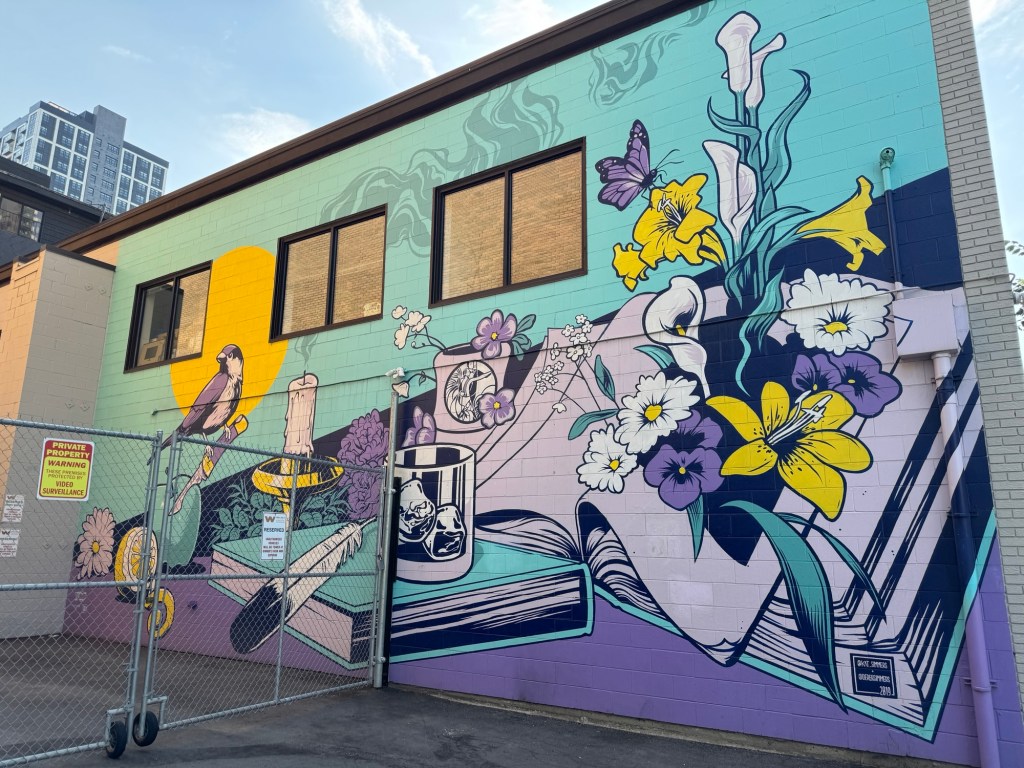
After lunch, we walked off a little bit of our smoked meat en route to part of The Red Mile, a stretch of 17th Avenue, with shops, restaurants, bars and street art—and a lot of Calgary Flames paraphernalia (keep this in mind if you’re visiting during hockey season). We grabbed a patio seat at Trolley 5’s brewpub for a couple happy hour beers, which were good if not remarkable (the service was also unremarkable, but might have been a one-off experience).
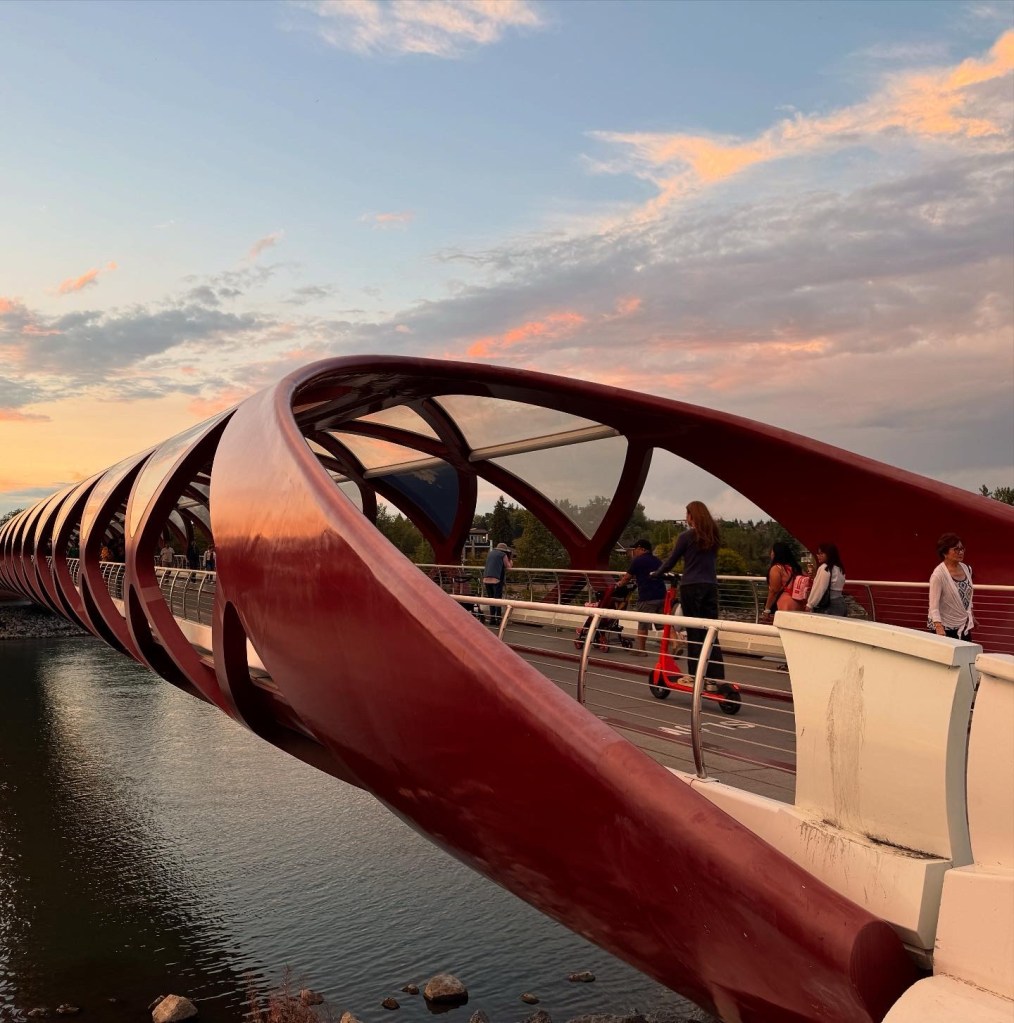
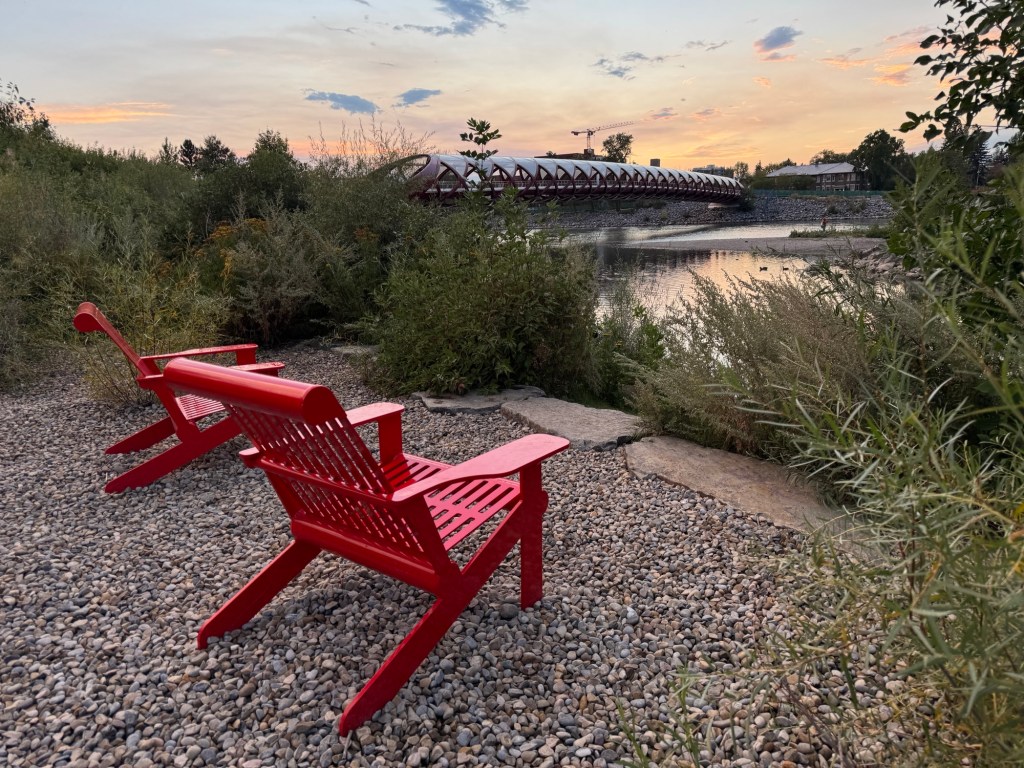
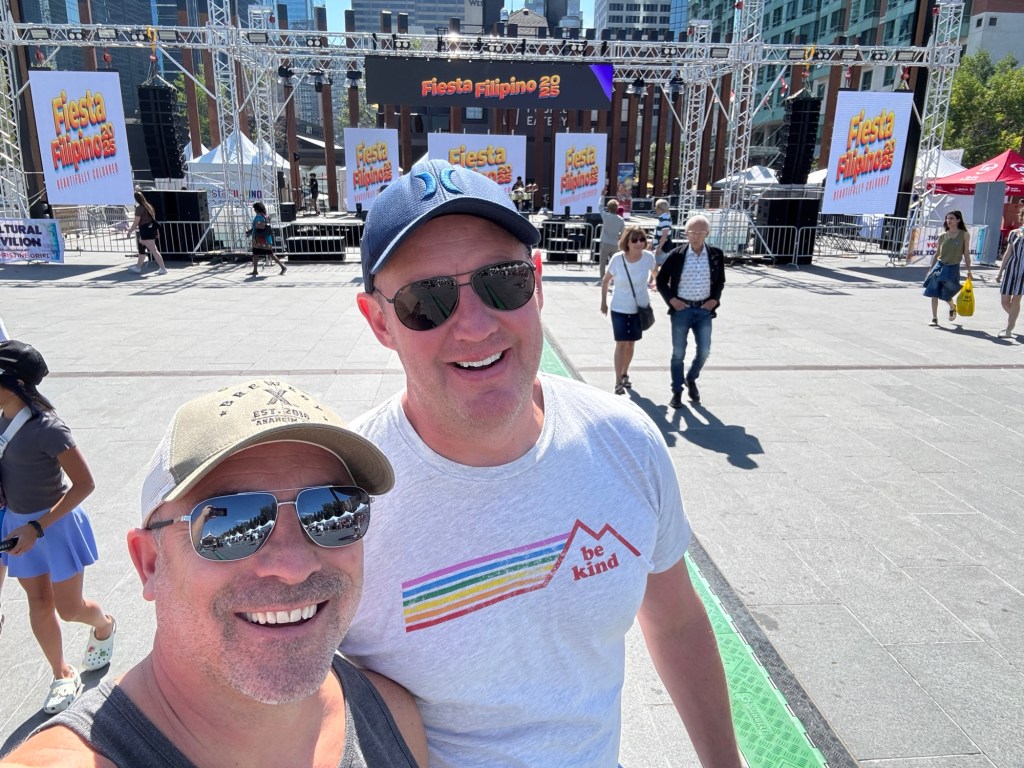
Since we were in Calgary for Pride weekend, we departed Trolley 5 for the festival in Prince’s Island Park. En route, we also checked out Fiesta Filipino in nearby Eau Claire Park. Whether or not there’s an event in either park the area is a beautiful place to check out. In particular, a walk (or bike or scooter ride) along the riverfront path is a great way to take the Calgary’s mix of nature and city, and the Calatrava-designed Peace Bridge is a Calgary Icon as well as a fun sight for architecture and design fans.
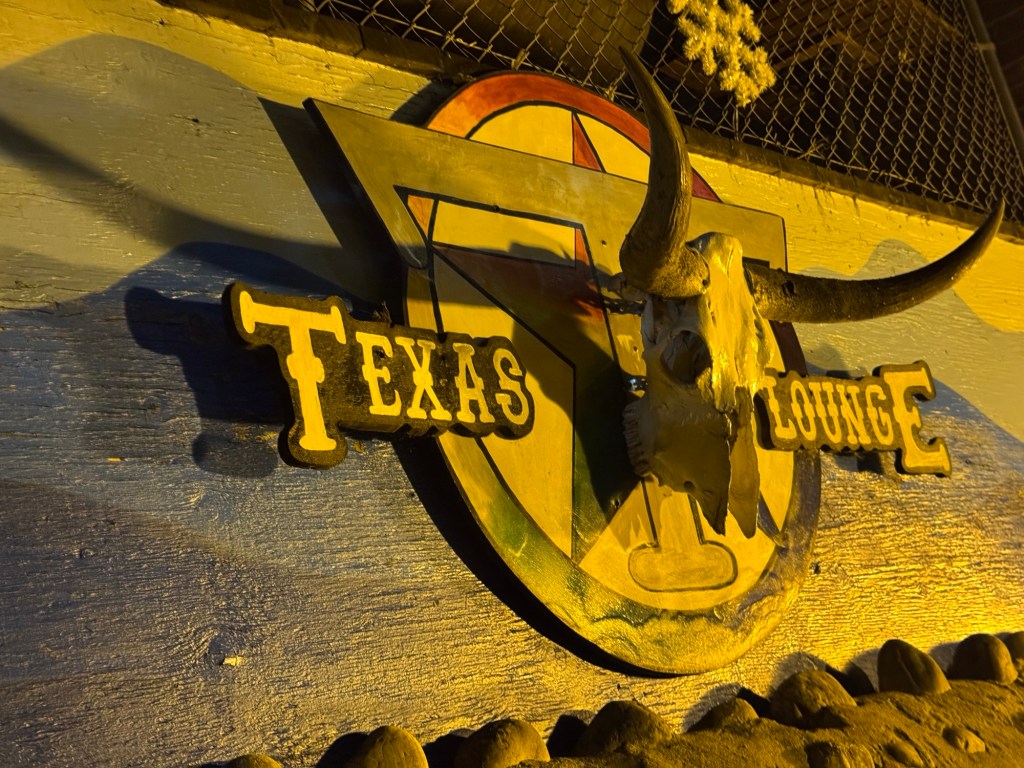
After a return to our hotel to freshen up and change outfits, we wrapped up Saturday night at Texas Lounge, one of a couple of LGBTQ-specific venues in Calgary (their entrance is on the right when you descend the steps; Goliath’s Saunatel bath house on the right would be a very different experience!). Saturday was karaoke night at Texas Lounge, and even without a crowd, this small dive bar which some refer to as “The Bunker” fills up quickly. I’m no singer, but the vibe was unpretentious and the staff was fun and efficient.
Twisted Element (or just Twisted) is Calgary’s LGBTQ club. We didn’t visit, but from the feedback of locals, you’ll have to take your chances whether you’ll catch a largely queer crowd here or be surrounded by bachelorette parties. I didn’t verify after folks I talked to suggested that the rotating parties, such as WERK and Detour were preferred by most.

Day 4
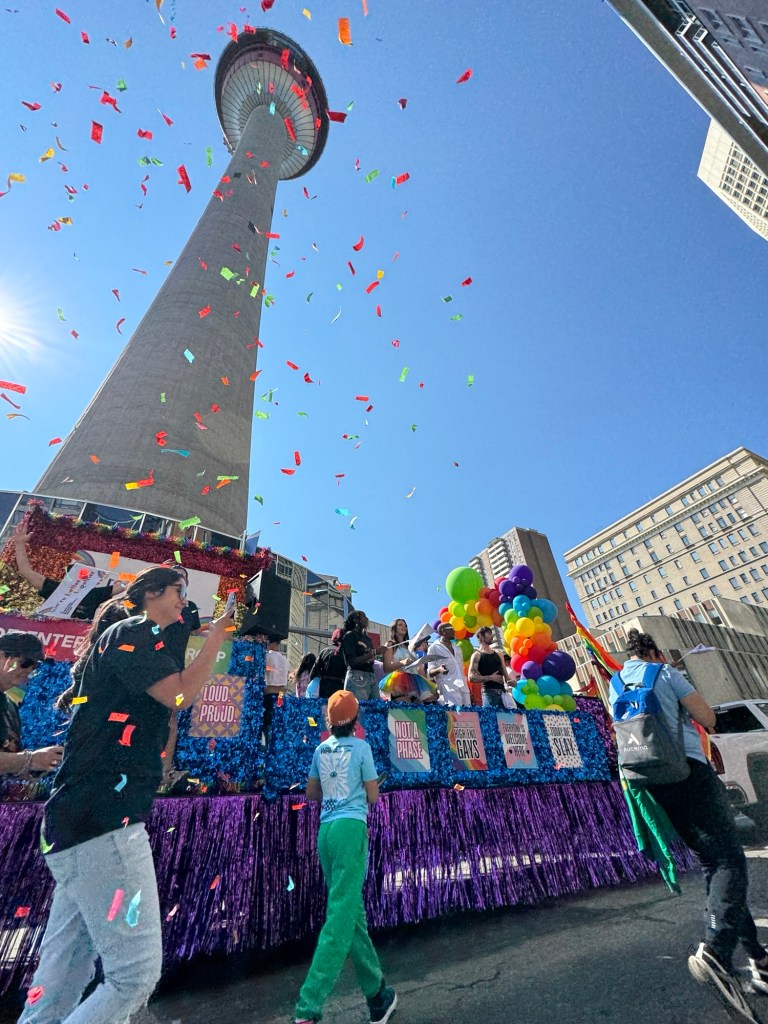
Sunday was Calgary’s Pride parade, so we caught some of that before heading to Stephen Street for some brunch at Local Public Eatery. Brunch was decent, but the patio’s post-pride vibe was great. Lulu Bar was my other choice for brunch, but was a little further afield after the parade and didn’t have reservations open, so I decided not to chance it.
After brunch, we hopped on scooters and headed to day two of the Pride festivities in Prince’s Island Park, including vendors, food trucks, performances and more. Based on the lines, it seemed like more of a crowd than the event was planning for, so after a couple hours, we decided to venture elsewhere.

In our case, elsewhere was Ship & Anchor, a LGBTQ-friendly pub on 17th Avenue which also hosts a number of LGBTQ events (and appears to be a hot spot to cheer on the Calgary Flames, FYI). After a couple hours in the hot sun of the festival, we cooled off in the AC inside with super-friendly and attentive service; they also have a large patio (at least in the summer). Wanting to explore a bit more after we’d cooled off, we ventured to Leopold’s Tavern and filled our bellies with their special poutine of the day: mac and cheese poutine with buffalo chicken. It was a lot, but was actually really good.
On a normal week, Sunday evening might be quiet time, but for Pride weekend (and Labor Day weekend for both the U.S. and Canada), things were still hopping. We managed a short disco nap and outfit change, then headed to the Detour dance party at Commonwealth, which was busy and fun. Surely, the vibe will change depending on the event, but the space here was a little smaller than the Palace Theatre, which helped it feel a little busier and more active. Note that there are lots of stairs, so if accessibility is a concern, this may not be near as much fun.


Departure Day
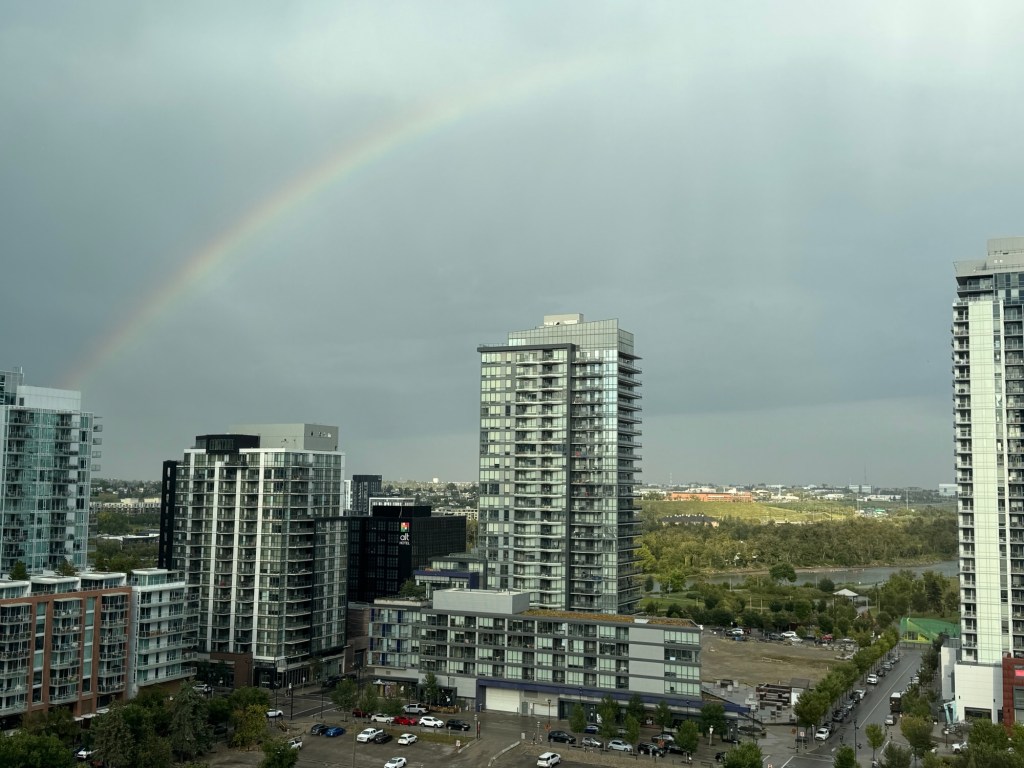
With a late-morning flight, we fueled up with coffee and caught the sunrise out our hotel’s east-facing windows before getting our ride back to Calgary International Airport. The city’s balance between urban and wilderness was a welcome close to the summer, inviting us and other queer travelers to experience both worlds—city sophistication and wild beauty. While there are dozens of other destinations on my short list, I’d love to come back, especially to spend more time outside the city exploring Banff National Park’s hiking trails, lakes, and mountains. Stay tuned for that report!
LGBTQ Safety
Sadly, as with other places in North America of late, Alberta is wrestling with advancing or reversing LGBTQ protections and freedoms. That aside, legal protections include sexual orientation, gender identity, and gender expression. Both Calgary and Banff felt safe and welcoming when I visited.
To emphasize Calgary’s welcoming spirit, the city’s Pride Week (now over Labor Day at the end of August) is full of celebrations, citywide events, and vibrant queer camaraderie. As well, the Fairy Tales Queer Film Festival (usually held in June) is a celebrated queer film fest spotlighting global LGBTQ+ stories.


Getting There
Air travelers will land at Calgary International Airport (YYC). Major U.S. carriers fly here directly from their hubs, as does Air Canada. Alternately, Calgary is WestJet’s home airport, and they have nonstop flights to and from Calgary and most major U.S. cities, plus a few European ones.
Passengers clear Canadian customs and immigration upon arrival. Not having anything to declare, I’ve always found entry into Canada (here and elsewhere) to be quick and easy. Returning to the U.S., passengers will also clear customs and immigration at Calgary airport instead of doing so after landing back in the U.S. Do allow extra time on your return; while customs was efficient for our mid-morning departure, Calgary’s security was not.
Calgary does have an express bus from the airport to downtown, but its light rail system doesn’t yet go to the airport. Alternately, taxis and ride shares are available (we learned from our driver that Uber offers much better compensation and support for their drivers here vs. Lyft, FYI).
Or, if you’re renting a car (relatively necessary to head out of town, but not as much so for downtown stays where parking will be expensive), major rental companies are located on-airport, just a crosswalk away from the terminal.


Know Before You Go
Folks from the U.S. who have spent time in Canada before (or who also read my Vancouver post) will likely be familiar with much of this, but the tips below should be helpful for first-timers and sometimes a reminder is good for the rest of us too.
Border and Entry Requirements: you’ll need a valid U.S. passport to enter Canada, but for most U.S. travelers visiting fewer than 180 days, you don’t need a visa. And remember, even though cannabis is legal in Canada, it’s not legal to bring it across the border—into or out of the country.
Money: Canada uses the Canadian dollar (CAD) and the exchange rate between CAD and U.S. Dollars has been good in recent years. Credit cards are accepted most everywhere (but it’s still a good idea to have a little cash). Check with your card issuer for foreign transaction fees, but it’s generally best to pay in CAD and get your credit card company’s exchange rate versus the rates at point-of-sale. Tipping is similar to the U.S.—15–20% is standard in restaurants. Oh, and because Canada is not the U.S., Alaska Airlines frequent flyers with their new Atmos Summit Visa will get 3 points for every dollar spent (after conversion).
Phones and Cell Service: Be sure to familiarize yourself with your cell plan before going: some U.S. phone plans may charge for roaming. But Wi-Fi is often free and available in cafes, hotels, and public spaces, which will help you stay connected even if your plan doesn’t cover you for free here. Coverage in Banff National Park is predictably spotty since it’s a wilderness area, so don’t rely on your phone for directions, especially if you’re off the beaten path.
Weather and Packing: Calgary is nearly 300 miles north of Missoula, Montana, so the city has pretty dramatic climate extremes. Add in a trip to Banff National Park, and the mountains’ elevation adds yet another element. When we were there in late-August 2025, Banff was quite warm during the day, but cooled off significantly overnight. Similarly, Calgary was hot during our days there, but one person told me that frost isn’t out of the question in other years. Pack layers, a waterproof jacket in case of thunderstorms, and check the weather forecast before you go!
Lodging
Working to balance reward points and overall cost, we stayed at the Hilton Garden Inn at the east end of downtown (a Hampton Inn shares the same building). The location was decent and was a block from the light rail’s easternmost fare free downtown station.
Other hotels more central to downtown, such as the Hotel Arts or Marriott’s new Element Hotel might be more convenient depending on your expected activities.
As with most larger cities, parking at downtown hotels can be expensive, so if you’re expecting to have a car, do pay attention to overnight parking charges or look to see if one of the less-expensive surface lots might be an option while you’re there.


 Upper Left Traveler