Madrid is a vibrant, bustling city that fully embraces the art of eating, drinking, and living well. I first visited back in 1999 and remembered absolutely loving it—something I happily re-confirmed on my most recent trip in December 2024. Whether you’re wandering through tapas bars, exploring world-class museums, or simply soaking up the street life, a weekend in Madrid (or longer) is a great opportunity to embrace a city that knows how to charm visitors year-round.
I didn’t do much of tourist Madrid when I was there during this most recent visit. That’s not to say you shouldn’t, but in my few days there, I wasn’t really in the museum mood. Plus, visiting at Christmastime, Madrid is a stunner with massive displays of Christmas lights (here’s a great clip of them), so exploring the streets and plazas seemed like the way to go.

Know Before You Go
Most Madrileños speak English well, but as with other places outside of the U.S., learning a few key phrases is helpful. Keep in mind that Spain’s Spanish can be a little different than Mexican (or other Latin American) Spanish. Things like zumo for fruit juice instead of jugo. Or buenas as a more generic greeting than buenas dias.
Madrid also hosts one of the biggest Pride festivals (if not the largest) in Europe, which even when I was there in 1999, was amazing (but it was 1999, so there are no iPhone photos, fortunately). Nightlife is also vibrant, to say the least, and runs laaaaate.
Madrid is HOT in the summer, so consider that before you book a trip in July or August. And it does get chilly in winter, with lows in the 30s (Fahrenheit; 0 degrees Celsius) when we were there in late-December.
Whether Madrid is your final destination or not, beginning in 2026, visitors from the U.S. and other countries will need a European Travel Information and Authorization System (ETIAS) approval prior to arrival in—or transit through Spain (plus Norway, Cyprus and other Schengen Zone countries). Follow the link above for more detailed info and note that you’ll need the ETIAS even if you don’t step foot outside the airport.
In addition to my experiences noted below, I found helpful tips from the Patroc Gay Travel, and Wheatless Wanderlust guides. Check them out for additional and different info.


Getting There
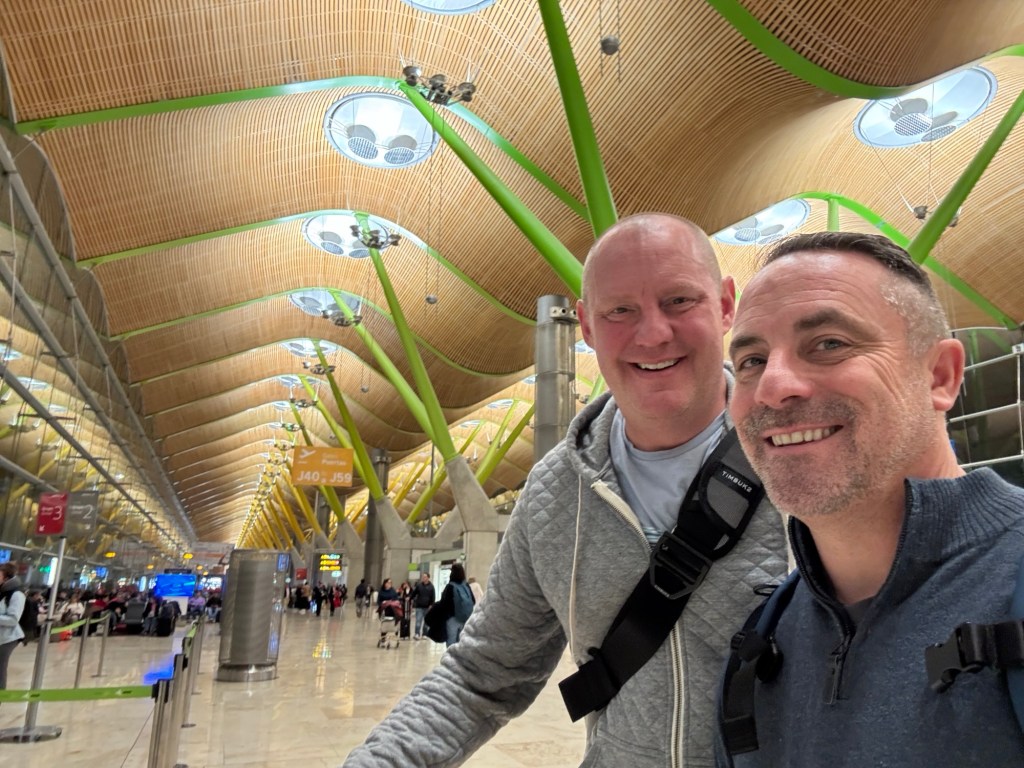
Madrid’s Barajas airport (code: MAD) is as large as you’d expect for a major European city and has lots of direct flights from the eastern U.S. (and Latin America). From the west coast of the U.S., you’ll probably end up needing to make a connection to get there. Wear comfortable shoes—it’s a long walk from one end of the terminal to the other!
Getting to the city center from the airport is mostly easy via the metro, though we did need to transfer between the airport line and the line that got us to our hotel in the Chueca neighborhood. Google Maps did a good job of pointing us in the right direction, but give yourself a moment for the transfer, as many of the stations are large and have many platforms and getting between the platforms and lines can be a little complex.
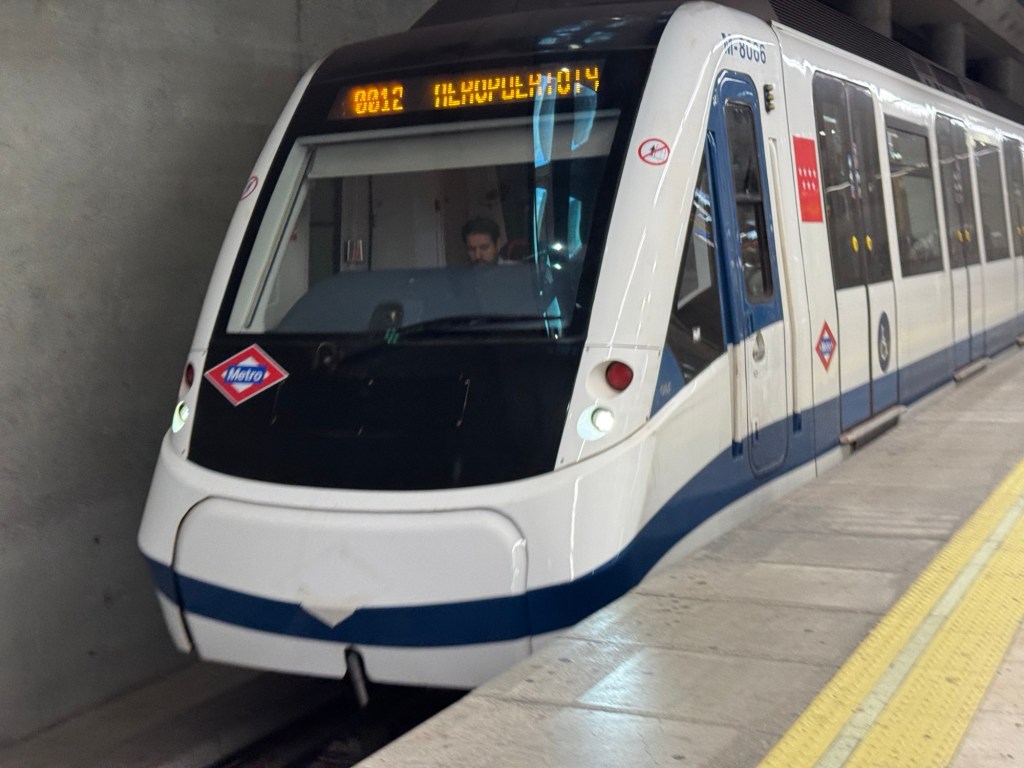

As for fares, you can’t simply tap your credit card at the fare gate to pay. You’ll need to purchase a fare card at the airport (or wherever your journey begins) before boarding and load it with one to 10 trips, depending on how much you think you’ll use. You’ll also need to pay an additional airport fee when departing or arriving at the airport station. Regardless of how many trips you purchase, hold onto your fare card so you can re-load it if needed; otherwise you’ll need to pay again for a new card for future trips. Two people can use a single card, however. Just be sure to tap the card before each person enters the fare gates.
When we departed Madrid, it was on the AVE high-speed train. The station is easily accessible by Metro. While it’s not necessary to get to the train station as early as one would for a flight, do give yourself extra time. The area of the station for Metro trains is separated from the inter-city trains by a several minute walk (a few more minutes if you don’t know where you’re going), and you’ll need to clear security before getting to your train’s boarding area. Train security isn’t as involved as airport security, but it’ll still take a moment.
LGBTQ Safety
Madrid is one of the most LGBTQ-friendly cities in Europe and is widely recognized for its inclusive and welcoming atmosphere. It welcomes 3+ million LGBTQ tourists annually and a is reported to have a population of around 500,000 LGBTQ residents. The Chueca neighborhood, the heart of the city’s queer community, is filled with LGBTQ-owned bars, shops, and cafés, and hosts Madrid Pride (Orgullo)—one of the largest and most vibrant Pride celebrations in the world. It was fun in 2019 and I’m sure it’s even more so now.
LGBTQ travelers will generally feel safe and supported in Madrid, with strong legal protections and widespread social acceptance. As with any major city, it’s smart to stay aware in crowded areas and at night as some reports of physical or verbal aggression have increased recently (link in Spanish), but overall, Madrid is a safe and affirming destination for queer travelers.
Sightseeing Highlights
As I noted above, when we went in December 2024, we didn’t hit many of the “greatest hits” sites, as one might call them. Madrid’s more common sites for visitors are full of art, history, and other culture, and are surely worth checking out. They just weren’t our agenda, so check out other guides for those (links above in Know Before You Go).

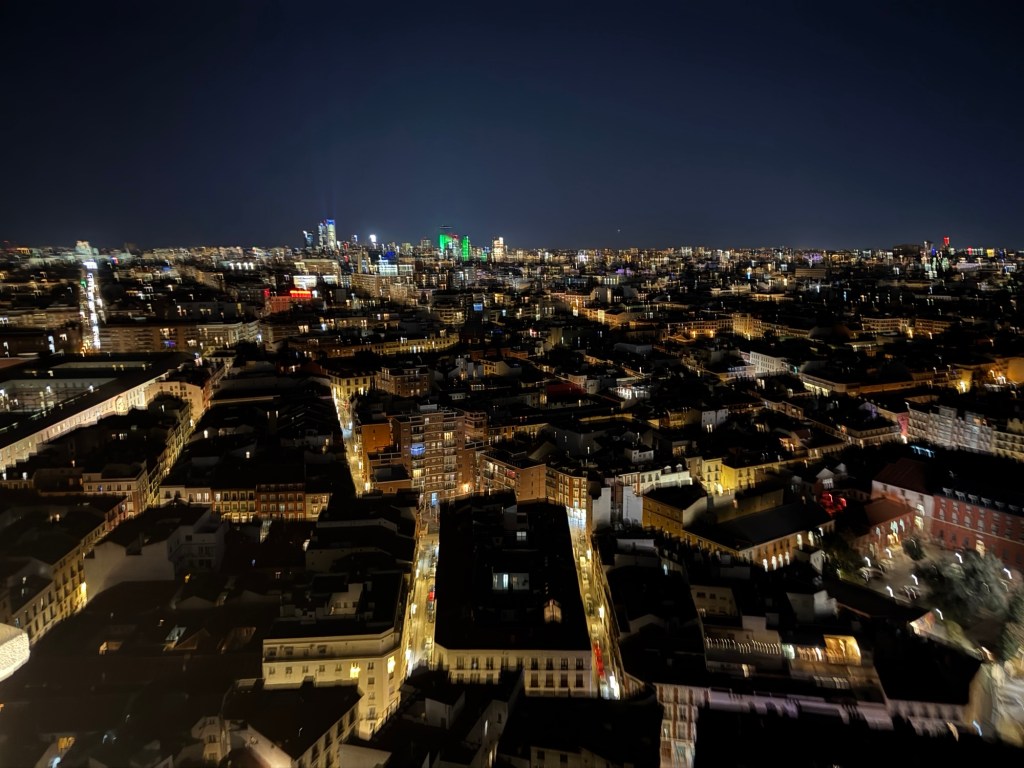

What we did do a LOT of was walk, eat, drink, walk some more, and take in Madrid’s views to rest our feet!
First off, the more I travel, the more I’m aware that food halls are my jam. They’re great spots to check out all kinds of food (and beverage) and are typically great spots for people watching and Madrid is no exception. While Oslo arguably has my favorite food hall, Madrid has more food halls than I recall anywhere else (and very good ones!), including:
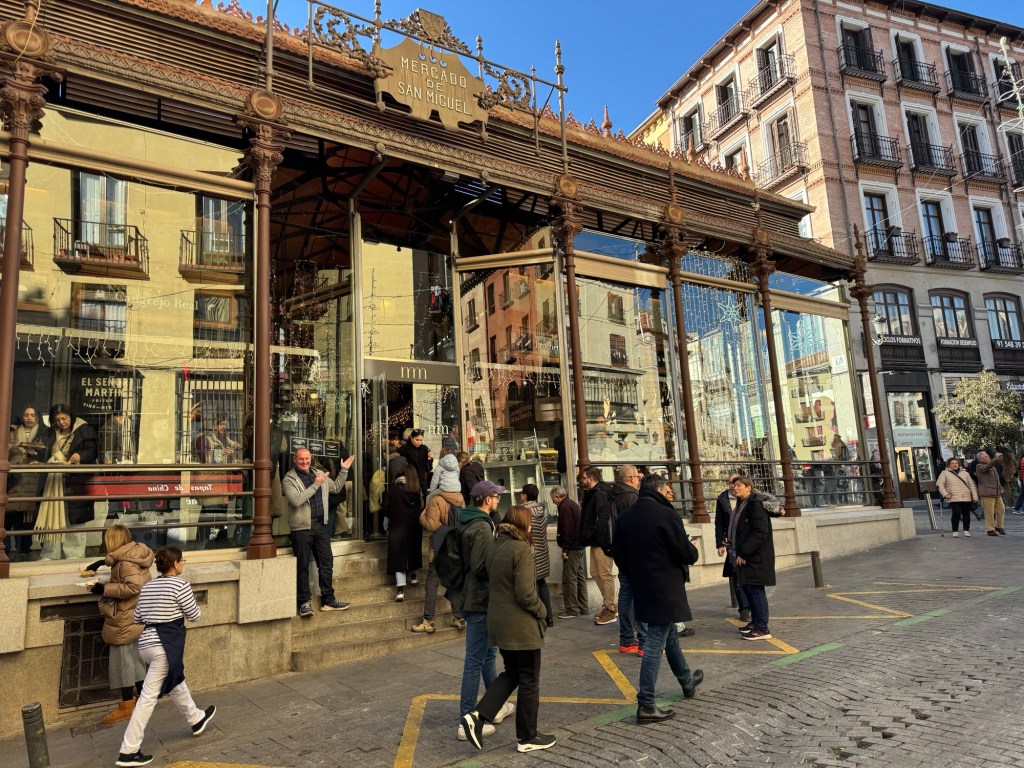
- Mercado de San Miguel, probably my favorite in Madrid. It’s in a beautiful 1916 steel and glass building near Plaza Mayor and was bursting with nearly every kind of delicious food and beverage you could imagine. It gets busy (like: really busy—welcoming 7 million visitors a year, they say), so finding a seat may be challenging and you’ll need to be a bit assertive to make your way through the halls and to the vendors’ counters. #ProTip: save your receipt. You’ll need to show it to avoid paying if you need to use the restroom, located on the downstairs level.
- Mercado Anton Martin has two floors of food vendors, places to eat, and other shops at the edge of the Cortes neighborhood. Downtstairs, there are primarily butchers and produce vendors, whereas the spots to sit and eat are generally upstairs. More shops are outside along the pedestrian street adjacent to the market. We were there early in the afternoon and it wasn’t crowded, but I imagine it gets much busier as the day goes on.
- Mercado de San Fernando in Lavapies definitely has less pretense than the others, both inside and out, with a decidedly international flair. I suspect this would be a great place to come to find the ingredients not easily available elsewhere. We were still full from Mercado Anton Martin when we passed through here, so we didn’t eat, but there’s a bounty of places to sit and eat food from around the globe.
- Mercado San Antón at the edge of Chueca is where we started our exploration. It’s smaller (at least in quantity of vendors) than the ones above with primarily vendors of prepared food—mostly with a focus on culinary adventure or fusion styles. But there is a grocery on the lower level if you need more basics.
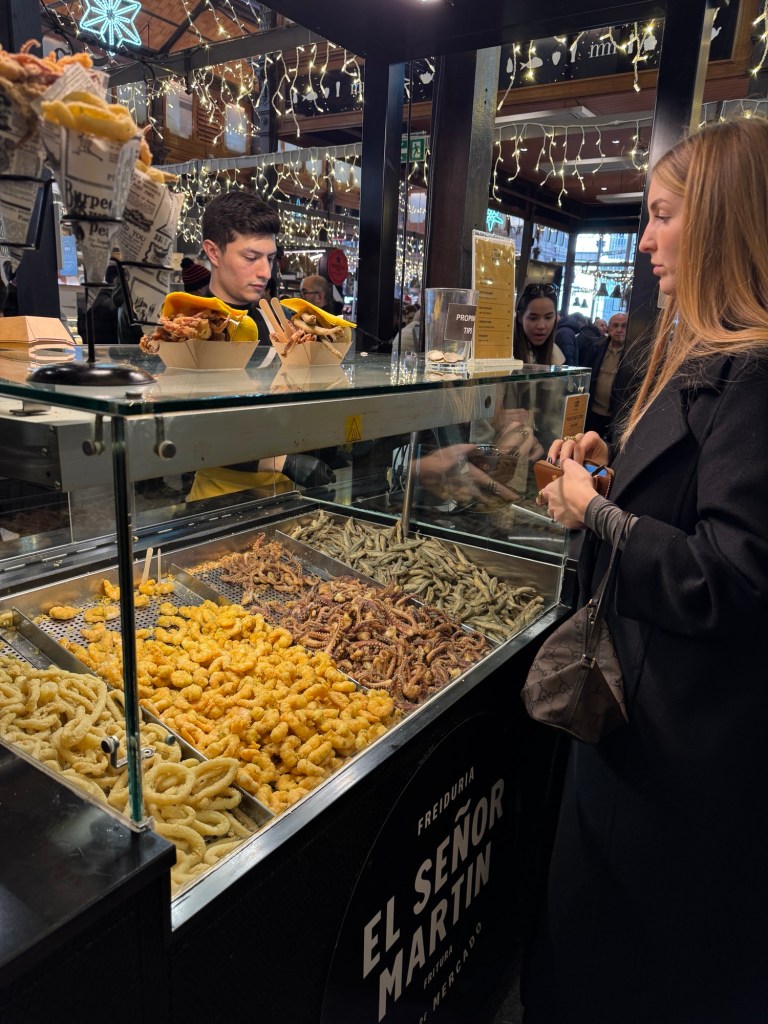
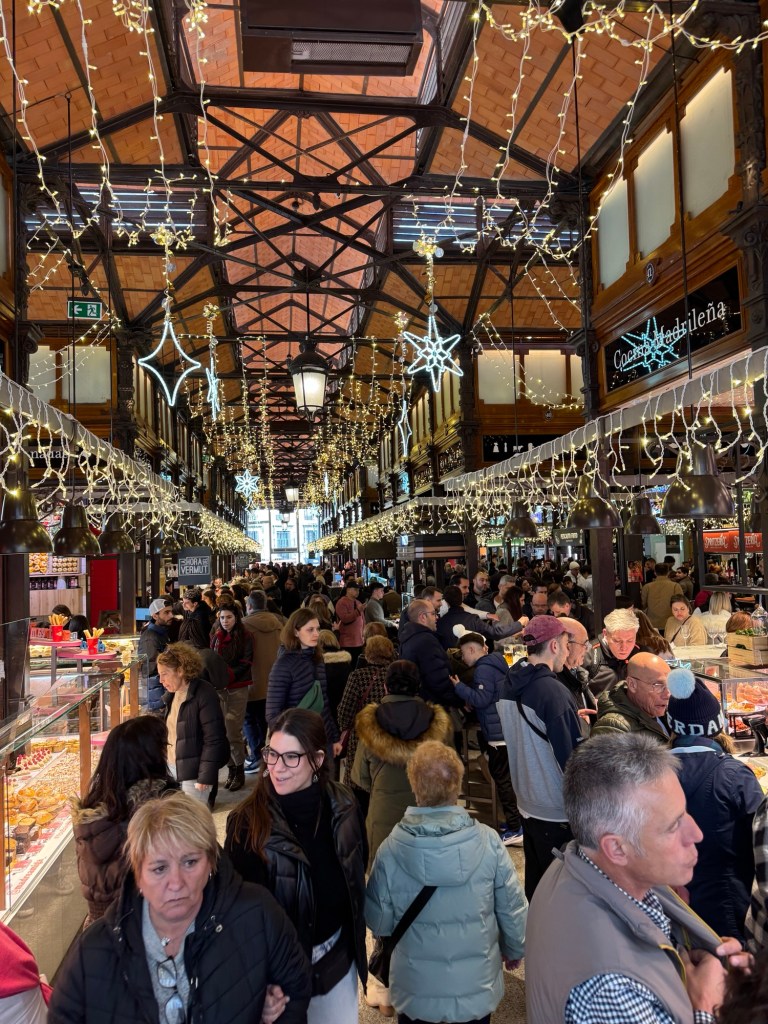
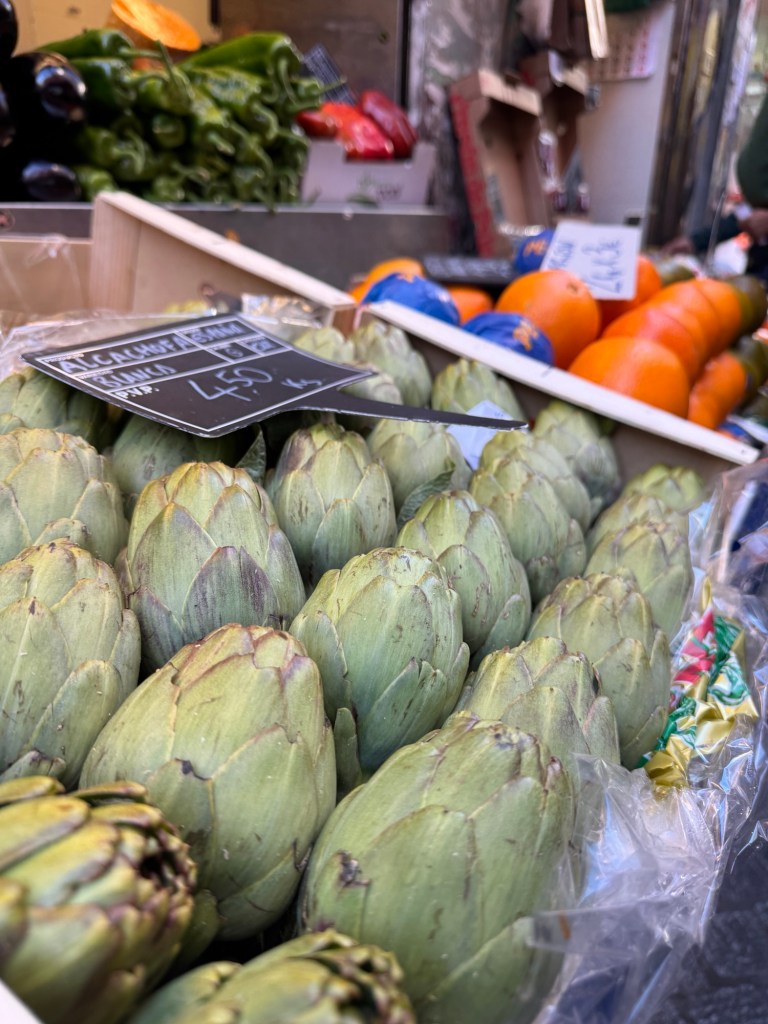

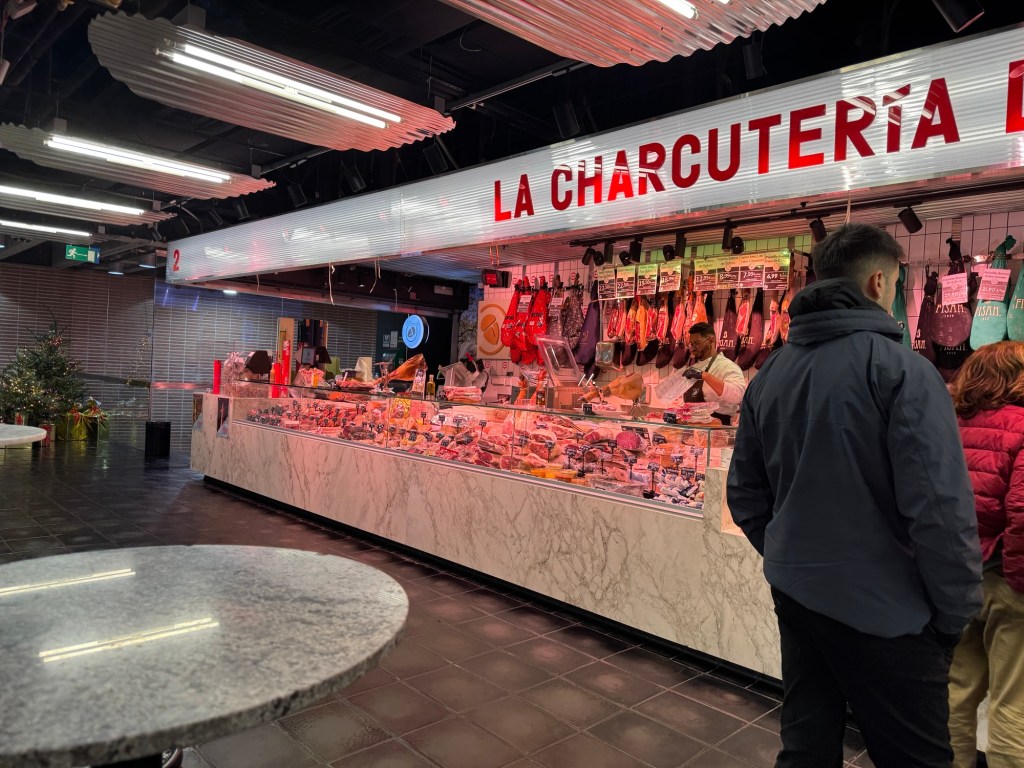
Besides all the food halls and markets, we found some great spots to rest our feet (and have a glass of wine, of course) with remarkable views of Madrid.
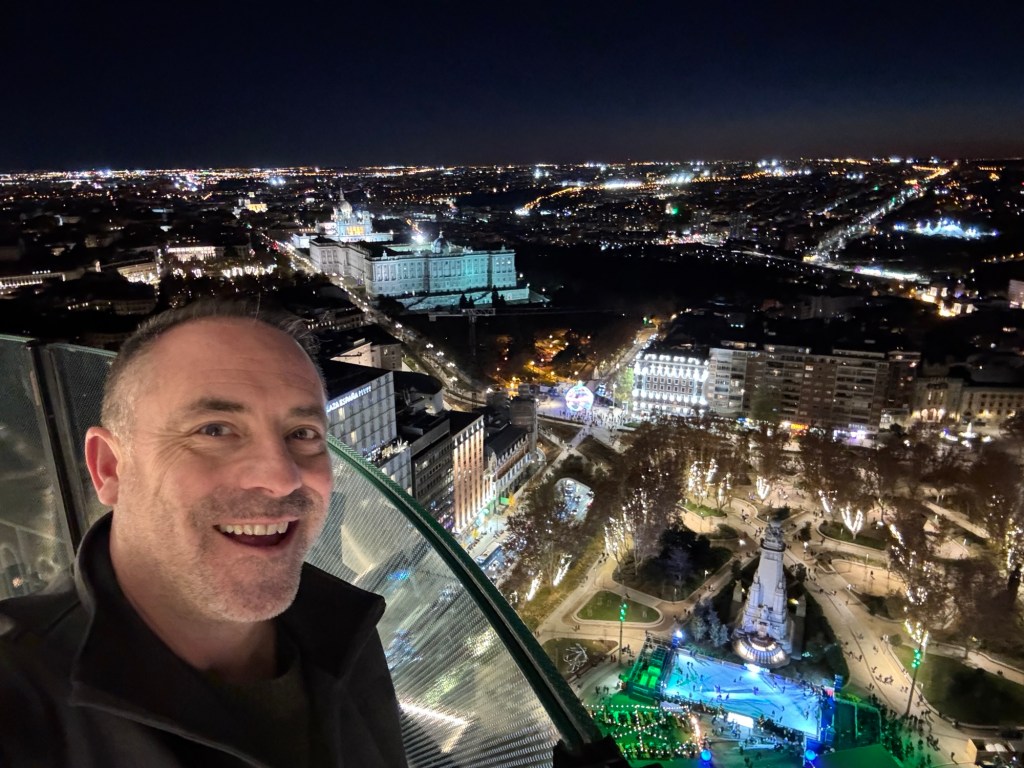
- El Corte Inglés, the biggest department store group in Europe, has two locations just blocks from each other. One of them has a great rooftop food market. Guess which one we went to first? Yup. Not that one (ha!). To be fair, both locations have lovely top-floor places to relax and get some food and beverage. But El Corte Inglés Callao is more formal and only has views if you have one of the few tables near a window. El Corte Inglés Gran Vía, however, has the “Gourmet Experience” food hall, and has panoramic views of the city, which are particularly stunning at sunset (evidenced by the photo at the top of this post).
- The Riu Hotel rooftop is a totally different experience with its outdoor bar on the 26th floor. While they’ll only serve you while you’re at the bar or a table, guests can walk around the rooftop area (including the glass floor area looking down 26 floors to the street level) or queue up for a panoramic photo overlooking the Plaza de España. Note that, unless you’re staying in the hotel, the entrance for the rooftop is at the rear of the building, there’s a fee (varies depending on time of day), and there may be a line. And then there’s another waiting list to get a table once you make it to the 26th floor. I still thought it was worth doing it at least once for the views. You only live once, right?


All of our walking around Madrid did include at least a few of the more typical tourist spots though.
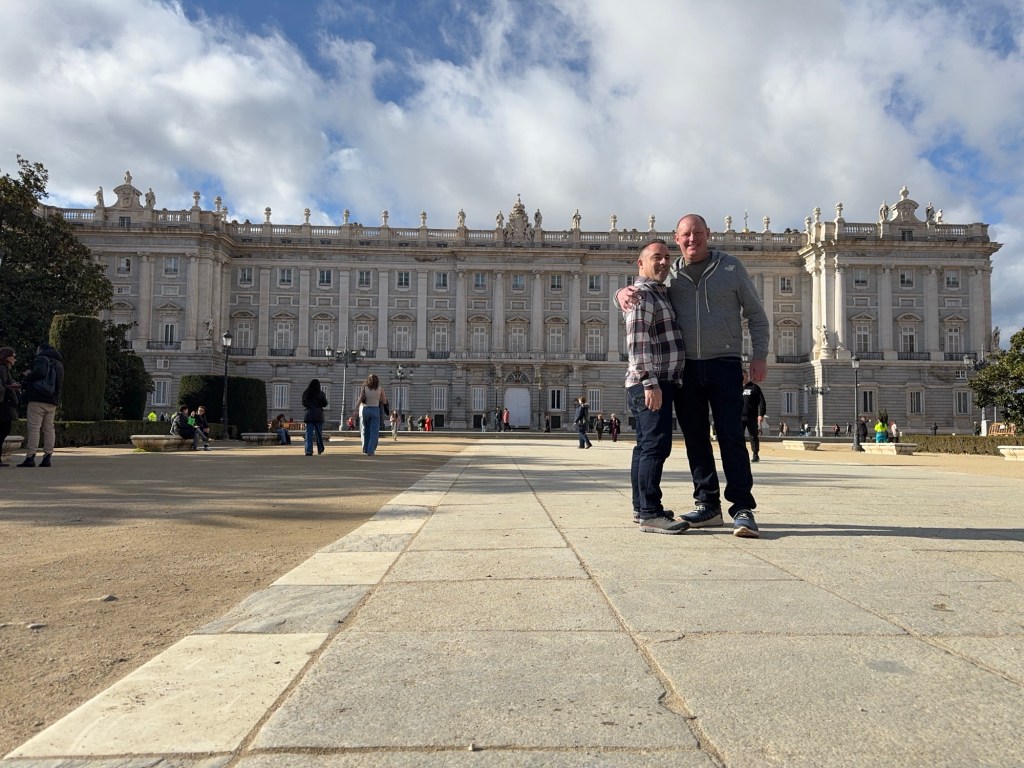
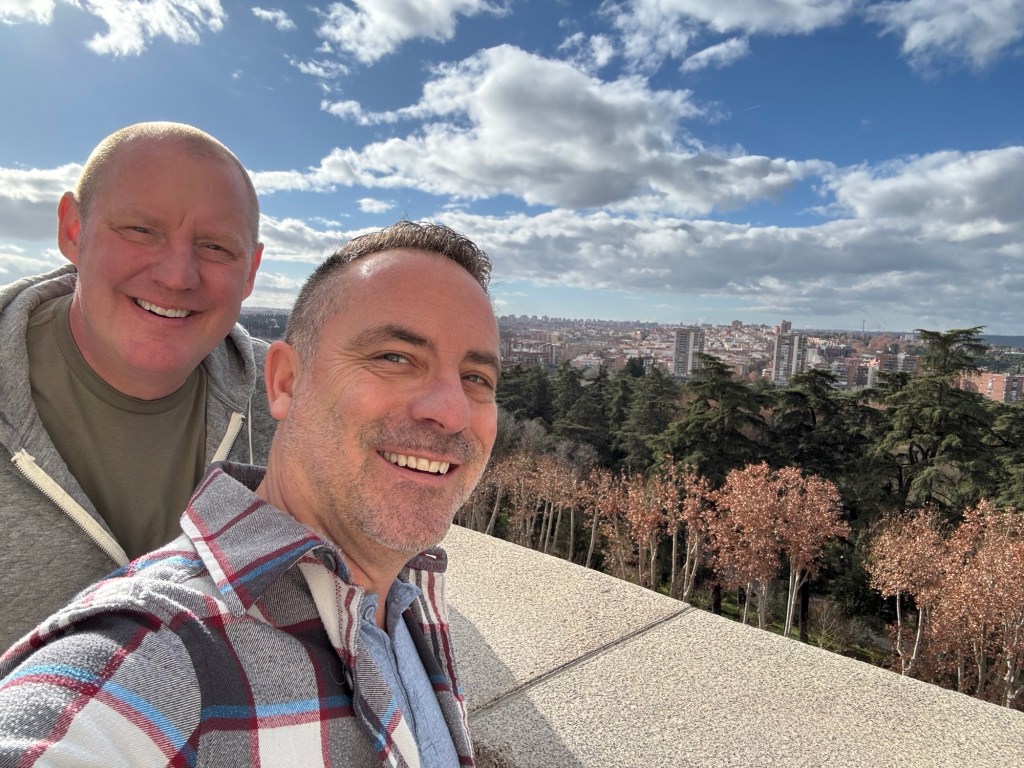
- The Palacio Real also has great views of much of Madrid. While we didn’t go inside, the grounds and plazas are beautiful. Be sure to walk through the courtyard between the Palacio and the Cathedral to catch the views of the Latina neighborhood and further out.
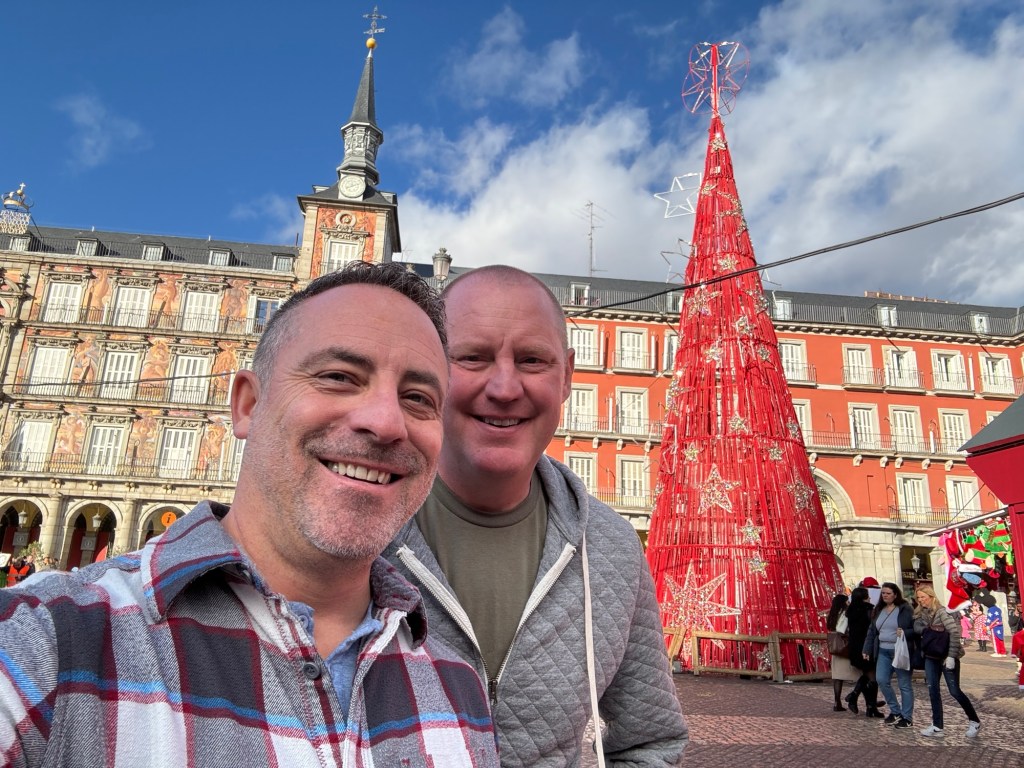
- Not too far from Palacio Real is Plaza Mayor, which is regularly filled with entertainers (permitted and not) and at Christmastime, a small market. As evidenced by the signs on the balconies of the apartments surrounding the Plaza, there are lots of vendors and entertainers who aren’t operating with permission, so I’d advise supporting only the official ones.
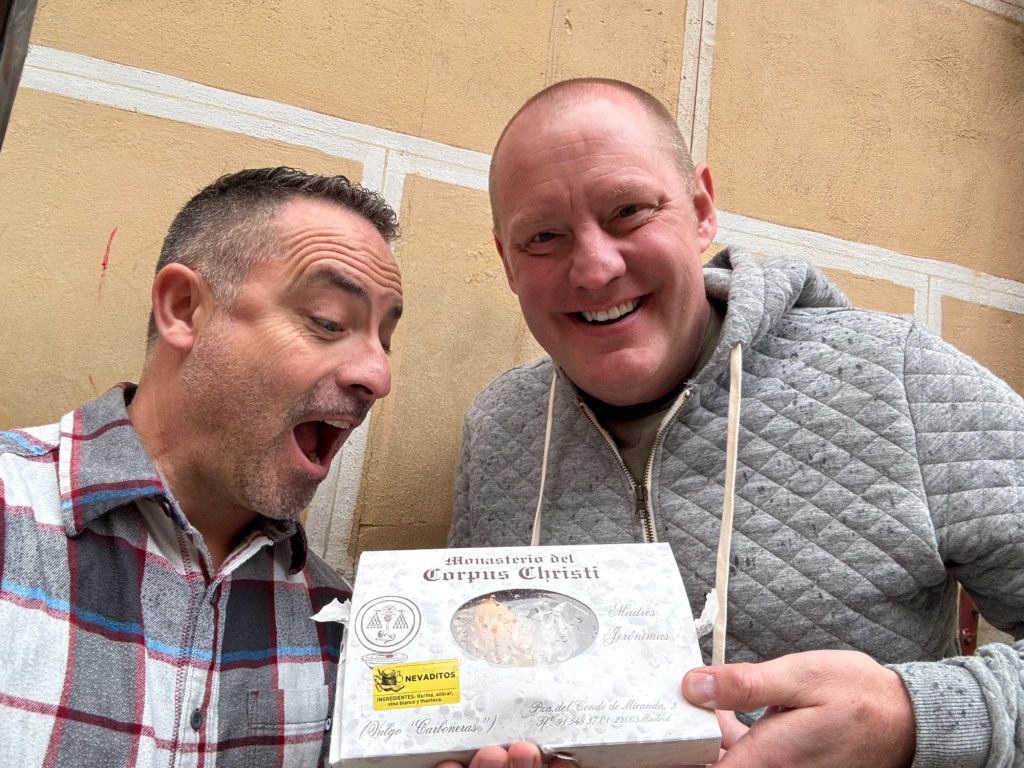
- The Monasterio Del Corpus Christi is right between Palacio Real and Plaza Mayor (and a block from Mercado San Miguel) and is something truly different. The Convent of the Jerónimas bakes up boxes of cookies visitors can buy from the cloistered nuns, though you’ll never see the nuns—bring cash and put it in a cubby on the revolving hatch while voicing your order to the nuns on the other side of the wall. Cookies are only sold by the kilo or half-kilo per kind. If you’re lucky and there are others ordering at the same time, you might be able to share among each other, as we did. The door for the convent’s cookie shop is subtle, but as you’re walking to the convent from Mercado San Miguel, it’s a smaller door to your right. Note the “open” hours and ring the bell (or follow others inside, as we did). Once inside, follow the signs through the corridor until you see the cookie menu and rotating hatch.
- Parque del Buen Retiro, or simply El Retiro, belonged to the Spanish royalty until 1868, when it became a public park. It’s full of paths, ponds and lakes to explore and photograph, small cafes to rest, and several of Madrid’s noted museums including Museo del Prado. It’s a great place to stroll through on a nice (or even cloudy) day.
Eating and Drinking
To be honest, most of our eating in Madrid was in the food halls, so I don’t have a ton of additional restaurant recommendations. But there were a few great spots we enjoyed, as well as a couple recommended by others while we were there.
- While chocolate and churros are a thing in various spots around Madrid, there’s one neighborhood near Plaza Mayor that is Ground Zero for them. Chocolatería San Ginés is the go-to for this deep fried dough and a cup of dipping chocolate (they have a half dozen storefronts mere steps from one another) but a few other places also have joined in.
- In Chueca, Tabernas El Buo and La Buha are brother and sister bar/restaurants on opposite sides of the street. El Buo seems to get busy first, in which case, you’ll be directed to La Buha if there’s an available table. We had a little sangria and a pizza (quite good) at La Buha and the food on everyone else’s table looked similarly delicious.
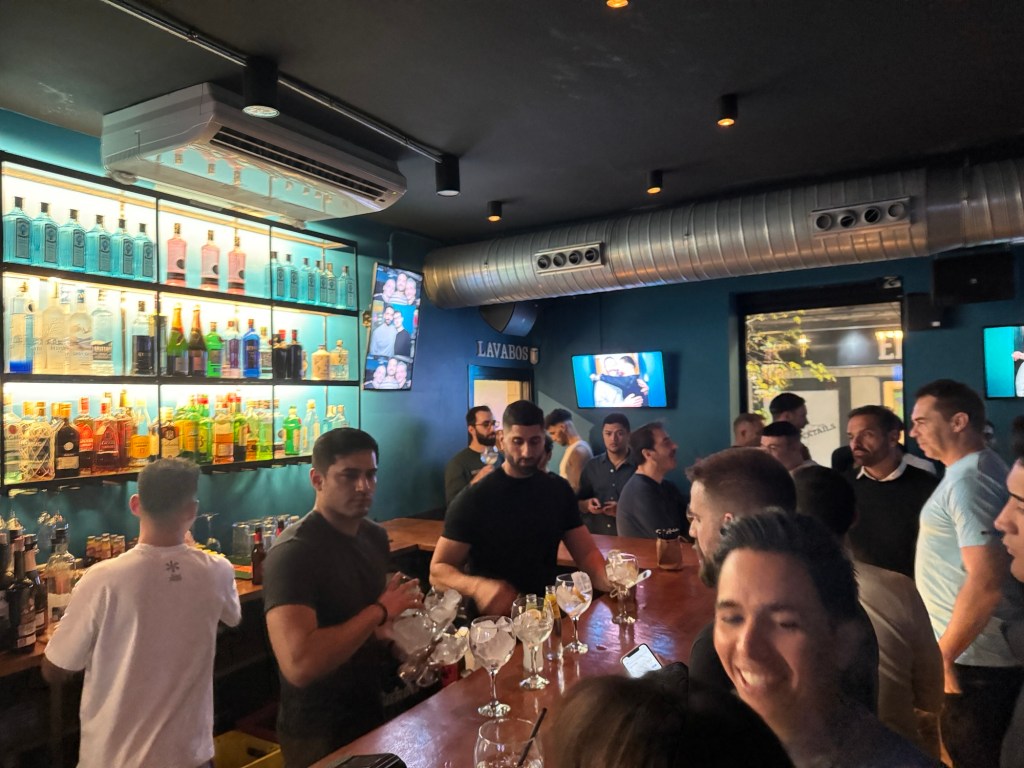
- D’Mystic is right across the street from La Buha and has a great, relaxed vibe for cocktails (or wine, in our case). The crowd was a mix of men and women, older and younger folks, and the staff were efficient and friendly (and a couple of them were smoking hot… just saying). Apparently it gets busier the later it gets. At 5ish, it was lively, but not packed, which was perfect for us.
- La Kama Cafe, like D’Mystic, wasn’t a spot we ate at, but their cocktails are quite the draw. The two-level cocktail bar is quite the tropical paradise inside with a lengthy cocktail list and bevy of handsome bartenders. It seemed busiest at the end of the workday (in our experience) and quieted down a bit as the evening went on, but was continuously bustling.
- Entre Santos came with emphatic recommendation by a friend from Portland who spent several months in Spain in 2023. The location is right in the midst of the Chueca neighborhood and easy access to nearby bars and nightlife in case you need a nightcap after dinner. As with Vinitus (below), we didn’t make it there before we had to depart Madrid, but it’s on our list for next time.
- Vinitus Gran Vía was recommended by a friend while we were there as having great tapas and other share-able plates. The location right on Gran Via promises great people watching while you eat, although there are also two other locations. We ran out of time in Madrid before we made it here, but it’s on a short list for a future trip.


Nightlife
With four evenings in Madrid, we hardly scratched the surface of the city’s nightlife. Besides wine and cocktails at D’Mystic and La Kama, there’s a wealth of LGBTQ+ watering holes centered in the Chueca neighborhood, plus tons more scattered around other areas of town. What I did notice is that a number of places I’d read about in guides were no longer open or had moved, so double-check any info before you make firm plans. Fortunately, most places are in close proximity, so it’s not much of an issue either way. Also note that many of the bars had restrooms in the basement level, so if you’re not a fan of steep and narrow stairs, plan accordingly. The ones we checked out included:
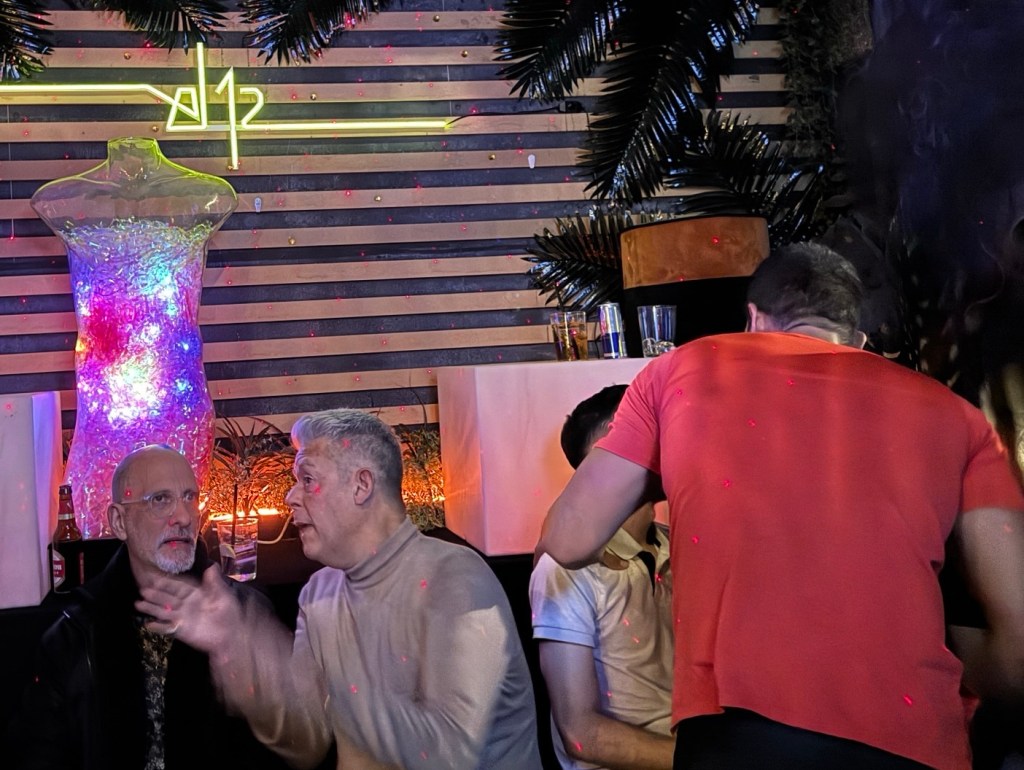
- El 12 was just steps from our hotel and was busy most nights after 10 or so. Though I’d heard it was the place to be on Thursday, it was just as busy on Wednesday night too with plenty of friendly guys of all ages and a couple women socializing, drinking and dancing. There’s a bar just inside the front door and another at the back next to the dance floor.
- Hot bar is right across the street from El 12 and was never quite as busy as El 12, but still had a line to get in later in the evening. Hot definitely attracted an older and more bearish crowd, but also had a 2-for-1 happy hour earlier in the evening which was welcome.
- Mad Daddy, as the name might suggest, also attracted an older crowd. Like: much older (plus a few younger admirers). But Mad Daddy was fun just the same, definitely busy, and spinning 80s hits when w e were there.
- You & Me had a swankier feel inside, with its glossy tiled and backlit bar. It attracted mixed group of men and women of a variety of different ages, though trended a bit younger (30s, on average perhaps). They had great music and fun bartenders. I’d definitely go back.
- Boyberry is a few blocks away from the other Chueca bars. One of our friends who had been a year prior said it was good fun when he was there, but apparently we arrived too late on Wednesday night for it to be busy.
- Finally, Strong was the one big club we checked out in Madrid. After you’ve entered and paid your admission, you’re dropped into its bumping dance floor (which will likely be empty prior to 1 or 2 am). I think we left near 6am when it was finally starting to quiet down…

Lodging
At the recommendation of a friend, we stayed at Room Mate Oscar, right in the middle of the Chueca neighborhood. It proved to be incredibly central to everywhere we ventured in Madrid, from El Retiro to the bars. It was also in close proximity to at least a couple different Metro lines, making it easy to get to and from the airport, train, and anything else. There’s also a continental breakfast provided and a lovely rooftop bar.

The Axel Hotel chain caters to gay travelers—we stayed at their Berlin Hotel a few years back. While their Madrid location may also be of interest to some, note that it’s not particularly close to most of Madrid’s gay nightlife, in case that’s a consideration.
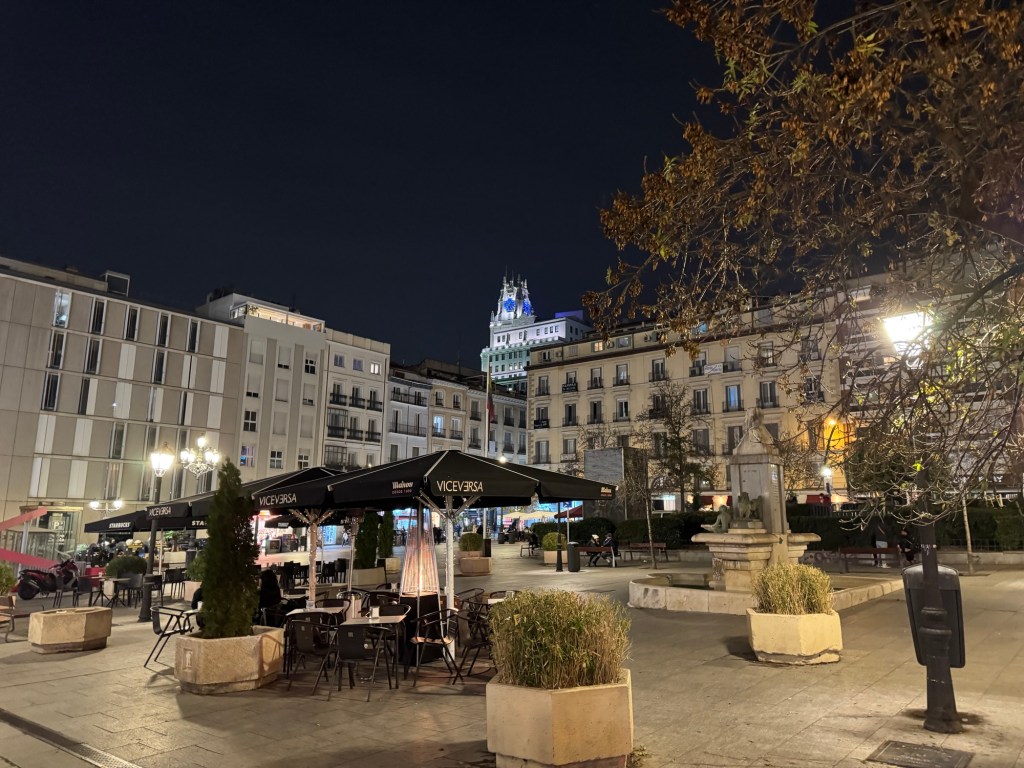
As you’re considering your hotel, however, note that the city squares are busy day and night. We opted for an “upgraded” room facing the square, and while the view was likely nicer than an interior courtyard or light well, it was decidedly noisier. Book your room or upgrade carefully if noisier locations are of concern for you.
 Upper Left Traveler