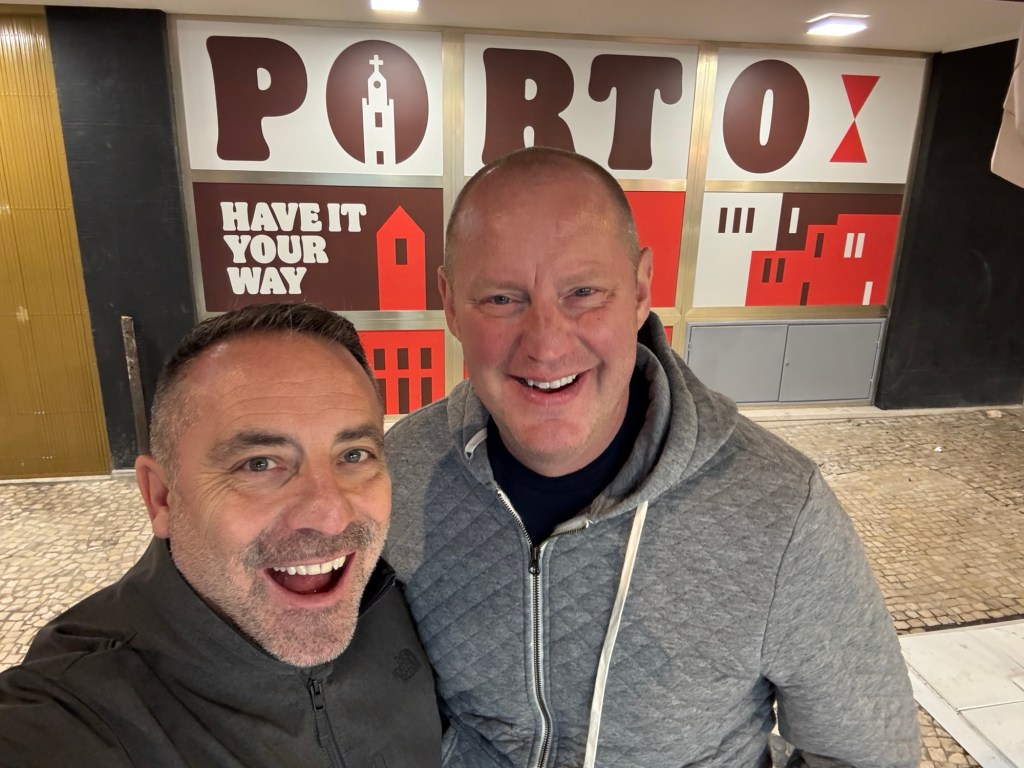
Why should Porto be on your travel radar? Portugal’s second-largest city, Porto, turned out to be the hidden gem I didn’t know I needed. When my husband suggested we add it to our December 2024 itinerary, I figured—why not? And wow, am I glad we did.
Porto is the perfect not-too-big city, full of charm, beautiful sights, a lively scene with LGBTQ and mainstream nightlife, and some of the kindest people we met on our trip. Bonus: it was hands down the most affordable European city I’ve visited. You can grab a beer or a glass of Portuguese wine for just a few euros, and meals are equally budget-friendly. It’s also more walkable than Lisbon I’m told, even though it’s not entirely flat (Lisbon is still on my must-visit list).
If you’re looking for a scenic, affordable European getaway, a Porto should definitely be on your list. Whether you spend a weekend in Porto or a make it a longer trip might depend on where you’re coming from, though (more tips on that below in “getting there”).

Know Before You Go
While most folks in Porto spoke excellent English, learning a few key phrases in Portuguese went a long way toward earning the friendliness of the locals. As well, while many Portuguese will speak and understand Spanish, they have a very strong pride in their own language. You’re probably better off resorting to English before trying Spanish.
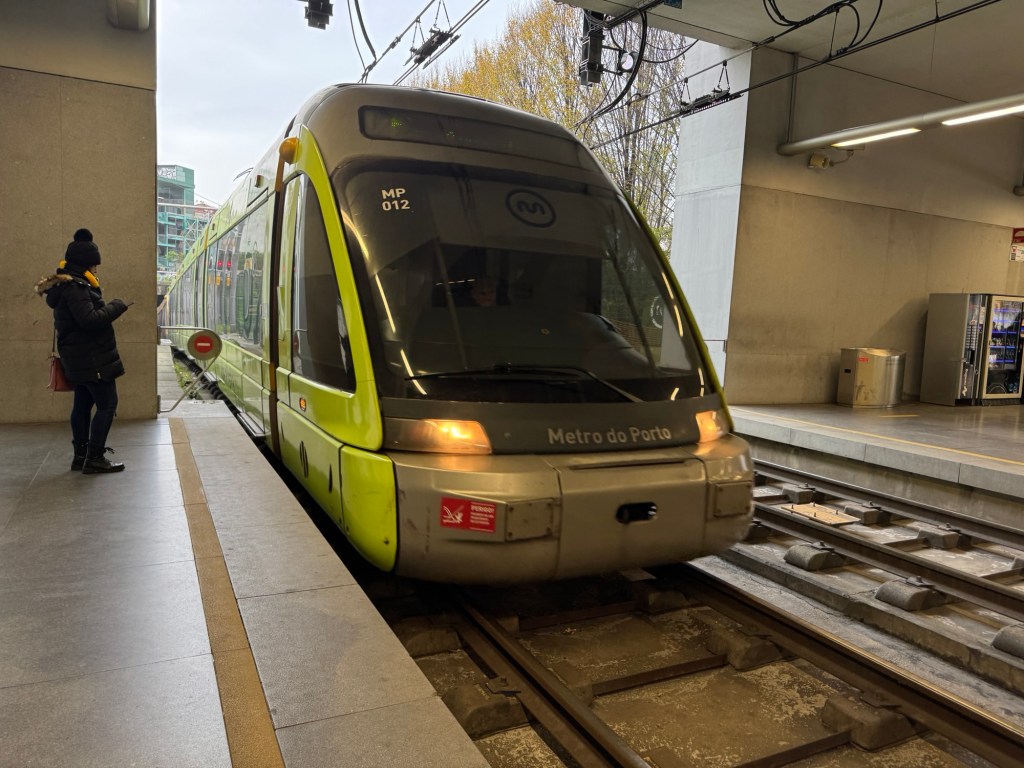
Once you’re in Porto, transit is easy and inexpensive, though you’ll likely need to buy a re-loadable fare card (less than 1 euro, sold at most any station). I’m told a few stations/lines, including the airport, now work using your contactless credit card, but not all, and I didn’t try this out. Busses and trains were frequent and safe and Google Maps details were spot on for directions, in my experience. Note that the riverfront tram (described more below) requires separate fare payment and does not use the fare card that the rest of the city’s transit does. You’ll need to pay for the tram on board, but the driver does have a credit card reader if you don’t have cash.
As you’re making plans, keep in mind that many restaurants and other businesses are closed on Monday (and often Sunday as well), so it would be wise to double-check opening days and times as you’re setting up any must-do parts of your itinerary.
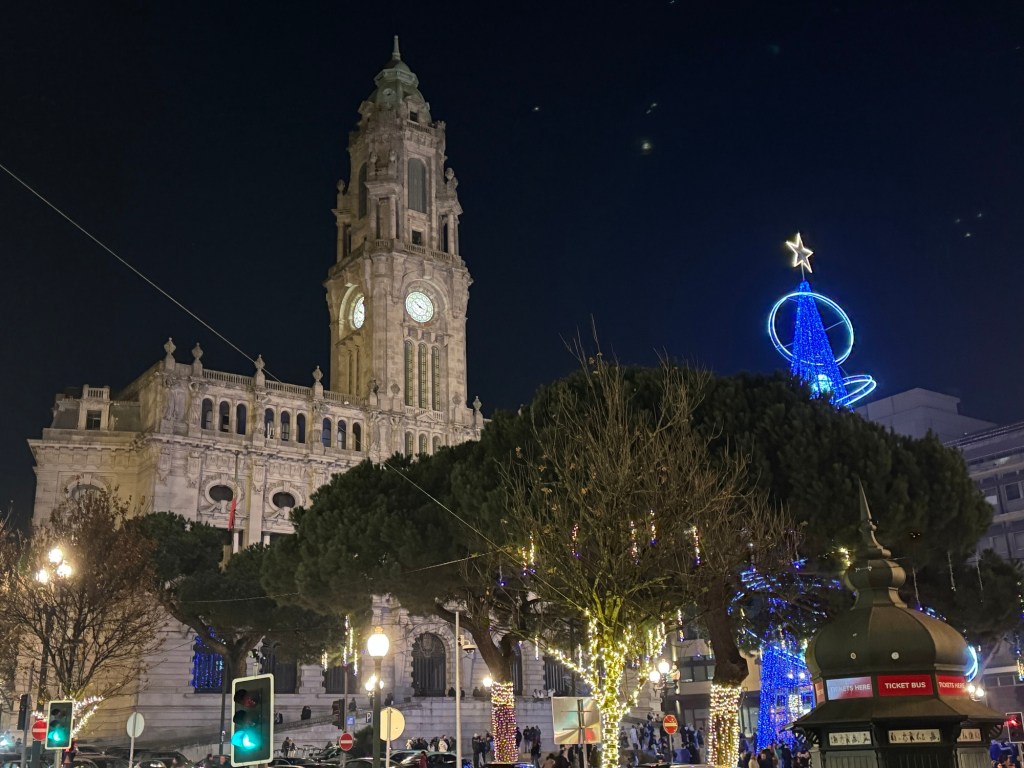
And … if you’re there in December like we were, the city is decked out in lights for the holidays and is especially stunning, as were other cities we visited on the same trip, especially in Spain.
Finally, beginning in 2026, visitors from the U.S. and other countries will need a European Travel Information and Authorization System (ETIAS) approval prior to arrival in—or transit through Portugal (plus Norway, Cyprus and other Schengen Zone countries). Follow the link above for more detailed info and note that you’ll need the ETIAS even if you don’t step foot outside the airport.
In addition to my experiences noted below, I found helpful tips on the Portoalites website. Check them out for more info.

Getting There
Getting to Porto (OPO) from Portland was definitely the most difficult and complex part of visiting the city. From the U.S., most major carriers only serve Lisbon directly. And in the interest of taking advantage of the perks of our OneWorld status, our European landing was at London Heathrow … and there are not daily non-stops from Heathrow to Porto, which meant making another stop in Madrid before finally getting to Porto. But it there are easy and frequent flights from Madrid (which I also recommend visiting).
Once we arrived in Porto, however, things were much easier. The airport is a striking concrete and glass design that’s modestly sized and was easy to navigate. There’s a transit station right at the airport with trains arriving frequently. A ride to the city center was only 2.25 Euro and takes about 30 minutes with no transfers, though once in the city center, you might need to switch trains or walk a bit to your hotel or final destination.
LGBTQ Safety
Portugal, because of its welcoming attitudes and strong LGBTQ legal protections, is regarded as one of the more LGBTQ-friendly countries in Europe. It is perhaps unsurprising that as Portugal’s second-largest city, Porto has a vibrant and welcoming LGBTQ scene.
As noted below, Porto has a vibrant queer scene for nightlife, especially for a city of its size (even as the second-largest city, its population is still under 300,000). And while most of the nightlife I checked out in Porto was close-in near one another, everywhere felt safe and accepting. I read that attitudes can vary slightly between urban and rural areas, so as with anywhere, it’s smart to stay aware of your surroundings, but I found the city to be very inclusive and respectful.
Sightseeing Highlights
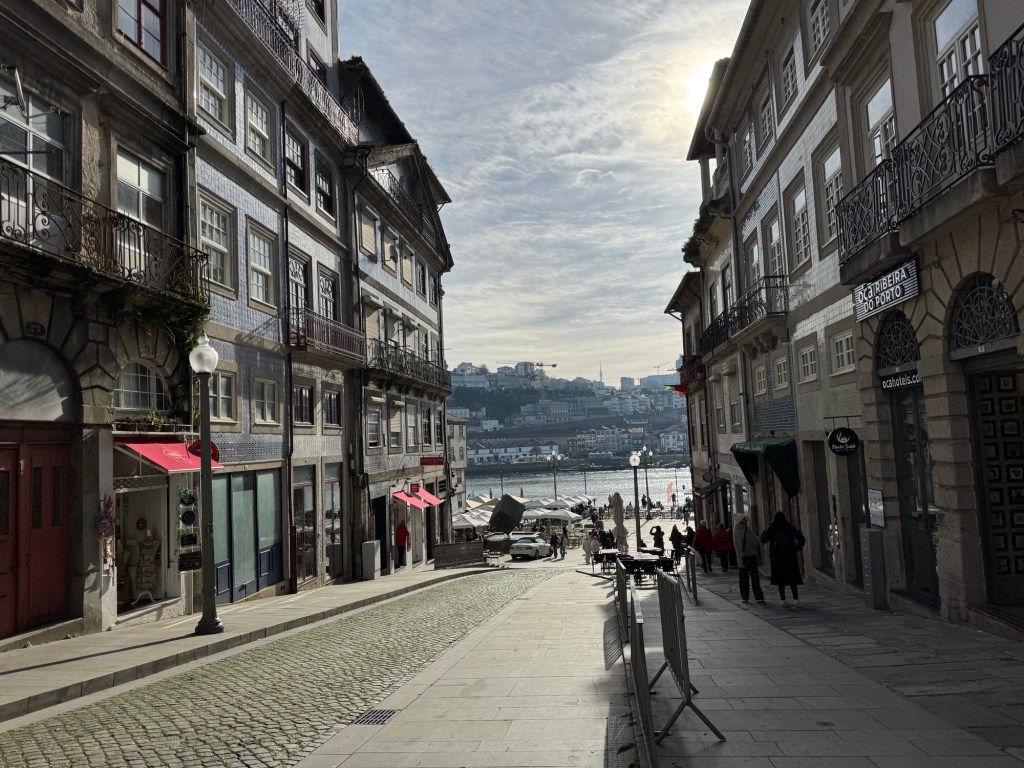
My favorite activity in Porto (as I suppose is true with most of my travels) was simply wandering the city. We primarily stayed in the city center, but there was no shortage of charming streets to explore, including many pedestrian-only ones. And it was perfect that Porto had a wealth of restaurants and bars everywhere. You could easily find one most anywhere to pop into for some refreshments and to rest your feet. See below for some highlights, but don’t hesitate to duck into any place that looks good—chances are it will be.
If you’ve read my other posts, you’ll know these tips aren’t meant to be an end-all-be-all guide. But hopefully they’ll be useful to pair with other sites or to highlight something that didn’t pop up elsewhere. With that said, here were some of my favorites from Porto:

- Dom Luis I Bridge is in probably every Porto guide from the last century. Honestly, all the bridges over the Douro River are beautiful, but the history of this one—awarded to a Belgian firm and to be administered by the former partner of Gustave Eiffel—is especially fun. The vendors and shops near the lower deck are great to explore, and the views from the upper deck are stunning on the streetcar and by foot.
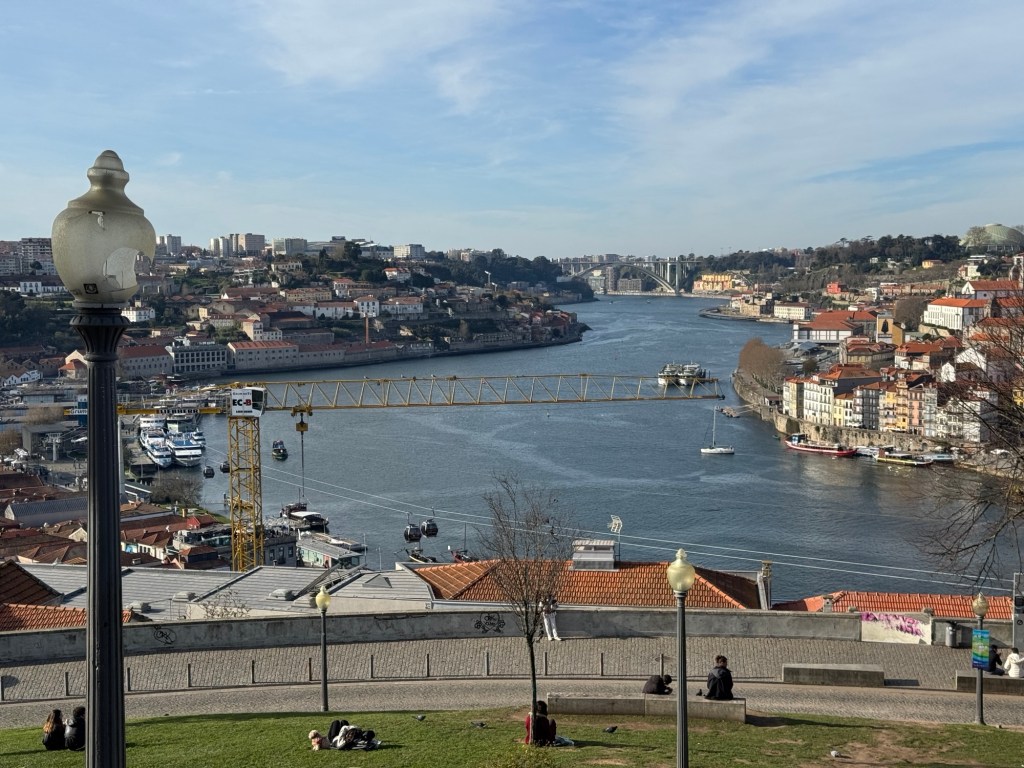
- The Jardim do Morro on the Gaia side of the Dom Luis I Bridge is also worth spending some time enjoying, I thought. I didn’t stay there for sunset, as many guides suggested, but it had amazing views of the city and river, just the same.
- If you’re a transit nerd (more on that below), the Museo do Carro Eléctrico is a great spot to check out for a short visit. If you’ve been to the cable car museum in San Francisco, California, this might feel mighty familiar, but a little different too. Walk through a short history of Porto’s trolleys, from the horse-drawn ones, to the pre-war electrified ones (and ones used for maintenance and cargo too!), to subsequent replacement by busses. Upstairs, there’s a tour through Porto’s former old-school power delivery system. If you’ve ridden the riverfront tram, save your ticket for discounted admission.
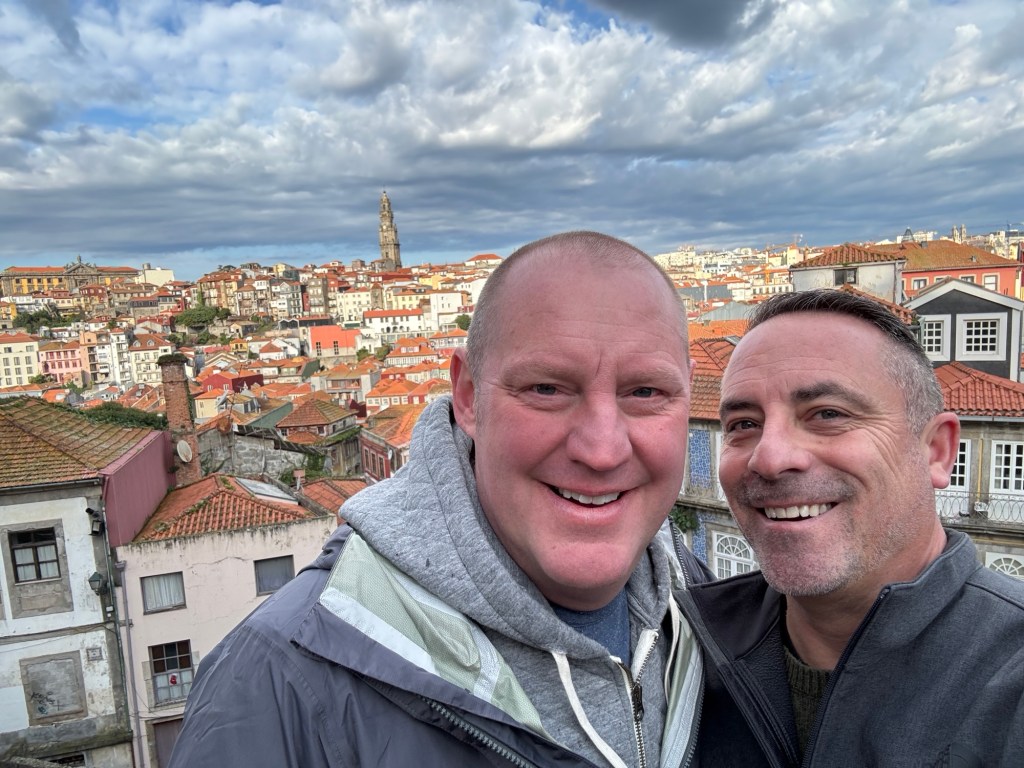
- The Sé do Porto (Porto Cathedral) wasn’t necessarily on our itinerary (I’ll spare y’all on my views on the church), but I’m glad we wandered past because the views from here are impressive, even if you don’t venture inside. Walk down the steps and through the alleys to the west of the church and you’ll be rewarded with some especially quaint residential areas before ending up in the riverfront neighborhoods and Palácio da Bolsa, the former stock exchange palace where experts now judge whether or not producers’ port is worthy of a vintage label or not.
- Whether or not you geek out on transit (again, sorry—still more on that below), the Porto Sāo Bento train station is totally worth a visit. Porto’s main train station may not be much to note trackside, but the main hall is decked out in tile that shares Porto’s rich history. Besides the story if it all, it’s a beautiful space that feels uniquely of Porto.
- Rua das Flores is nearby and is a delightful pedestrian street filled with beautiful tiled buildings, retail shops, street art, restaurants, cafes, and bars. Don’t miss the art at sidewalk level on the electrical boxes (at least that’s what I thought they were)—every one is different and delightful.
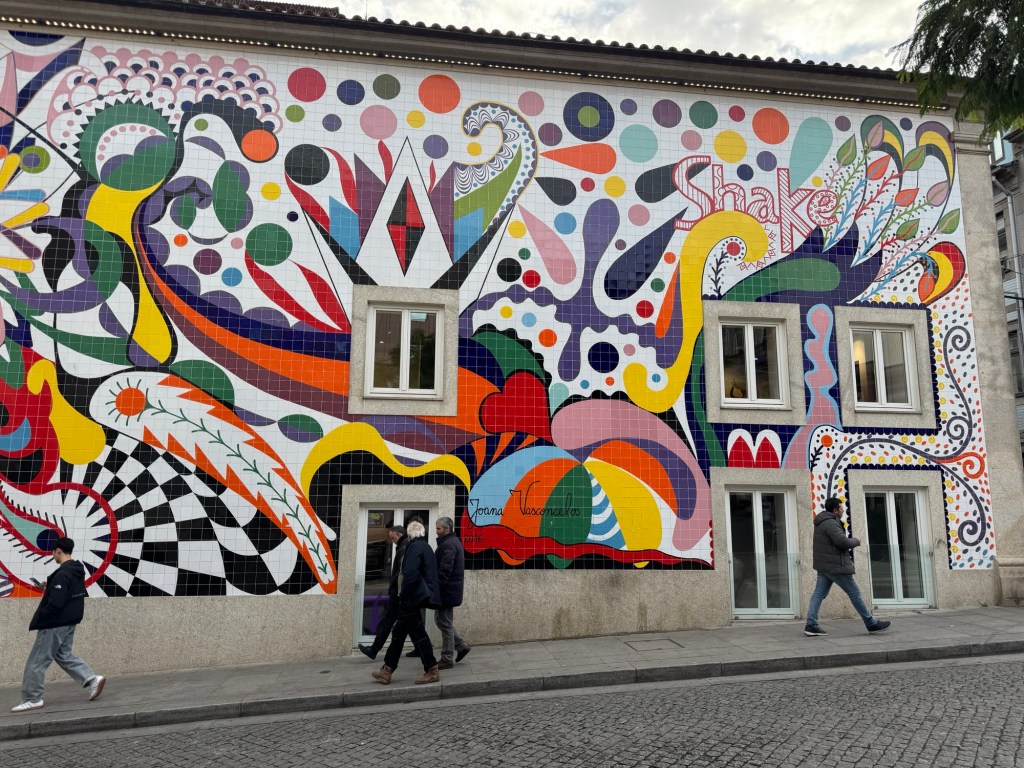
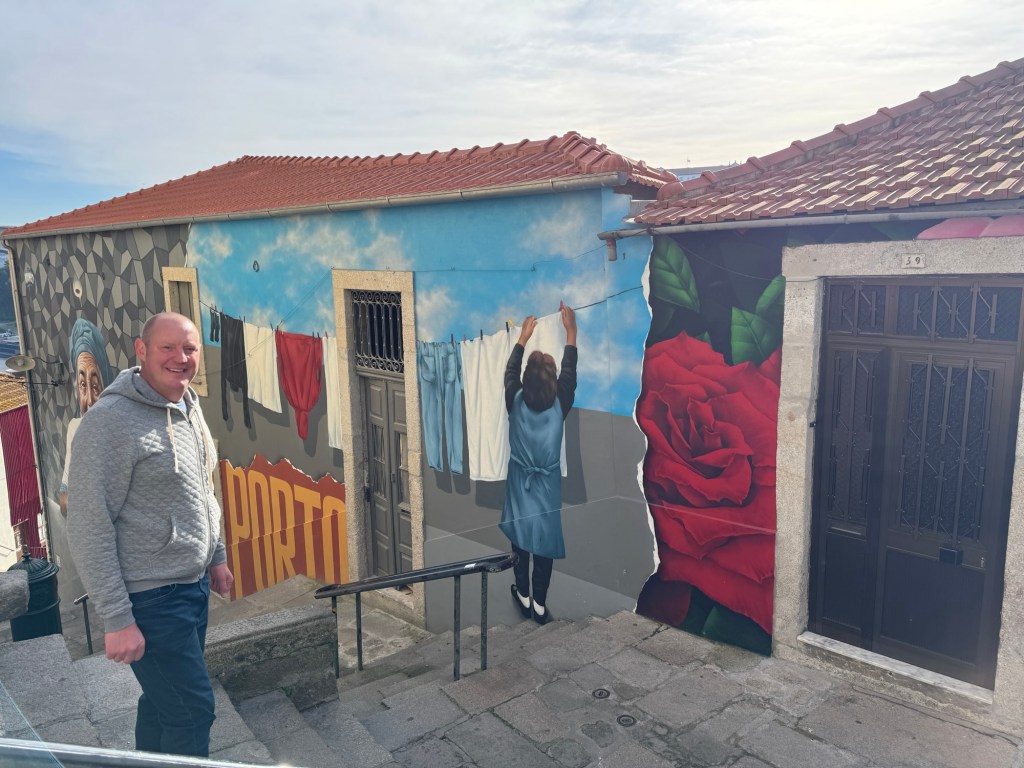
- Porto has other street art too. It may not be as obvious or plentiful as other cities I’ve visited, but had one of my favorite murals along the staircase leading from the Igrejia de Santa Clara down to the lower deck of the Ponte Luis I. As well, the cat along Rua das Flores was one that a friend and I had both been fascinated by. And to refer to it simply as a cat is an understatement.


Porto has every type of transit, so I figured it deserved its own list. A little like Medellin, if there’s some type of vehicle you want to board, you can probably do it here. For instance:
- Subway trains and street cars are perhaps basic enough, but Porto has good, frequent service above and below ground. The new pink line was getting finished up while we were there in December 2024. Maybe you’ll be among the first to ride?
- Want a gondola? Done. The Teleférico de Gaia goes to and from the top of the Ponte Luis I to markets and Port vintners on the Gaia side of the river. Is it epic? Maybe not, but the views are lovely just the same, and you end up next to a food hall once at the river. I’m sold.
- Need to get back up the hill? Use the Funicular dos Guindias for just a few euros to get from the bottom of bridge back up to the Igrejia de Santa Clara.
- And last, but very much not least, there’s the historic tram from the Douro riverfront near the city center to the ocean (follow the link for more comprehensive info, but note the fare info is dated). This might not be something I’d need to do every trip, but is absolutely something I’d recommend for everyone to do at least once. The tram cars are quaint and rustic (at least one is now part of San Francisco’s F-Market line, too), but more than anything, they amble along such an incredibly beautiful stretch of the Douro River. Slow down and take in the views (and note above the discounted tickets if you choose to also go to the museum). Note, however, that the tram is not hop-on-hop-off. A round trip ticket will get you as far as you choose to go in each direction, but once you disembark, you’ll need to pay again to get back on.


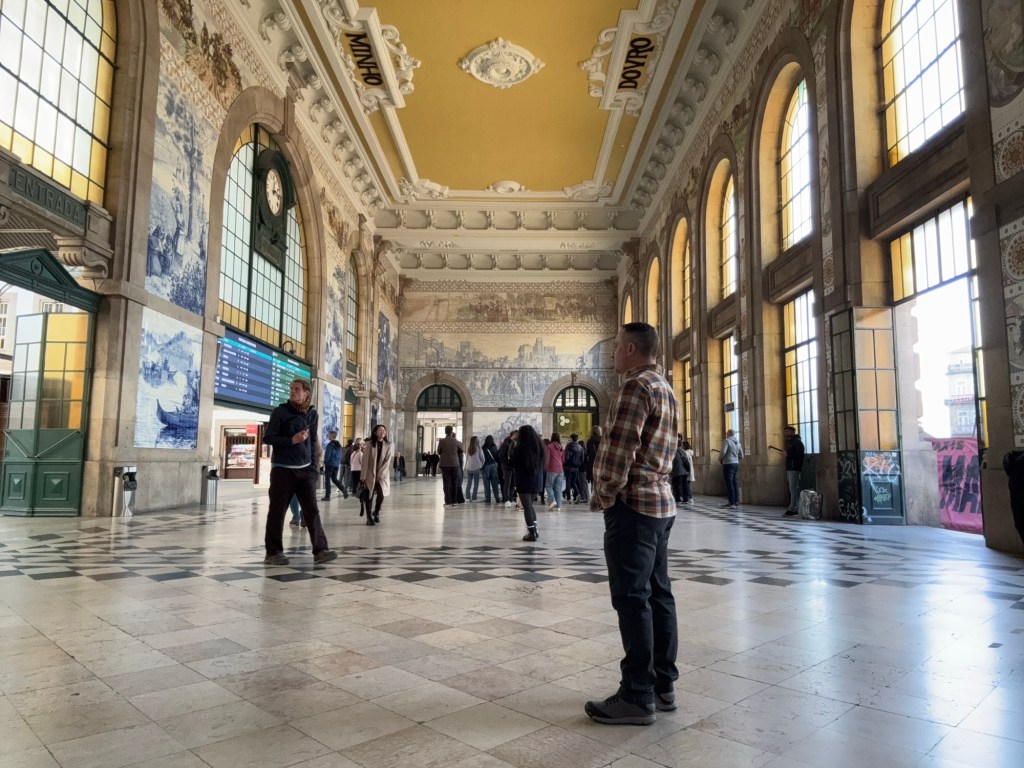
As you’ll read in other guides, the tile facades of many of Porto’s buildings are absolutely stunning. Not only should you not hesitate to stop and admire them, but be sure to soak in all the variety. Some are simple glazed tile of a consistent color and maybe compliment or play off the same style in a different color next door. Other buildings have tile with intricate patterns. I didn’t feel like it was something I had to seek out, so much as something I had to watch for and be open to. It’s lovely and surprising where the styles and colors pop up.
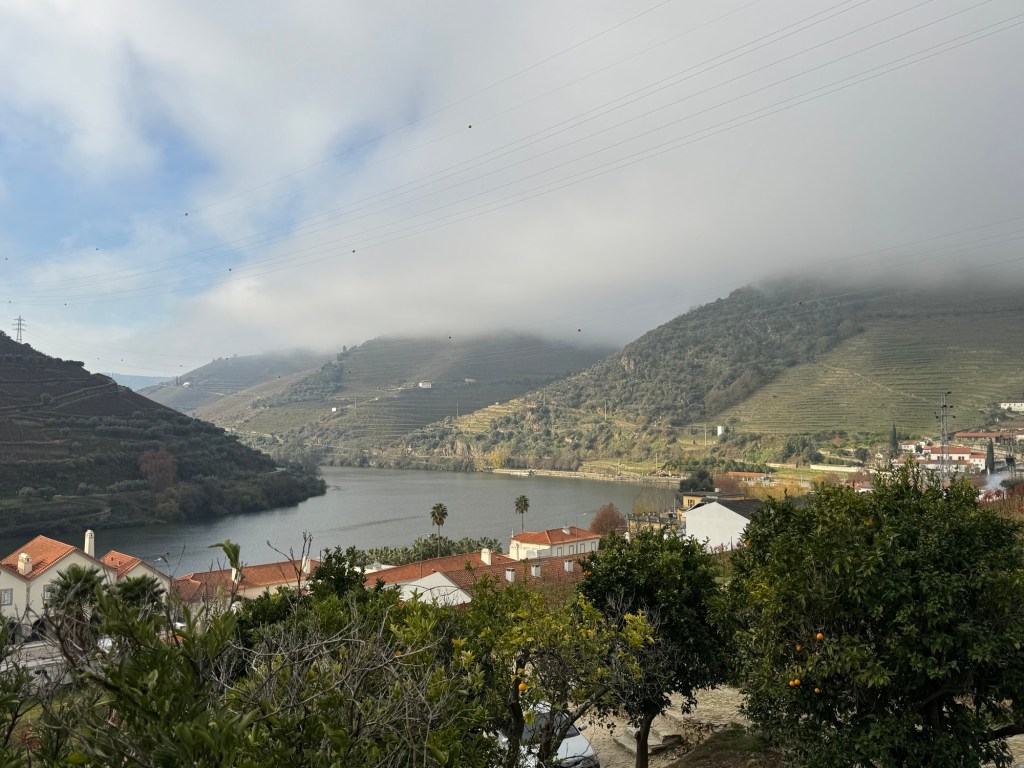


On a very different note, at a few folks’ suggestion, we signed up for a day-long wine tour in the nearby Douro region. In addition to being famous for Port wine (technically, to be called Port, it must be produced here), the area produces a variety of wonderful red and white wines. As well, the Douro region’s river, hills, and dramatically terraced vineyards are stunning. Our tour, which I’d recommend, was on a Monday, our second full day in Portugal, and the timing unintentionally proved to be a great decision. Not only did we take advantage getting out and about while things in town were closed (see the “know before you go” note above), but it gave our feet a rest in between two heavy walking days. Oh, and wine and food and sights, of course!
Eating and Drinking
I’m pretty sure what I’m about to say is blasphemous to the Portuguese, but I really don’t care for bacalao. If you like salt cod, more power to you—you’ll love it here. While there’s more to Portugal than salt cod, Portugal was not in my Top 5 of culinary destinations. But there is some fun and unique stuff to check out, such as:

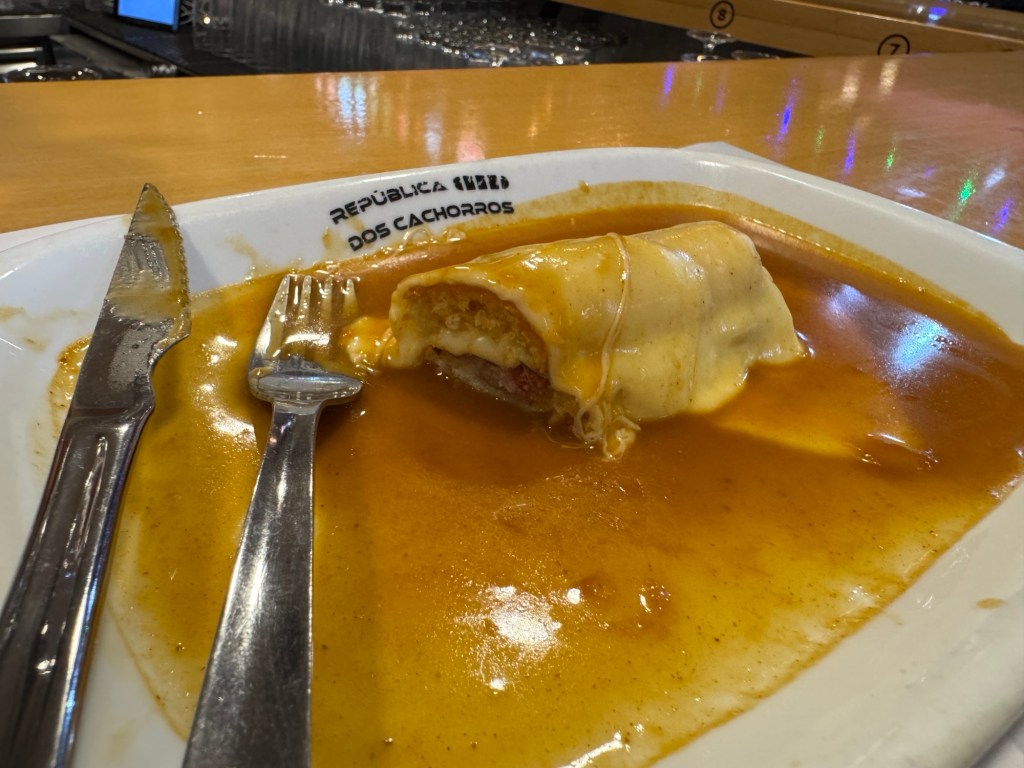
- Francesinhas are Porto’s response to Croque Monsieur and Croque Madame sandwiches. We sampled them at O Alfonso at the recommendation of our wine guide, who said that O Alfonso’s are more authentic and less touristy than Café Santiago, which you might have heard of from a certain chef named Anthony Bourdain. I can’t vouch for the legitimacy of one versus the other, (apparently the sauce is what differentiates one restaurant from another) but I liked the fries. 😆 Whether or not you love the sandwich, I think it’s worth a try.
- If you watched the Anthony Bourdain shows on Porto, you probably also flagged República dos Cachorros on your to-eat list too. Should you choose the Cachorro Especial, you’ll find it especially similar to the Francesinha. It’s less filling and the breading (IMO) is preferable to the sandwich version. Also worth sampling. Not sure it its worth repeating. You do you.
- Food halls are basically my jam, so stumbling onto the Time Out Market that’s adjacent to Porto Sāo Bento station was fortuitous. We’d just eaten so we didn’t take the opportunity to sample the various food stalls, but did linger in the bright and welcoming space for a glass of wine, then perused the Christmas market held outside.
- We also popped into Mercado Beira Rio near the base of the Teleférico de Gaia. It’s not huge, but has a good variety of food, inexpensive wine, and was busy but not overcrowded when we were there.
- Also near the base of Teleférico de Gaia are the facilities and tasting rooms of so many of the Port producers. I can’t vouch for one versus another, but the options are vast and the variety of ports offered where we went was similarly vast.
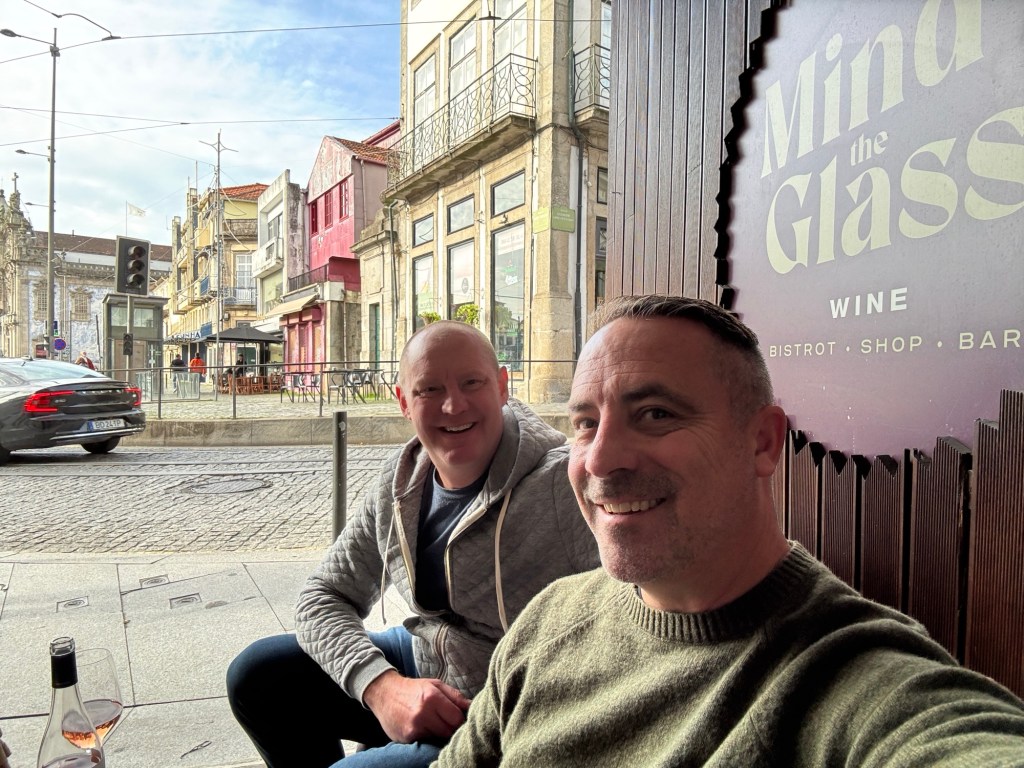
- If you’re done eating and just want a drink, good news: Porto is here for you! Maybe just for the name, but I loved “Mind the Glass.” But wherever you visit, know that a bottle of Portuguese wine in Porto costs about as much as a glass in the U.S. Sit back, relax, and enjoy, friends!
- One last boozy note: if you watched Jamie Oliver’s show in Porto, you might think it’s everywhere that folks are drinking cherry liquor in chocolate cups. While this wasn’t my experience, we did get to sample it at one of the Christmas Markets in town. It’s not too boozy and the chocolate is delicious. I don’t know if I’d seek it out, but I certainly wouldn’t turn it down. It’s tradition, you know!
Nightlife
For a modestly-sized city, Porto has an especially vibrant nightlife. We had a great time celebrating in Porto and its gay bars threw down a wild variety from neighborhood fun to pop divas to daddy dance to seedy dive. As noted elsewhere, pay attention to what’s open when, but a few favorites:
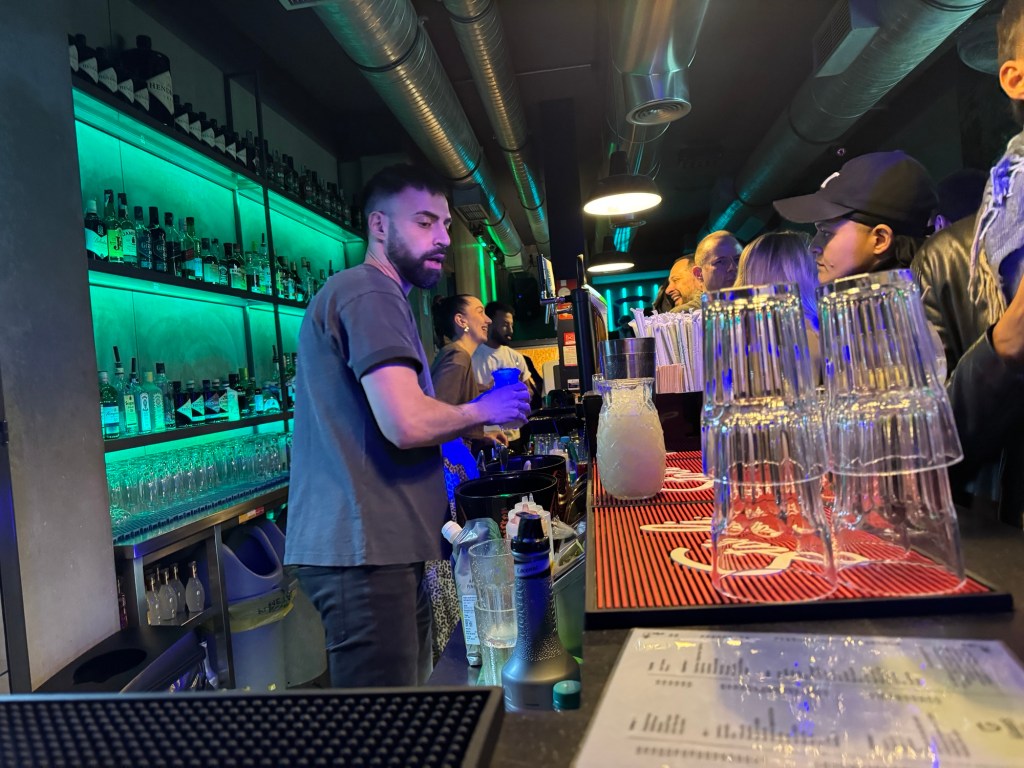


- Fabrik Bar was a great place to start a night. Good (and inexpensive) drinks, friendly and sexy bartenders, and fun pop music with a mixed crowd of younger and not-so-young folks plus (mostly) men and a few women. You could probably stay here all night … or you could wander to ….
- Café Lusitano which has a wonderful old-school wood-paneled and frescoed-ceiling vibe. At least when we were there, it attracted an older crowd, but one that was 100% into shaking their thing on the dance floor. Come for the atmosphere, stay for the dancing.
- After Café Lusitano, we wandered to Invictus. I’ll chalk this up to being there at the wrong time or wrong night, but it was sleeeeeeeepy. That said, the staff were so friendly. I’d probably try to check it out again at a different time.
- Also maybe a bit sleepy, Bar of Soap is a delightful neighborhood establishment with inexpensive drinks and lovely staff. 10/10 would recommend, even if just a spot to start the night or end a low-key one.
- And then there’s The Hole. Self described as a “cruising bar,” I can confirm there is a bar there. I would, however, describe the bar as an accessory to the cruising. And by cruising, I mean a dimly lit maze of playrooms located downstairs after you put your clothes in the locker room. Oh, and you’ll need to ring the bell for entry at the inconspicuously marked door.
Lodging
Admittedly, I was trying to cram in some year-end Hilton stays to maintain my super-fancy elite status, so I didn’t really look at other places in town, but the Arts Hotel Porto, part of Hilton’s Tapestry Collection, was perfect. The location was relatively close to all the things we wanted to do without being in the noisy center of it all. The room was cute but small, as expected for a European boutique spot, but the breakfast spread was fresh and wonderfully un-American (sorry Hampton Inn).
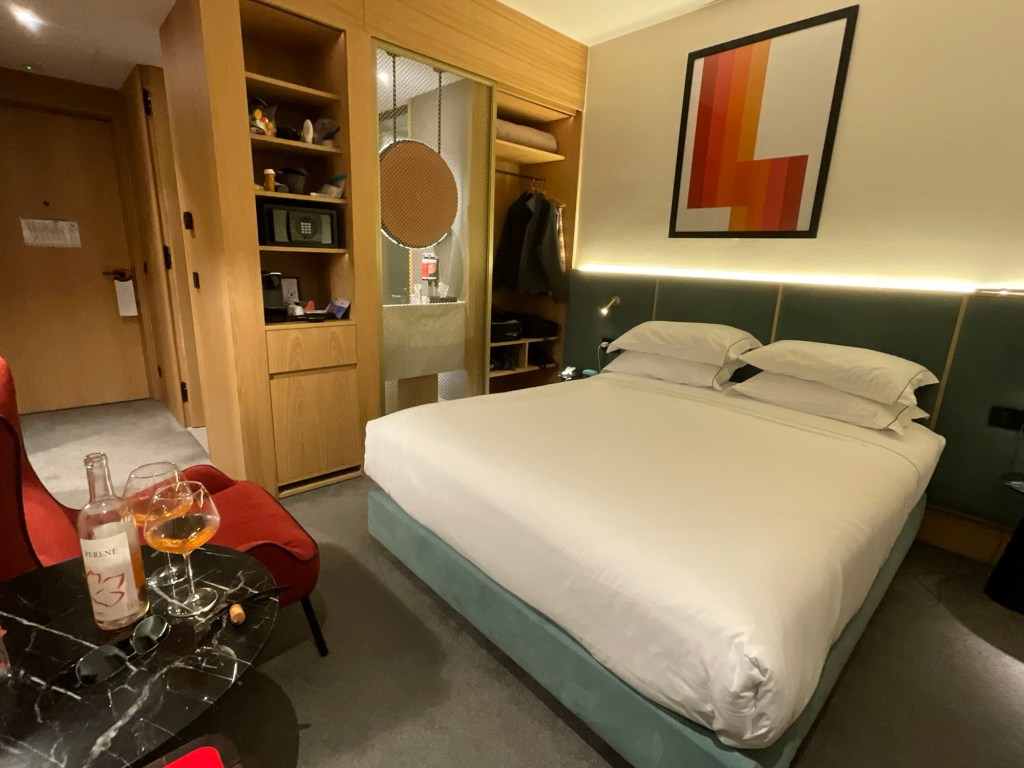
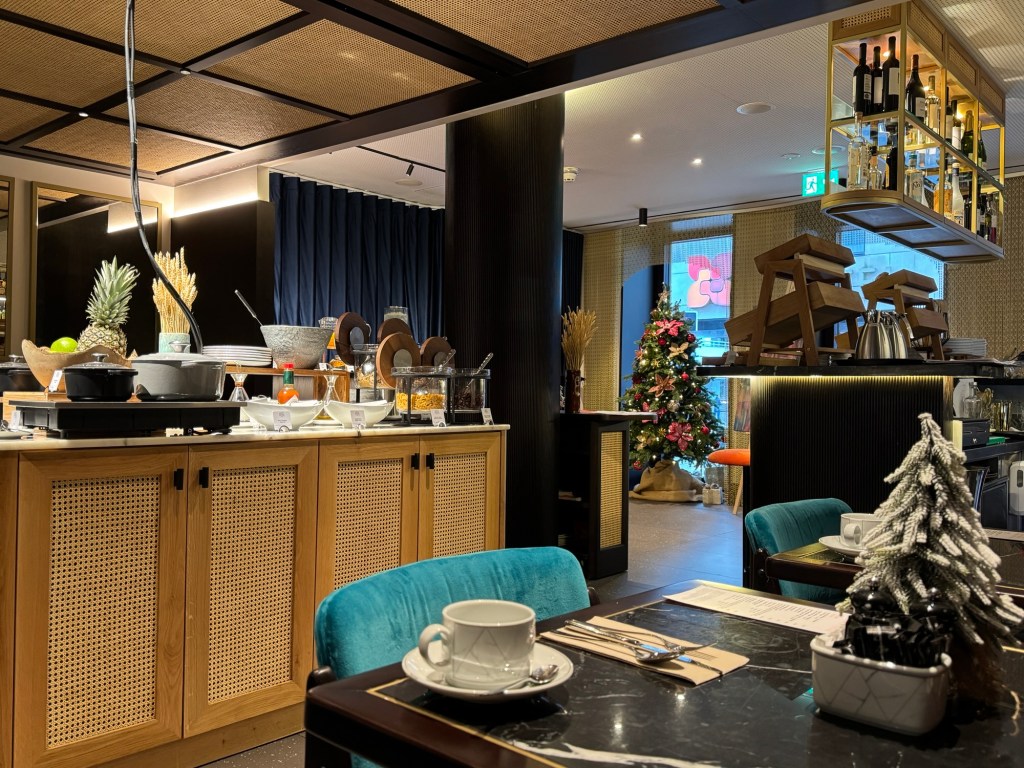
Based on our stay here and subsequent stays elsewhere, I’d consider carefully how much space you need (i.e.: American standards) and how quiet or not you might tolerate. Rooms with a plaza or city view may seem lovely but might also end up being noisy, whereas a courtyard room such as ours in Porto may seem like a downgrade but could actually be much more quiet.
 Upper Left Traveler