I’m one of those travelers who never really outgrew the excitement of flying—I love gazing out the window as much now as I did as a kid. As an adult I’ve chosen to spend a good amount of time on planes, especially on Alaska Airlines. So when Alaska announced their new Atmos loyalty program combining Alaska’s Mileage Plan and Hawaiian Airlines HawaiianMiles, as well as prior changes Alaska Airlines announced in October 2024, I paid close attention.
Starting in 2025, the Alaska Airlines frequent flyer program made changes to the way members earned elite status, including new qualification opportunities and added milestone rewards at mid-tier levels. A few new tweaks arrived in August 2025 with the announcement of the Atmos program and a new Choice Earning program is coming for 2026 (check out my tips on that here). For frequent flyers, these updates could mean more value—or more competition for valued perks.
This post highlights details of earning status points and how to follow along with it all, accentuating updates as well as my two cents on the changes. Check out my other post that attempts to break down the sometimes murky details of upgrades—one of the perks for elite frequent-fliers.

Basics: Earning Atmos Status
The thresholds for elite status in Alaska’s Atmos frequent flyer program are generally straightforward, although point thresholds for the highest level elite tiers were raised for 2026. A new Choice Earning scheme is coming sometime in 2026. Elite status points are primarily earned via miles flown on Alaska or partner airlines (butt-in-seat miles, if you will). While there is not yet a spending requirement, as some other carriers have moved to, there are ways to accrue elite status points that don’t require butts-in-seats.

Coming in 2026, point thresholds increased for Platinum and Titanium tiers (formerly Gold 75k and 100k), with 80,000 and 135,000 points needed for these tiers, respectively. Members who achieved Platinum or Titanium during calendar year 2025 will get a few head start points dropped in their account in February 2026 (5,000 for Platinum and 20,000 for Titanium).
For now, flights purchased on the Alaska website or Hawaiian Airlines website earn Atmos points equal to miles flown (usually), with some opportunity for class-of-service bonuses (keep reading for those).
- New for 2025: for flights purchased on the Alaska or Hawaiian Airlines websites, earning is based on miles flown regardless of who operates the flight (although flights operated by partner airlines can be more expensive when purchased on Alaska’s site). A reminder that Saver and Basic Economy tickets only earn points at a percentage of actual miles flown. While Alaska and Hawaiian’s reservation systems won’t formally merge until April 2026, points earned on both airlines will count toward year-end status qualifications.
- Updated for 2025: for flights purchased on a partner airline’s site, earning is based on the class of service. For example, discount economy and “regular” economy earn EQM at 25% and 50% of flown miles, respectively. Check here (then scroll down) for the complete chart and note this will change a bit when Choice Earning is implemented in 2026. Note that Starlux flights do not earn elite points when purchased on the Starlux site.
- New for 2025: award travel—including travel on global partners—counts as elite points (but does not earn any points that can be redeemed for travel).
- Carried over (for now): earn 500 points minimum on flights operated by Alaska (flight numbers 1-1999), Horizon (flight numbers 2000-2999), and Skywest (flight numbers 3000-3499), except Saver Fares, which earn 30% of actual miles flown. Good news: Hawaiian-operated flights (such as interisland ones) qualify for the 500-point minimum as well.
- Buyer beware: The round-trip-travel-to-anywhere certificate Alaska donated to the local charity auction doesn’t earn points (or at least it didn’t used to).

Earning Atmos Elite Points Without Flying
For 2025, Alaska announced a host of different ways to earn Atmos elite points in addition to butt-in-seat miles flown. Those include:
- Earn one elite point for every $3 spent on purchases made with the Alaska Airlines credit card—now the Atmos Ascent card—with no limit in 2026. (Note: this relates only to elite status points; points redeemable for travel are computed separately.)
- The new “premium” Atmos Summit card earns one elite point for every $2 spent. And cardholders receive 10,000 status points annually on their anniversary, beginning with their first anniversary. The Summit card has no cap on points that can be earned via card spend.
- Earn 1 elite point for every 3 regular points earned with “eligible everyday and travel” Mileage Plan partners. I’ve read that folks have have remarkably different experiences getting elite points recognized, so keep that in mind if you’re counting on these points. Learn more here, and …
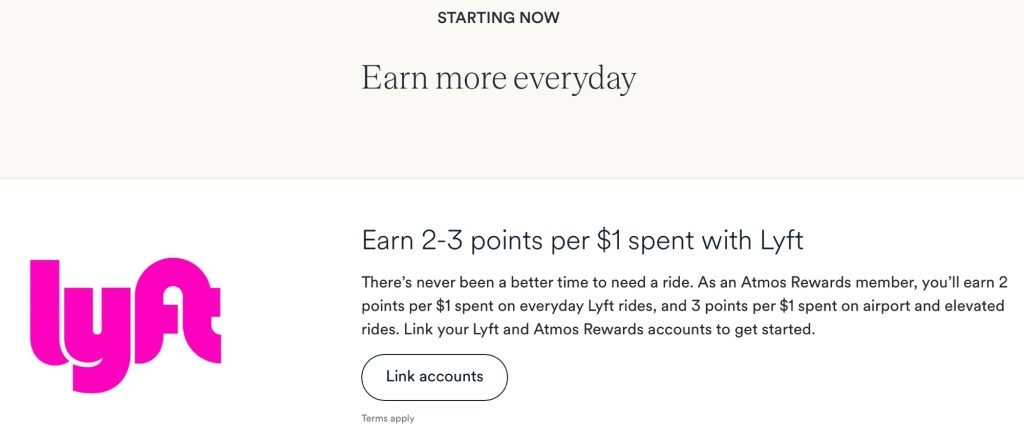
- NEW for August 2025: Link your Lyft and Atmos accounts and earn 2 points for each $1 spent on Lyft, or 3 points for each $1 spent on airport and elevated Lyft rides. For what it’s worth, I’ve found this hard to track and reconcile, so keep that in mind if you’re counting on these points.
- Rollover elite points will be offered as a milestone choice at the 85,000 point milestone, allowing the member to roll over 10,000 points (per milestone award chosen) to the following year.
Tips to Maximize Elite Points
There are a few ways to earn elite points faster and/or less expensively than the strategies above. Those include
- Companion fares (offered with the Alaska Visa—now the Atmos Ascent card, but notably not the Atmos Summit card) earn elite points for both travelers based on the fare of the primary traveler, at least until Choice Awards show up in 2026. So the $99 (plus taxes) fare for the companion also earns elite points based on the primary traveler’s fare. Note that companion fares can only be used for Main Cabin fares on flights in the U.S., Mexico, and Canada operated by Alaska or Hawaiian, not paid first class or flights operated by other partners.
- Some more-expensive Main Cabin and First Class fares earn bonus elite points. Check Alaska’s earning chart to determine if you qualify (or if it’s worth the buy-up). And if you routinely buy these more-expensive tickets, check my post about Choice Earning for a comparison of points earned for your 2026 plans.
- As noted above, award travel on Alaska and partners will also earn elite based on miles flown.
- New in 2024, and continued since then: at the time of purchase, members can elect to purchase Sustainable Aviation Fuel (SAF) credits equivalent to the distance of their flight. Earn 500 elite points for every $100 in SAF credits purchased, up to an annual maximum of 5,000 elite points. Additionally, at year end, Alaska has typically run a promotion for members to buy elite points via SAF contributions.
Elite Points Fine Print
Upgrades typically don’t earn any extra miles (elite points or otherwise). The exception to this is a paid upgrade via the Alaska app or website, although travelers report very different experiences with this, so if your motivation of buying the “upgrade available” seat is to get extra elite points, expect that you might need to call after the flight to get things corrected. Check out the charts on Alaska’s Earn Points page for full details, and keep reading for tips on how to determine your fare class.
In the not-as-good news section of the fine print, there are Saver fares. Saver fares only earn 30% of flown miles as elite points.
It’s also important to recognize that, unless a promotion or fare class specifically states that bonus miles are also elite points, they’re most likely not. That means the bonus points awarded on each flight for various tiers of Atmos status are not elite points not are purchased miles.

Fare Classes
It’s not always easy to determine an itinerary’s fare class, or even a route’s flight miles. Especially near year end, this could have increased importance for mileage runs that secure status for the following year. As well, fare classes have historically been a key factor in upgrade priority. Here’s my very un-definitive guide:
- When booking on Alaska’s website and on the iPhone app, the fare class and flight miles don’t show up until the confirmation screen (the one right after “add to cart” and before payment is entered). Annoying, perhaps. But it is what it is. Pick your flights, click through to the confirmation screen, and voila! There it is. (See app screenshot below – the “Main – (S)” signifies the fare class as “S”.)
- After a flight is booked, this information is also included in the receipt or with the details of the traveler’s trips on the Alaska site. In the app, the info is nested one level further in: go to Trips, select the itinerary and tap Flight details. The distance shows flight miles, and scrolling will reveal the Cabin and (in parentheses), fare class.

Note that if the flight has been upgraded to First Class (with a certificate or a complimentary upgrade), the website typically will show the class as (U). In this case, the original purchase receipt, a call to reservations, or waiting until the points post is how someone would determine the paid fare class.
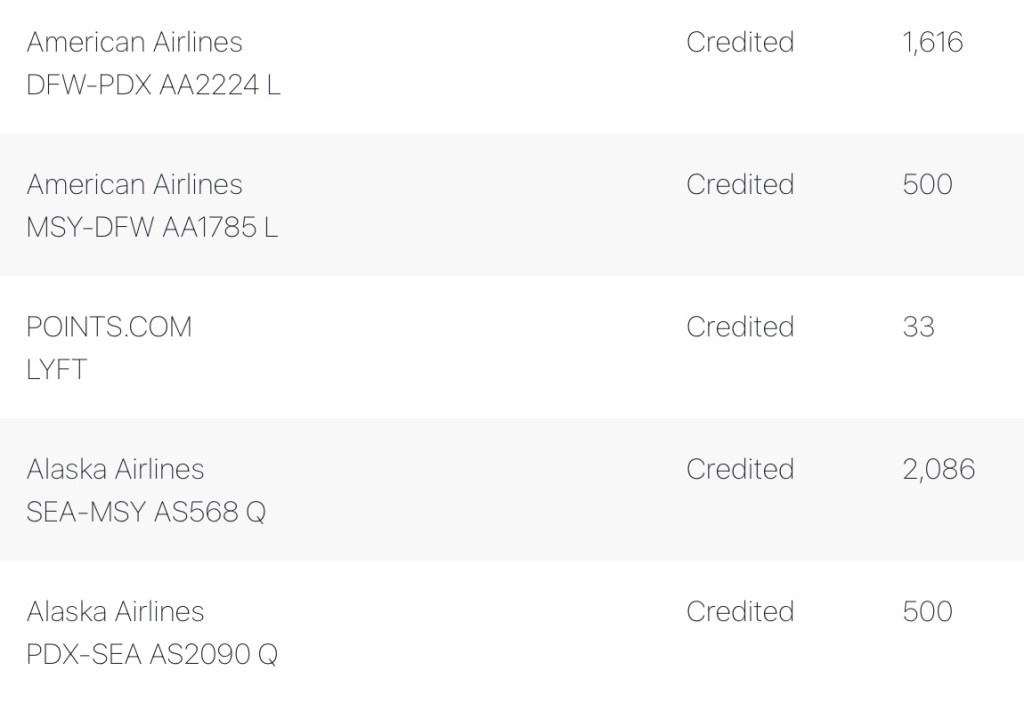
Alaska recently updated how they show mileage activity after a flight, and the details of flights completed now also include the paid fare class, as shown below for a few flights I took over Labor Day weekend 2024 on American (fare class L) and Alaska (fare class Q). Obviously, I’m looking forward to my Lyft rides earning elite qualifying miles.
Unfortunately, fare classes on partner airlines aren’t always easy to find during booking. While Alaska has simplified for 2025 how miles and bonuses are earned on partner flights, travelers may need to wing it (pun sort of intended) or call reservations for the airline they’re booking with if the details are really important.

Hopefully this all was helpful. Add your comments below if there’s anything I’ve missed that might be useful.
 Upper Left Traveler
Who decides what fare class you are buying from a partner, AS or the partner? I have boarding passes identifying the fare class a J and AS EQM’s paid based on N class-200% vs 50%!
LikeLike
I think it’s how the partner reports is back to AS. My take: keep quiet and enjoy! 😉
LikeLike