Before diving into the trip to itself, I can’t help but preface things with the sense of nervousness we felt heading to Havana. Information about traveling to Cuba felt generally vague and often questionable whether it was up to date, especially what documentation is needed (or not) for the various types of visas, or what to expect at customs entering Cuba or returning back to the U.S. But, on with the trip …
Highlights
- Cuban people (or at least those I met in Havana) are incredibly kind, friendly and prompt. There’s no “island time” here. If someone tells you they’ll arrive at 10:00, chances are they’ll be there no later than 9:50.
- Cats and dogs are *everywhere* on the streets. They all seem friendly enough and mostly leave everyone alone, going about their own business. Did I say they are everywhere? After the first day, we started joking about “Los Gatos de Habana” (said with the inflection of a telenovela announcer).
- Havana is a city that loves music, or at least knows that its visitors love music. It’s as prevalent as New Orleans or Dublin. And I love both of those cities for the ease in which one can stumble into a variety of places for live music at nearly any time of day.
- Cuba clearly has no emissions regulations for their cars and trucks. As much as I loved Havana, people sensitive to exhaust smells might not have as much fun here. At least at street-level, it’s worse than Mexico. If you’ve spent time there, you’ll know that’s saying something.
- Cell service is better then what I’d heard, but coverage from U.S. carriers is insanely expensive. Plan your communication in advance and use the trip as an excuse for a digital detox. (Pro tip: save off maps ahead of time for offline use. They won’t be as detailed as online ones, but GPS works offline and it can be helpful to figure out where you are and where you’re headed.)
Day 1:
JetBlue operates multiple nonstop flights from Orlando to Havana. Ours departed just after 7:30am and arrived uneventfully and right on time in Havana just after 9:00am. Yes, people clapped when we landed.
Passport control and customs in Havana were a breeze. Travelers must approach the customs agent individually (as opposed to the U.S. and other countries where family traveling together can approach together) with a customs declaration form and visa document that was provided by JetBlue at the Orlando airport. The agent briefly fussed with their computer and took a photo, then stamped our passports and sent us on our way to have our luggage scanned at an x-ray machine, before exiting past a couple of people dressed like old-school nurses (white uniform and hat included) who collected another form provided by JetBlue on which we declared any health issues or contact with animals. Interestingly, we later learned from a Canadian couple that the Canadians didn’t get asked to complete the health declaration form.
Once we exited the secure area, we changed some U.S. dollars for Cuban Convertible Pesos (CUCs) at an automated machine and got in our historic 50s American taxi. Note that U.S. ATM and credit cards don’t work in Cuba, so bring plenty as much cash as you think you might need while you’re there. To some degree, you can change cash as you go, but U.S. residents won’t be able to use their cards to while they’re in Cuba. Canadians (and others, I presume) had no troubles using ATMs in Havana.
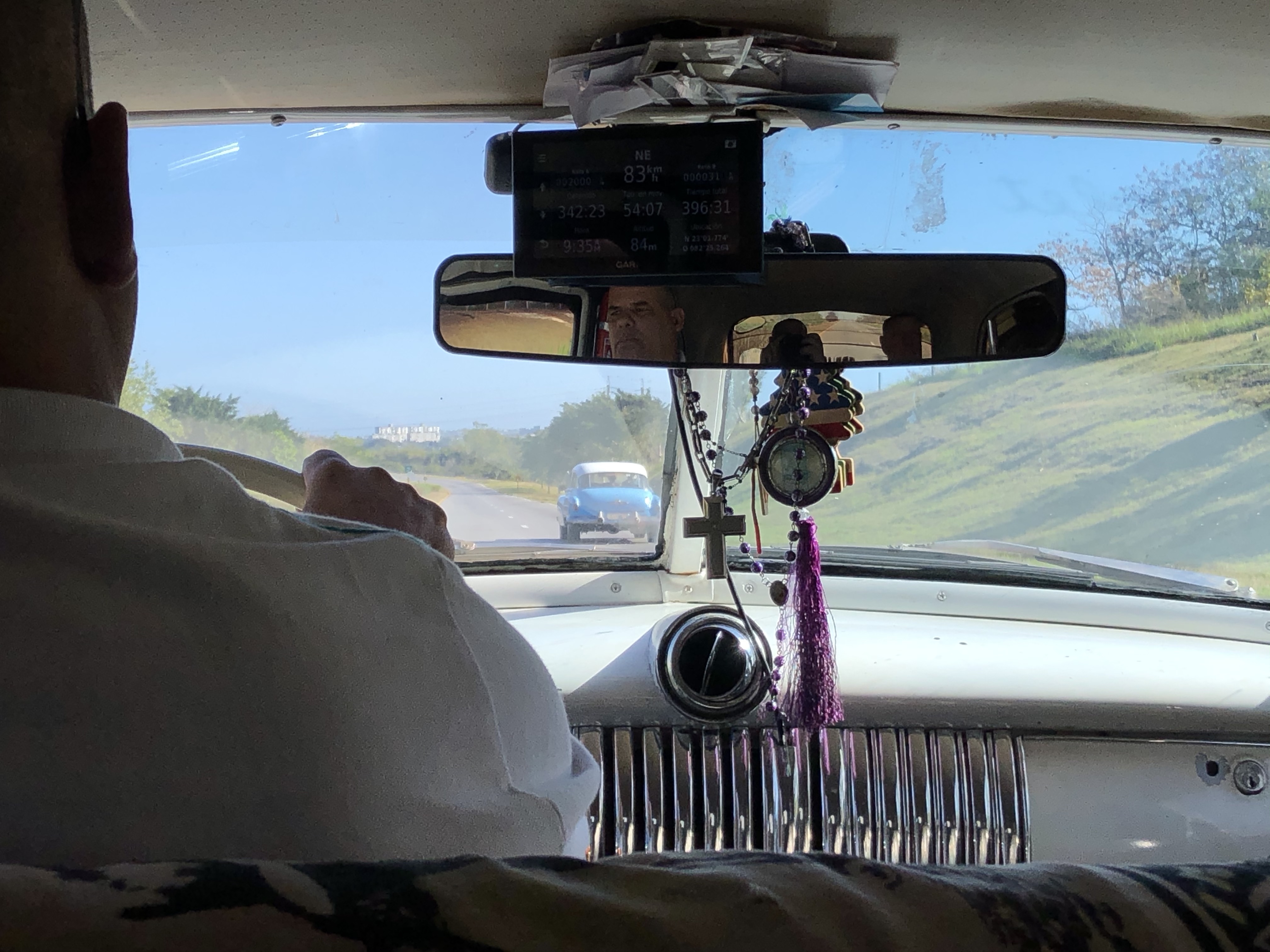
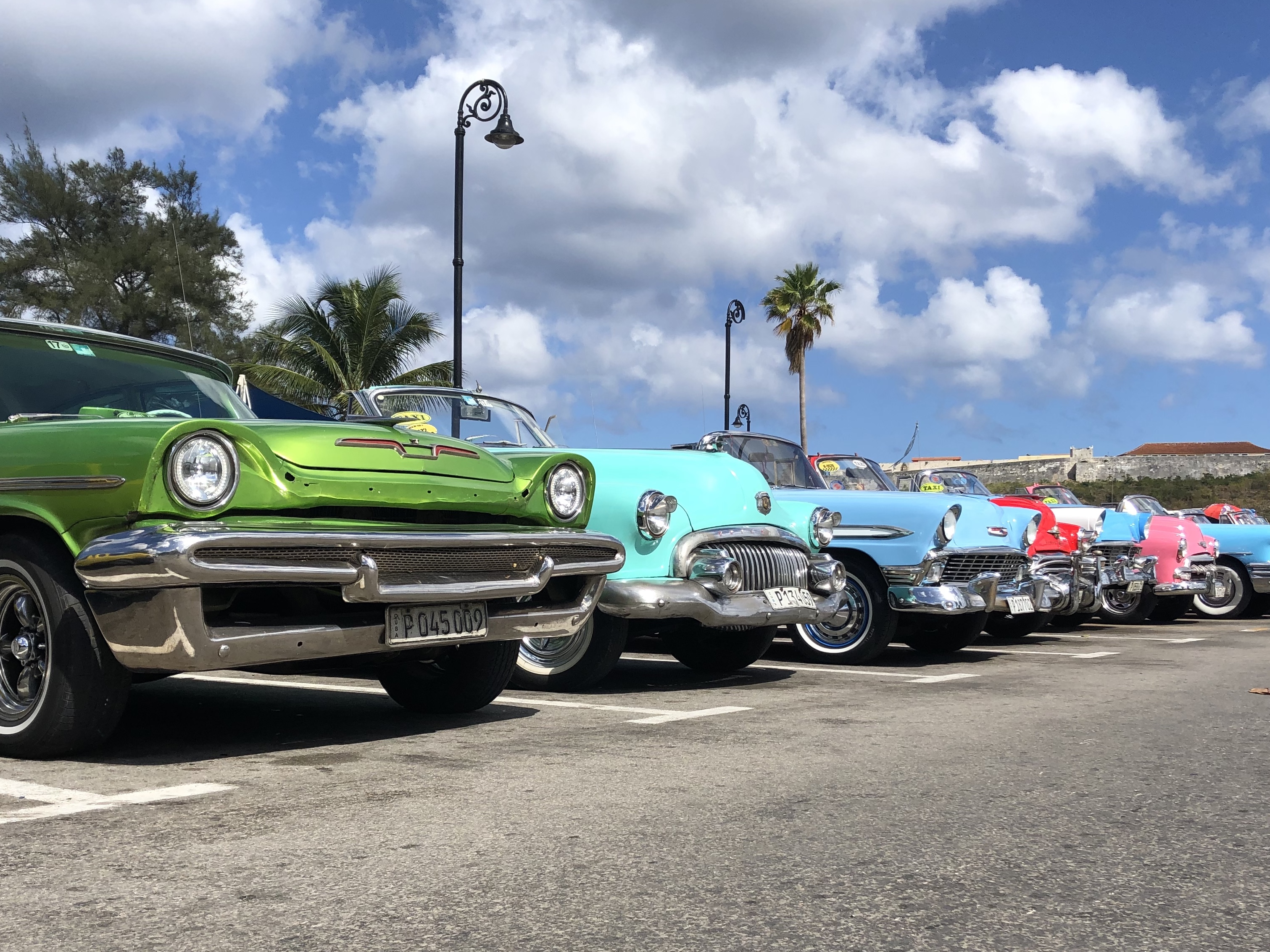
It’s a 20- or 30-minute drive from Havana airport into Old Havana where we were staying. Our driver pointed out a few sights on the way and also offered to change currency for us at a much better rate than the machine in the airport. While I wouldn’t count on having a similarly enterprising taxi driver, this is great business for them, as the driver gets a cut changing currency both directions, and it’s a great deal as a traveler.
In Old Havana, we arrived at our AirBnB, which was fortunately ready *very* early. The housekeeper for our host was incredibly friendly and helpful, giving us a quick “what’s what” summary of our apartment and the surrounding neighborhood restaurants and entertainment areas. She also promised to have a taxi ready for us for our return to Havana airport, which turned out to be really helpful for our early-ish morning return flight.
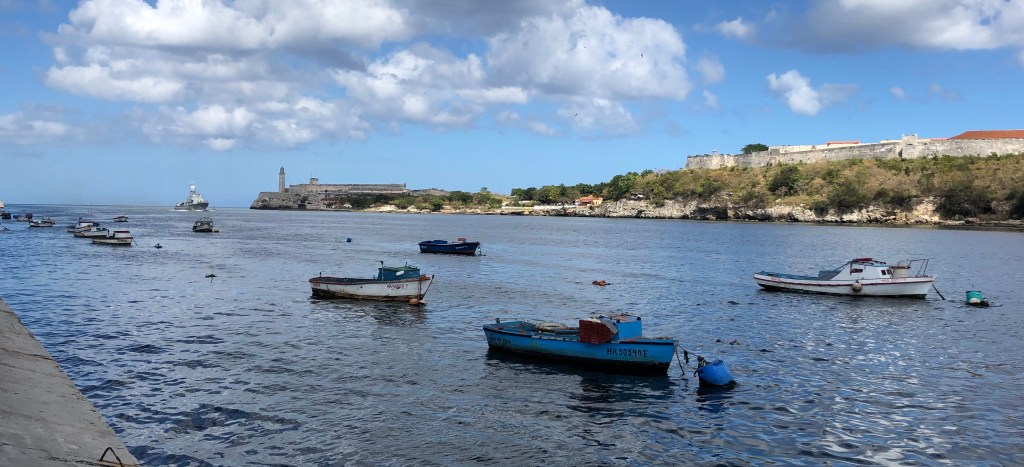
We quickly got settled and began our exploration around Old Havana. We made our way to the waterfront where it leads from Havana Port out to the ocean and walked along the deteriorating concrete walkway, taking in the sight of the parked classic American cars, cute fishing boats, and across the water, the Castillo de los Tres Reyes del Morro and adjacent fortress. A bit further along the malecon, we made our way past the very fancy-looking Hotel Paseo del Prado, which stands in stark contrast to deteriorating buildings almost next door – a contrast which would repeat itself throughout our exploration. From here, there’s a beautiful view along a long stretch of the Havana waterfront, with the Habana Riviera and Hotel Nacional de Cuba especially prominent.
After walking the malecon for a bit, we re-routed back toward Old Havana and made our way along Boulevard de San Rafael, a pedestrian-only street humming with activity, food windows and small cafes, and other shops. We wanted a place to eat lunch where we could sit down and relax a bit more, so we walked back to the Parque Central and found an outdoor table at Hotel Inglaterra where we grabbed a ham and cheese sandwich and a couple beers while we people-watched the locals and tourists making their way through this central square. While we lunched, a band set up and started playing – a great treat which would become a common thread of many of our restaurant and bar stops in Havana.
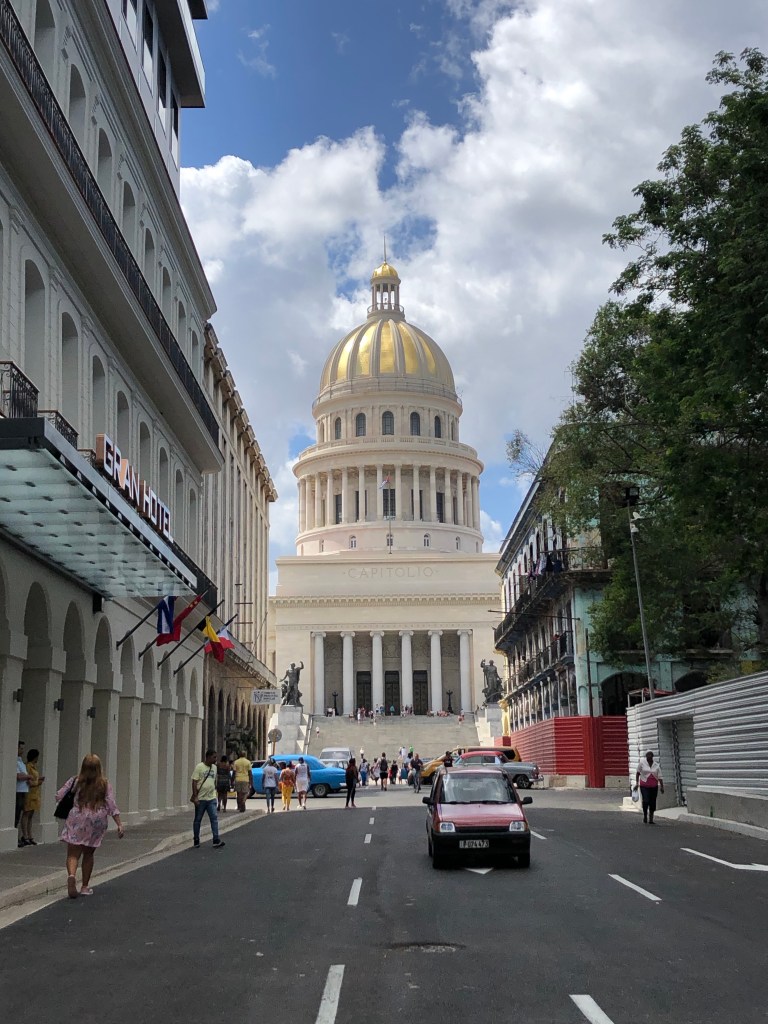
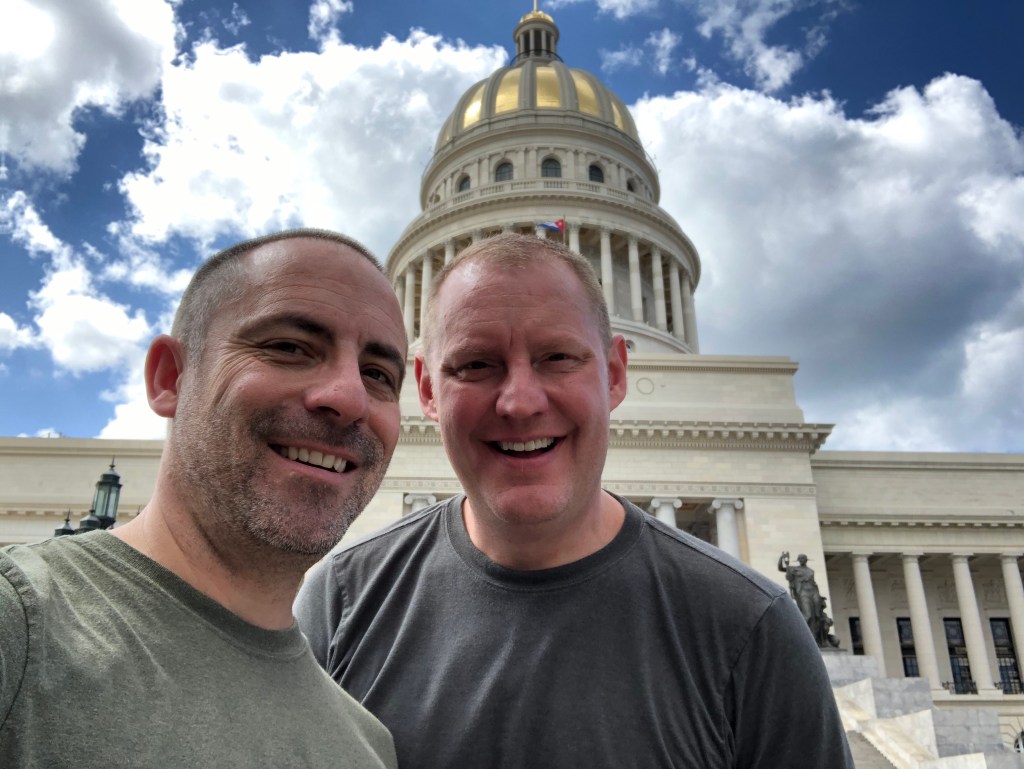
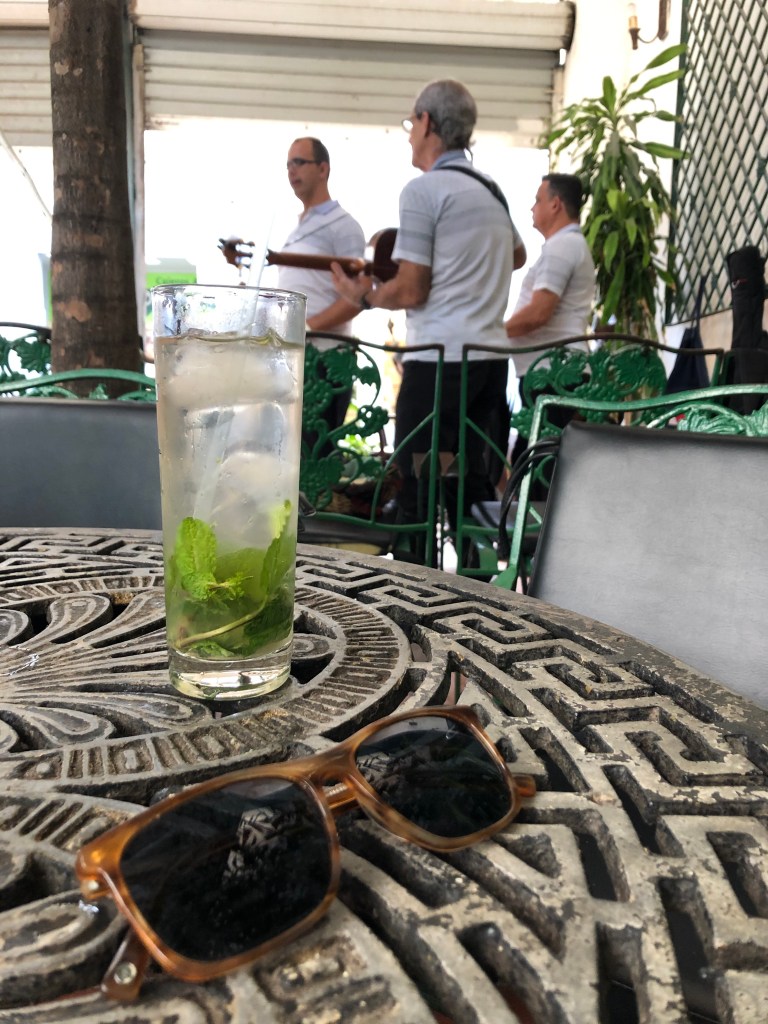
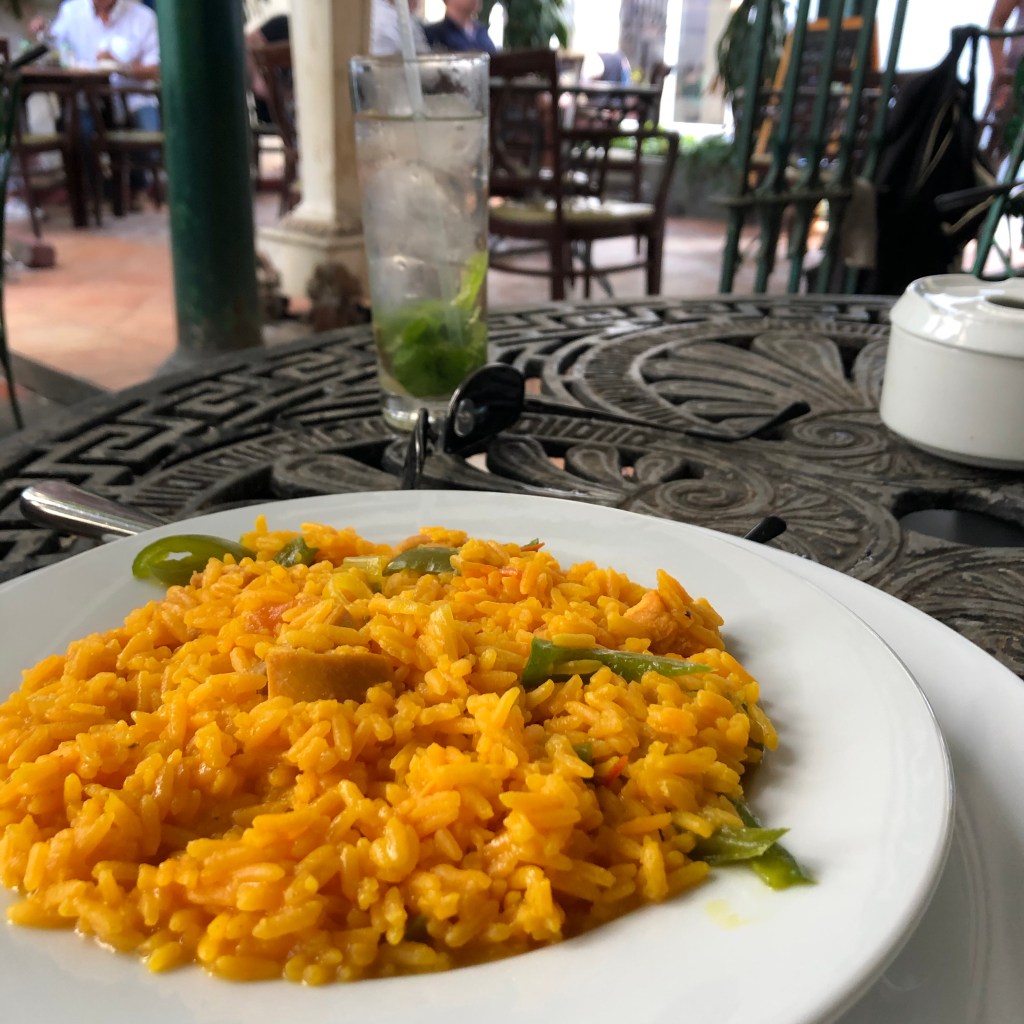
Following lunch, we took a few selfies on the steps of the nearby Capitolio, which was mostly finished after a many-year renovation for Havana’s 500th anniversary in 2019. We’re told the interior is still under renovation in 2020, in contrast to nearby hotels which, with private involvement, had similar interior and exterior restoration completed in just a year. In any case, the exterior of the capitol is glorious during the day, and even more so when lit up at night. Selfies snapped, we continued our exploration along Calle Obispo, another pedestrian street teeming with a local craft market, retail shops, a couple bars and restaurants, and more food windows. We popped into another restaurant/bar where a band was playing, and enjoyed their music while we had a mojito and some delicious Arroz Campesino (Very different than Arroz a la Cubana. Lesson learned.). After that: a nap.
The evening turned out much different than we expected. While we’d planned to take a class learning to cook Cuban classics, there was an incredible mix-up with the people with whom we’d booked the class. After a long and disconcerting taxi ride to Havana’s Miramar neighborhood, we returned to Old Havana, and wound down from the experience over pizza at one of the outdoor tables at 5 Esquinas restaurant. The restaurant had great service, which was a welcome respite after the cooking class snafu. After dinner, we snagged another drink at El Louvre restaurant and bar on Calle Obispo. We started on their rooftop, but made our way back down to the ground floor to listen to the night’s band, which was great.
We stayed at El Louvre until about 10, when the band took their break. At that time, we hailed a taxi and made our way to Fabrica de Arte de Cuba, which Anthony Bourdain had featured on one of his shows. Our arrival time turned out to be just about perfect, since there was hardly a line to get in, but was late enough that the space was already somewhat busy.
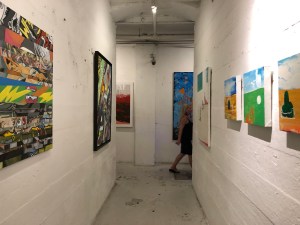
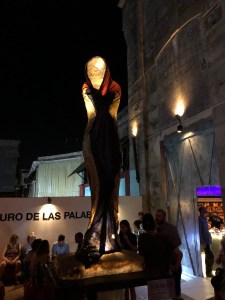
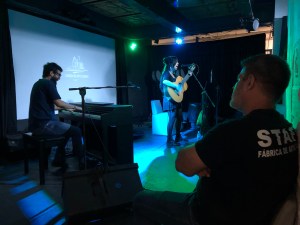
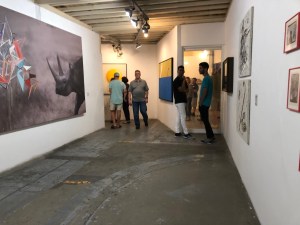
To be honest, Bourdain’s show didn’t do Fabrica de Arte justice, perhaps because the venue has grown in the five years it’s been open. What isn’t captured in the show is how diverse—and expansive—the venue’s work is. On the Thursday night we were there, we saw several galleries of photographs, sculptures, murals, and videography, as well as a tango performance, DJs, and live musicians. There were also at least two food vendors and I lost count of the number of bars. When we left (maybe 1am?), the place was absolutely packed inside and the line outside snaked around the block.
The night’s unexpected Event Number Two was our ride home. I should have mentioned above that it’s unclear what constitutes a taxi in Havana. Yes, there are yellow cabs with black and white checkerboard patterns running down the sides. And there are the classic American cars, many of which have lights in the front window that say “taxi”. But there are also endless other drivers in cars that are new, old, and everything in between who will readily ask if you need a taxi and (presumably) whisk you off to wherever you request. Returning from Fabrica de Arte back to our apartment, we climbed into one such “taxi.”
In fairness, the driver took a straightforward route back to our apartment and seemed reasonably legitimate in his service. And his 1970s-era Russian Lada sedan looked to be pretty well maintained. It wasn’t until we were a several blocks into our ride that we noticed the strong odor of exhaust. And shortly after that, we realized that where the handle for the window should be … was just the gear that the handle should attach to (which was impossible to operate manually). We got close enough to our apartment and insisted our driver let us out. Safely on the sidewalk, we gladly inhaled the comparatively clean air on the street. I’m not sure if the issue was typical of all Ladas, or just his, but we were happy to walk the rest of the way home before pulling up the covers in our air conditioned apartment.
Day 2:
Fresh and rested, we got up Friday morning and walked around the corner from our apartment to have breakfast at 5 Esquinas. Their fixed price breakfast ($4.50!!) includes a plate of fresh fruit, eggs prepared however you like, bread, coffee, and fresh juice. All good, and a bargain.
Right after breakfast, we’d scheduled a tour with Jose, a local guide. I’d given Jose a few tips before our arrival about what we were interested in seeing, and he did a great job of mixing in our interests with other historical stops. He was also great to converse with, sharing his perspective about Cuba, past and current relationships with the U.S. and Russia, and its pride and struggles.
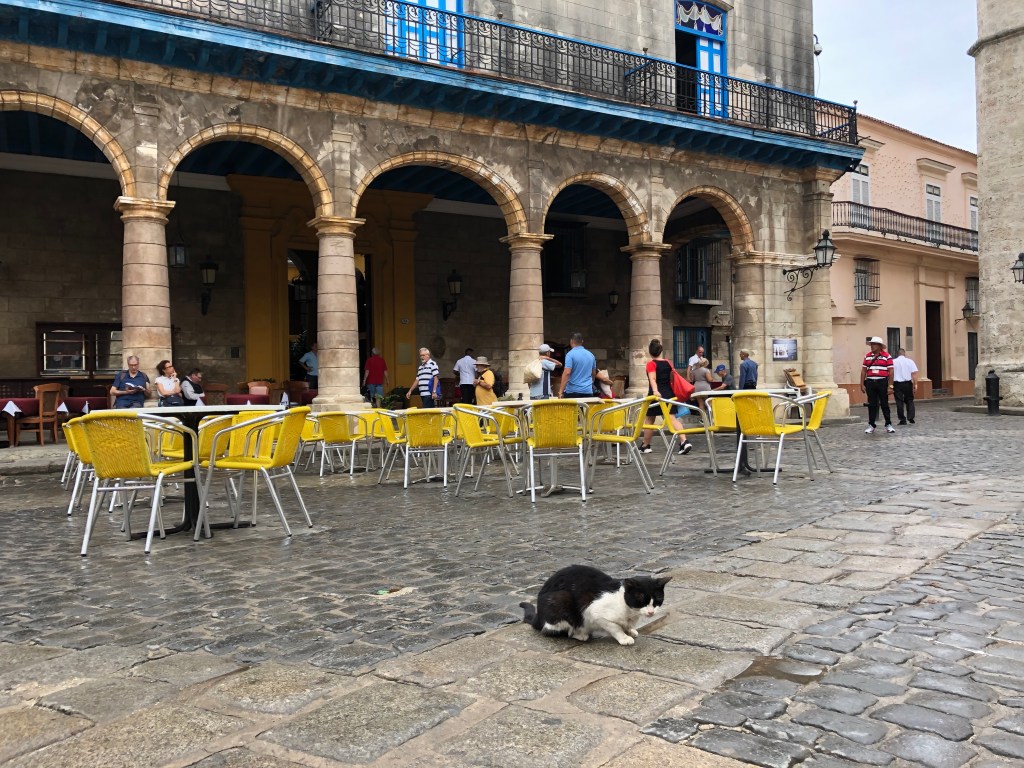
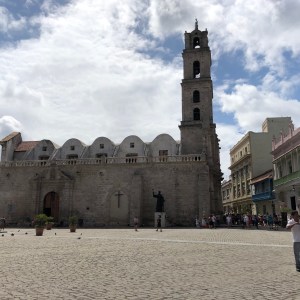
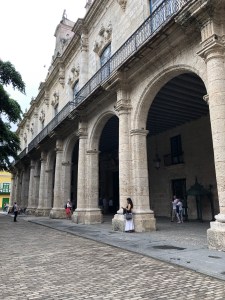
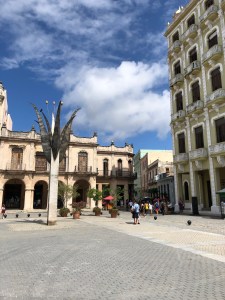
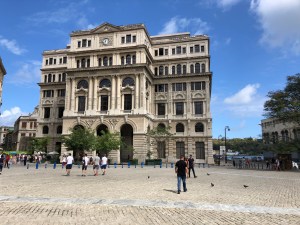
While our Thursday in Havana was hot and sunny, Friday brought all sorts of weather, starting out with drizzle and a short rain shower. Jose started us out walking toward Plaza Cathedral (Cathedral Square), ducking briefly into a storefront across from the main police headquarters to escape a rain shower. Jose has a great knowledge of the city and was easily able to talk about most anything we came across (police headquarters included). As soon as the shower subsided, we continued to Plaza Cathedral, where Jose gave us the low-down on how Cuba has become a melting pot of religions because of immigration over the years. In this case, it was Catholicism, since we were next to the Basilica and Convent of St. Francis of Assisi.
Jose took us through three other major plazas in Old Havana: Plaza de Armas (Arms Square or Military Square), has a wooden street in front of the building on the west side the square, supposedly laid so passing carriages wouldn’t disturb the governor’s sleep, like carriages rumbling over cobblestones would. Plaza de San Francisco was the city’s historic commercial square. ????, located across the street from the port. When we were there, the port was especially quiet, since many of the cruise ships from the U.S. that docked there were full of American travelers and those ships are no longer stopping in Havana. Plaza Vieja rounded out our quartet of historic squares, after which we walked through the San Isidro neighborhood, which is awesomely full of vibrant street art (even more than the rest of Havana).
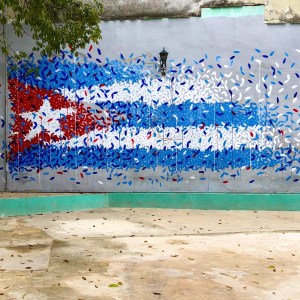
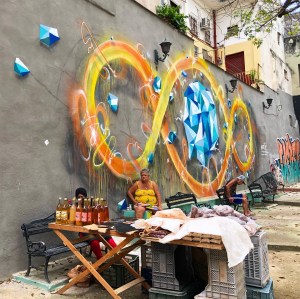
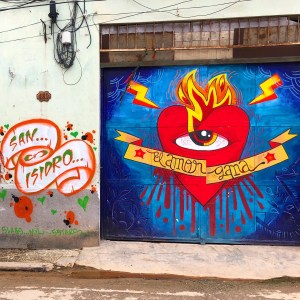
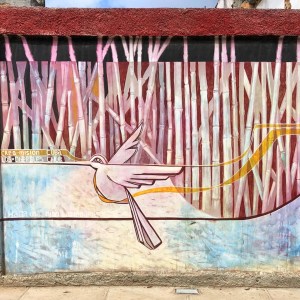
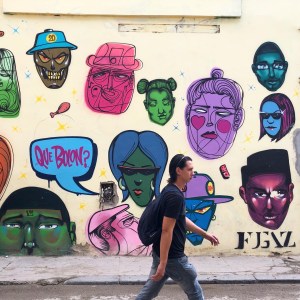
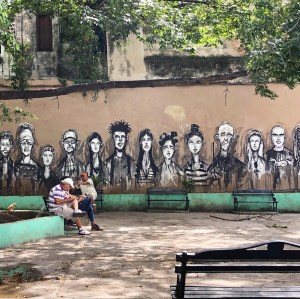

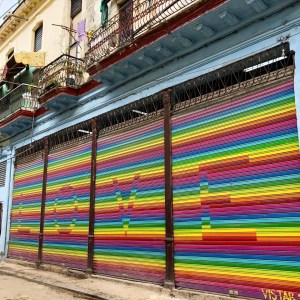
We made our way out of Habana Vieja, along El Prado, and through the center neighborhood on our way to the Vedado neighborhood. In Vedado, we made our way through Callejon de Hamel, which is a fascinating (and maybe a little odd) block of murals and sculptures made of bathtubs and other materials. In addition to the colorful art, it’s also a shrine to the Afro-Cuban religions present in Havana. Oh, and it was also our stopping spot for a late lunch at El Barracon de Hamel with some pretty good rice, beans, rope vieja and pork steak. And a rather persistent cat who sat down on my bench and scared the heck out of me when I realized it was there.
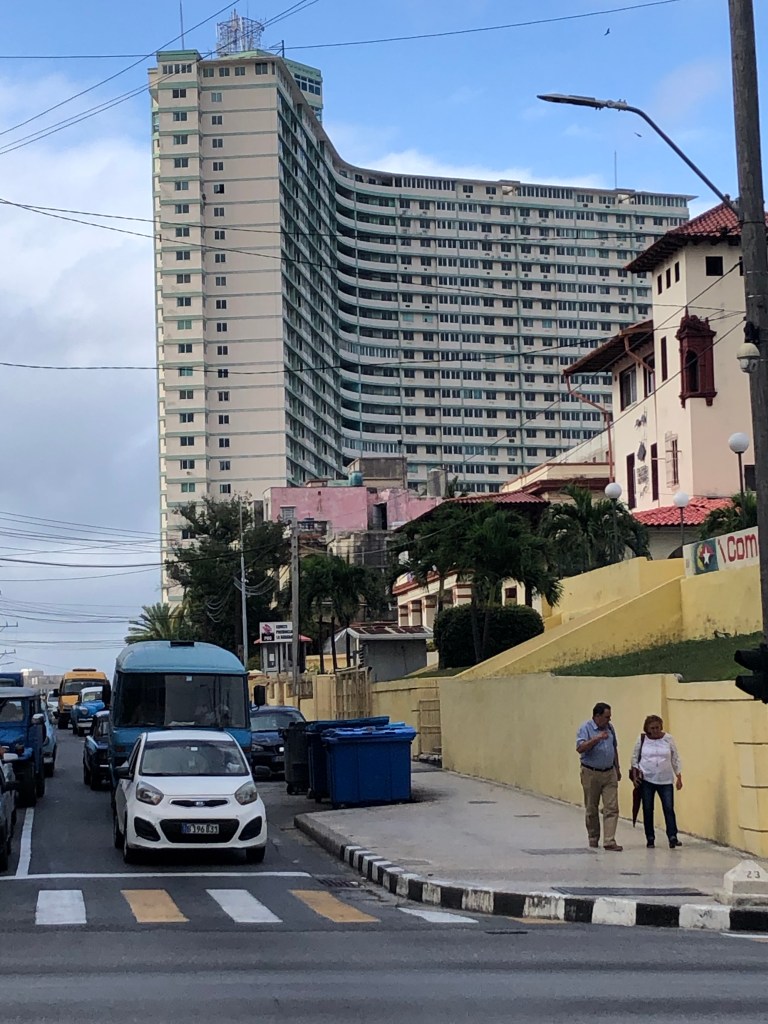
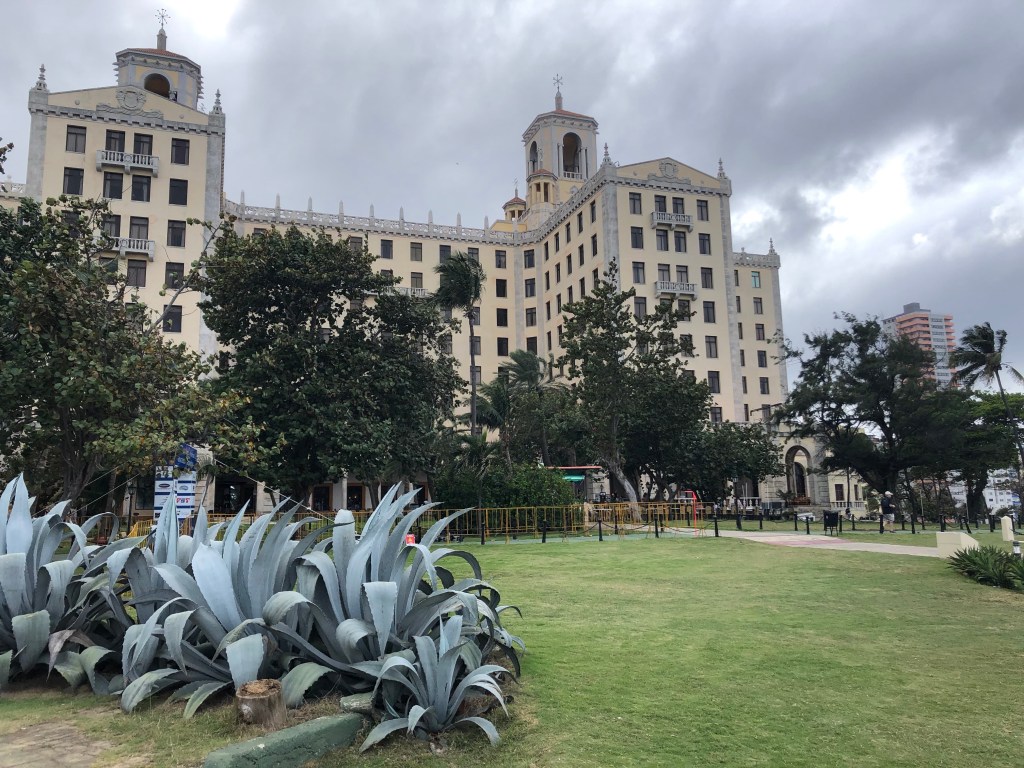
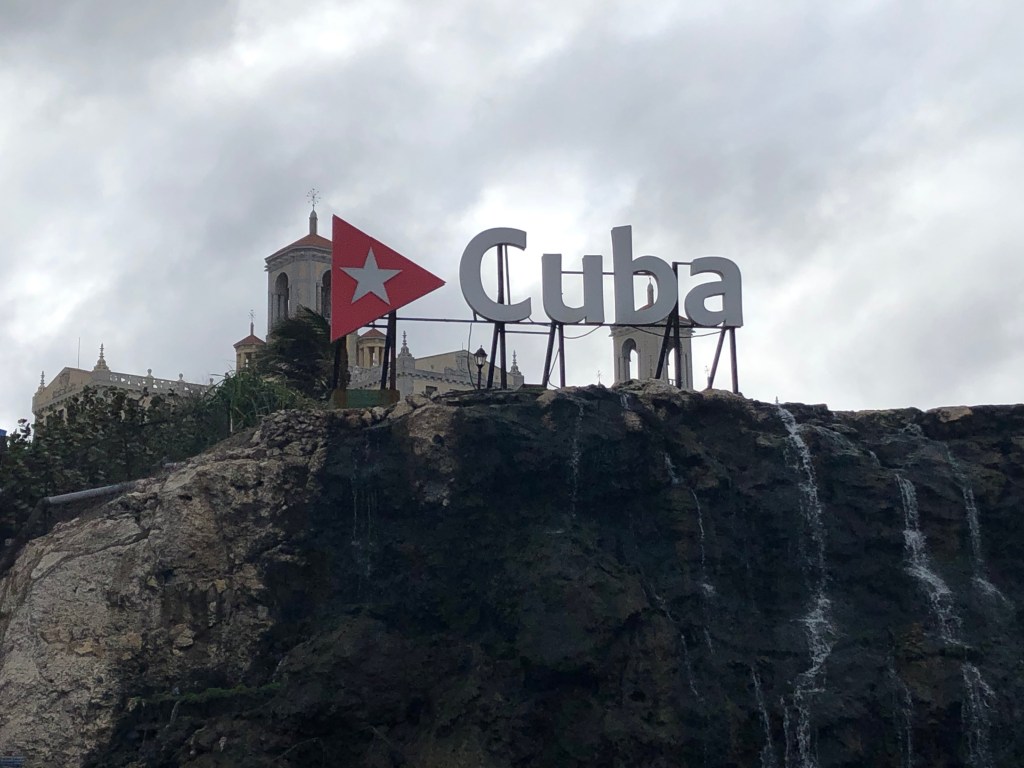
After lunch, Jose took us past the university (state-paid education in Cuba is great, Jose says), and what used to be the Habana Hilton, before being nationalized in 1960 under Fidel Castro’s regime when it got it’s current name: Hotel Habana Libre. The landmark Hotel Riviera is nearby, as is the Hotel Nacional de Cuba, which remains a dramatic presence with the building and grounds—as well as a prominent Cuba sign on a bluff at the edge of the property—overlooking the waterfront.
With tired feet after a full day of walking, we finished our tour with Jose and made our way to change some cash to get us through the evening, which we did in the lobby of the Gran Hotel Manzana Kempinski. Apparently they only change currency for patrons and guests, so we made our way to the rooftop bar for a beer and a visual treat as night began to fall. At dusk, the rooftop view is especially beautiful as the nearby Capitolo and Parque Central were light up for the evening.
Following the rooftop beer, we made our way back to El Louvre for a bit more of their live music. Even though their Thursday night band was our favorite, that didn’t stop JC from singing La Bamba with the band, nor did it stop either of us from humming along with their instrumental version of Hotel California (yes, seriously).
Bellies empty, we made our way to Lo De Moink for dinner including a Cubano for JC and another round of (quite good!) ropa vieja for me, as well as the most elaborately-decorated mango daiquiri I’ve ever seen. Dinner ended up being our last stop for the night. Although we walked to one of the city’s gay bars, we arrived at about 10:30 and it didn’t open until 11. We were appropriately tired from all of our walking, so we decided to retreat to our apartment. Besides, we had planned for a relatively early morning the next day in order to leave plenty of time to clear security at Havana airport.
The flight back:
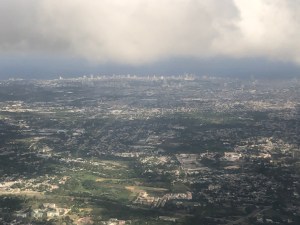
When we checked in for our flight to Havana, the counter agent recommended we arrive at Havana airport three hours prior to our return flight’s departure. Since our flight departed at 10:10, we arrived at the airport right around 7:00am to discover that the check in counter doesn’t open until 7:40am. Once open, check in was smooth and easy, after which we exchanged a few remaining CUCs. Those can’t be exchanged for U.S. currency, so I got Euros, which seemed a good excuse to plan a trip to Europe. Passport control and security were easy too: the agent checked our passports, took our photo once more, and retrieved our Cuban visa documents before sending us through to x-ray our bags, an incredibly quick process.
A few final observations:
The people of Havana are incredibly kind and generous. They’re very proud and point to the revolution, Fidel Castro, and others for making Cuba free (free from other countries’ influence, predominantly). But it doesn’t sound like everyone is convinced things are working out especially well at the moment. They have pride in what Cuba once was – new, clean, shiny – but clearly recognize that’s not the current reality.
The current reality in Havana is one of contradictions. There’s a common sentiment (at least that we noticed) of success in fighting off America, who would have enslaved them, even while they’re eagerly welcoming American tourists. They’re proud to be “free,” but point out that embargoes mean certain staples are in short supply—things like soap, toothpaste, and gas. Adding to this, many workers in the state-run economy earn only $10 or $20 a month, so a box of cereal might be nearly half of someone’s salary, although certain food is provided to residents as rations. Residents who have found the means to cater to Havana’s tourism industry have the opportunity to make far more as AirBnB hosts, taxi drivers, or tour guides, than the could elsewhere in the workforce.
As with other Latin American countries I’ve visited, the public squares are incredible gathering spaces. People may eat and sleep at home, but they live in the public spaces.
 Upper Left Traveler